Last updated: October 2026
For one small region, Tuscany has given the world a ridiculous number of famous people. I’ve written about them before, the writers and composers in one post and the artists in another. This is the quick version: all 99 of them, A to Z, with a line or two on what they’re famous for and where they came from.
And it isn’t all Florence. Twenty of the 99 were born in a small town or a village, from Vinci and Caprese to Gabbro and Ponticino. Not bad for places you can drive through in a minute.
Tap a button to see just the artists, the writers, the musicians or the scientists. There are buttons for history, film and TV, fashion and sport too, and Modern Tuscans shows everyone born from 1880 on. Some people turn up in more than one list. For people who are still alive, I’ve just given the year they were born. Where there’s a page on this site for their home town, I’ve linked it. Otherwise the link goes to the province.
A

Fra Angelico (c. 1395–1455)
A Dominican friar and painter. His frescoes in the friars’ cells at San Marco in Florence are some of the gentlest pictures of the Renaissance. He was beatified in 1982.
From: Vicchio, in the Mugello · Florence province. Read more: Tuscan artists, Tuscan art trail

Anna Maria Luisa de’ Medici (1667–1743)
The last of the Medici. In the Family Pact of 1737 she left the family’s art collections to Tuscany on condition that they never left Florence, which is a big part of why the Uffizi is still so full.
From: Florence.

Pietro Aretino (1492–1556)
A shoemaker’s son who took his town’s name and became a famous poet, playwright and letter-writer, feared for his attacks on the powerful. Forced out of Rome in the mid-1520s, he settled in Venice in 1527 and lived very well there.
From: Arezzo · Arezzo province. Read more: Writers, composers and thinkers
B

Gino Bartali (1914–2000)
A cyclist who won the Giro d’Italia three times and the Tour de France in 1938 and 1948. During the war he carried forged papers hidden in his bike for a network rescuing Jews, and in 2013 he was named Righteous Among the Nations.
From: Ponte a Ema (then in Bagno a Ripoli, now part of Florence) · Florence.

Domenico Beccafumi (c. 1486–1551)
Siena’s great Mannerist painter, with strange light and bold colour. He also designed some of the marble floor panels in Siena cathedral.
From: Near Montaperti, outside Siena · Siena province. Read more: Tuscan artists, A short history of Tuscany
Roberto Benigni (born 1952)
Actor, comedian and director. La vita è bella (1997) won him the Oscar for Best Actor, and it also won Best Foreign Language Film. He’s famous in Italy for reciting Dante to huge audiences too.
From: Manciano La Misericordia, Castiglion Fiorentino (he grew up in Prato) · Arezzo province.
The Bergamini architects (17th–18th centuries)
Giovanni Francesco Bergamini and his son Alessandro worked for the Cybo Malaspina court at Massa. Giovanni Francesco designed the courtyard of the Palazzo Ducale around 1665, and the Villa della Rinchiostra (1675) for Teresa Pamphili. He also designed the high altar of the Certosa di Pisa, which Alessandro finished in 1686. Alessandro went on to build the palace’s 18th-century fronts.
From: Carrara, working in Massa · Massa.

Enrico Betti (1823–1892)
A mathematician at Pisa, remembered for early work on topology. As a young man he fought at Curtatone and Montanara in 1848.
From: Pistoia. Read more: Writers, composers and thinkers

Giovanni Boccaccio (1313–1375)
Author of the Decameron: a hundred stories told by ten young people sheltering from the plague outside Florence. He wrote the first life of Dante and was a close friend of Petrarch.
From: Certaldo or Florence (he died in Certaldo) · Florence province. Read more: Writers, composers and thinkers, A short history of Tuscany

Luigi Boccherini (1743–1805)
A cellist and composer who spent most of his working life in Spain, writing for the Infante Don Luis. He wrote hundreds of works, with the cello given far more to do than usual.
From: Lucca. Read more: Writers, composers and thinkers
Andrea Bocelli (born 1958)
A tenor who won the newcomers’ prize at Sanremo in 1994 with Il mare calmo della sera. He sings at the Teatro del Silenzio, an open-air theatre in the hills at Lajatico, and celebrated 30 years of his career there in July 2024.
From: La Sterza, near Lajatico · Pisa province.

Sandro Botticelli (c. 1445–1510)
The painter of the Birth of Venus and the Primavera, both in the Uffizi. He also painted frescoes on the walls of the Sistine Chapel in 1481–82.
From: Florence. Read more: Tuscan artists, Writers, composers and thinkers

Filippo Brunelleschi (1377–1446)
The architect who worked out how to build the dome of Florence cathedral without a wooden frame to hold it up. He also designed the Ospedale degli Innocenti and showed painters how linear perspective works.
From: Florence. Read more: Tuscan artists, Tuscan art trail
C

Francesco Carrara (1805–1888)
One of the great criminal lawyers of the 1800s, author of the Programma del corso di diritto criminale, and later a senator.
From: Lucca. Read more: Writers, composers and thinkers

St Catherine of Siena (1347–1380)
A dyer’s daughter who became a mystic, writer and adviser to popes, and helped persuade the papacy to come back to Rome from Avignon. She was made a patron saint of Italy in 1939 and a Doctor of the Church in 1970.
From: Siena · Siena province. Read more: Writers, composers and thinkers

Roberto Cavalli (1940–2024)
A fashion designer known for animal prints and bold patterns. In the early 1970s he patented a way of printing on leather, and he founded his own fashion house in Florence.
From: Florence.

Benvenuto Cellini (1500–1571)
Goldsmith and sculptor. His bronze Perseus stands in the Loggia dei Lanzi in Florence. His autobiography, full of brawls and boasting, is still a cracking read.
From: Florence. Read more: Tuscan artists

Cimabue (c. 1240–c. 1302)
Cenni di Pepo, known as Cimabue. His great painted crucifix in Santa Croce was badly damaged in the 1966 flood. Vasari says he discovered the young Giotto.
From: Florence. Read more: Tuscan artists, Tuscan art trail

Matteo Civitali (1436–1501)
Sculptor and architect. He built the little marble temple for the Volto Santo inside Lucca cathedral, finished in 1484.
From: Lucca. Read more: Tuscan artists

Carlo Collodi (1826–1890)
Carlo Lorenzini took his pen name from Collodi, his mother’s village. Le avventure di Pinocchio came out as a book in 1883 and has been translated into hundreds of languages.
From: Florence. Read more: Tuscany with kids, Pescia
Carlo Conti (born 1961)
A TV and radio presenter, known for quiz shows like L’eredità. He has hosted the Sanremo festival and been its artistic director five times: 2015, 2016, 2017, 2025 and 2026.
From: Florence.
D

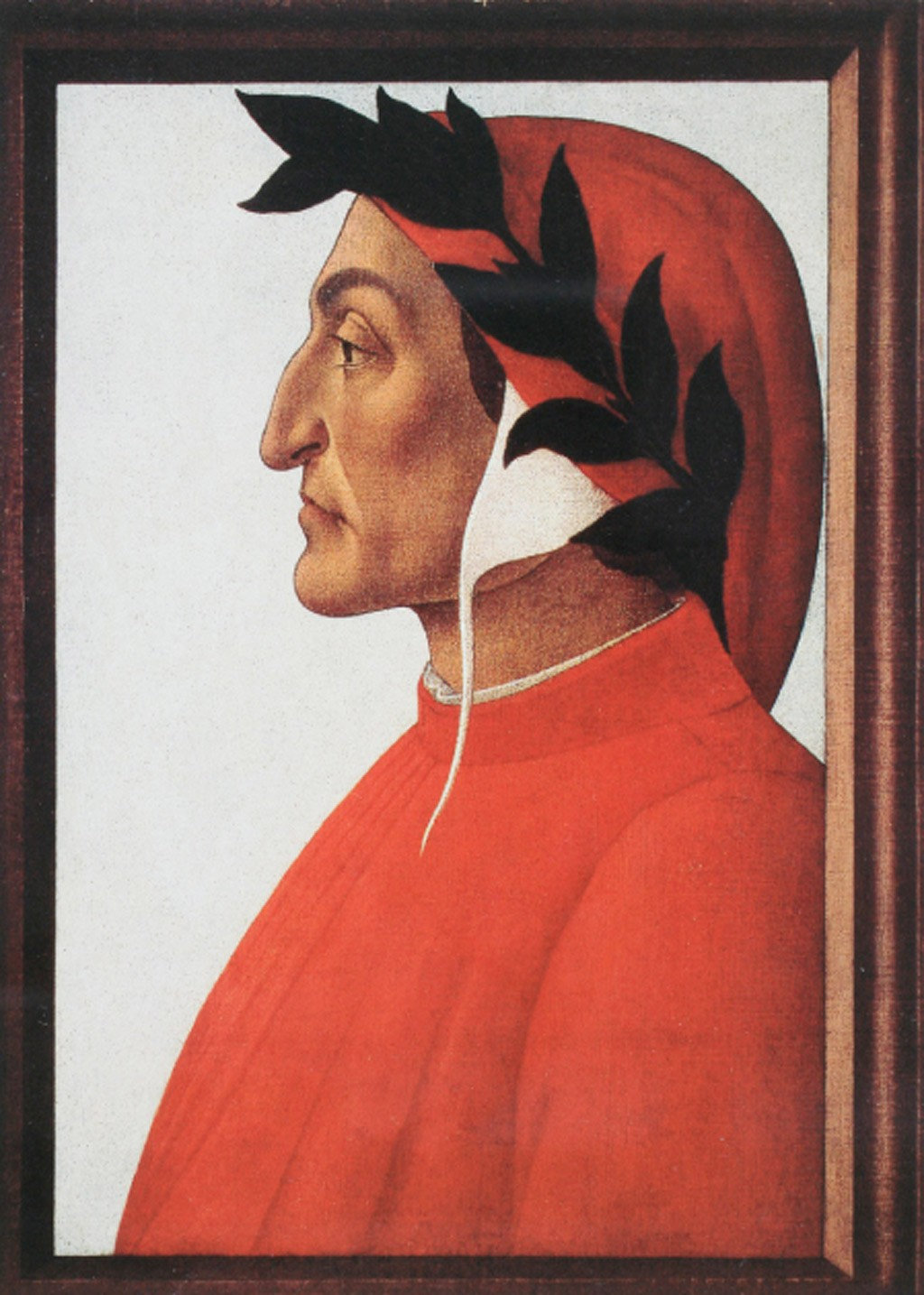
Dante Alighieri (1265–1321)
He wrote the Commedia in Italian rather than Latin, which did a huge amount to shape the Italian language. Exiled from Florence in 1302, he never went back, and died in Ravenna.
From: Florence. Read more: Writers, composers and thinkers, A short history of Tuscany

Donatello (c. 1386–1466)
The great sculptor of the early Renaissance. His bronze David is in the Bargello in Florence, and his horseman, the Gattamelata, is in Padua.
From: Florence. Read more: Tuscan artists, Tuscan art trail

Duccio di Buoninsegna (c. 1255–c. 1319)
Siena’s first great painter. In 1311 his Maestà was carried through the streets to the cathedral. It’s now in the Museo dell’Opera del Duomo.
From: Siena · Siena province. Read more: Tuscan artists, Tuscan art trail
F

Oriana Fallaci (1929–2006)
A journalist and writer who joined the Resistance as a teenager. Writing for L’Europeo, she became famous for tough interviews with world leaders, collected in Intervista con la storia (1974).
From: Florence.

Giovanni Fattori (1825–1908)
The leading painter of the Macchiaioli, who painted in patches of light and colour, often outdoors. Livorno’s Museo Civico Giovanni Fattori is named after him.
From: Livorno. Read more: Tuscan artists, Tuscan art trail
Antonio Federighi (c. 1420–1483)
Sculptor and architect, capomaestro of Siena cathedral and, for a few years, of Orvieto cathedral. He carved statues for Siena’s Loggia della Mercanzia.
From: Siena · Siena province.
Pietro Fontana (1782–1857)
A sculptor who trained at the Carrara academy, then at Brera and in Rome. He carved the statue of Maria Beatrice d’Este (1824) for the monument in Piazza Alberica, Carrara.
From: Carrara.
G

Galileo Galilei (1564–1642)
He improved the telescope and found the four big moons of Jupiter and the phases of Venus. His support for a Sun-centred universe brought him before the Inquisition in 1633.
From: Pisa. Read more: Writers, composers and thinkers, A short history of Tuscany

Lorenzo Ghiberti (1378–1455)
He won the 1401 competition for the bronze doors of the Florence Baptistery, then spent decades on a second pair that Michelangelo is said to have called the Gates of Paradise.
From: Pelago, near Florence · Florence province. Read more: Tuscan artists, Tuscan art trail

Domenico Ghirlandaio (1448/49–1494)
He painted the fresco cycle in the Tornabuoni Chapel in Santa Maria Novella, full of real Florentines in their best clothes. The young Michelangelo was apprenticed in his workshop.
From: Florence. Read more: Tuscan artists, Tuscan art trail

Giotto di Bondone (c. 1267–1337)
The painter who brought real weight and feeling to Italian painting. His frescoes fill the Scrovegni Chapel in Padua, and he designed the bell tower beside Florence cathedral.
From: Vespignano, near Vicchio · Florence province. Read more: Tuscan artists, A short history of Tuscany

Benozzo Gozzoli (c. 1420–1497)
He painted the Procession of the Magi in the chapel of the Palazzo Medici Riccardi, Florence, and the life of St Augustine in San Gimignano (1464–65). He died in Pistoia.
From: Florence (or Scandicci, just outside) · Florence province. Read more: San Gimignano, Volterra and Pienza, Tuscan art trail
Irene Grandi (born 1969)
A pop and rock singer who broke through in 1994 with Fuori and T.V.B. She came second at Sanremo in 2000 with La tua ragazza sempre.
From: Florence.

Guccio Gucci (1881–1953)
As a young man he worked as a porter at the Savoy Hotel in London, eyeing the rich guests’ luggage. Back home he opened his first leather goods shop in Via della Vigna Nuova, Florence, in 1921.
From: Florence.

Francesco Domenico Guerrazzi (1804–1873)
Writer and Risorgimento patriot, often in prison or exile for it. His best-known novel is L’assedio di Firenze (1836).
From: Livorno. Read more: Writers, composers and thinkers

Pietro Alessandro Guglielmi (1728–1804)
An opera composer trained in Naples, much loved for his comic operas. He worked in Dresden, Brunswick and London, and ended up as music director at St Peter’s in Rome.
From: Massa. Read more: Writers, composers and thinkers

Francesco Guicciardini (1483–1540)
Diplomat, governor for the Medici popes, and historian. His Storia d’Italia is one of the great histories of Renaissance Italy.
From: Florence. Read more: Writers, composers and thinkers

Guido d’Arezzo (c. 991–after 1033)
A Benedictine monk who taught the choir at Arezzo cathedral. He developed the musical staff and the ut-re-mi way of teaching sight-singing, the ancestor of do-re-mi.
From: Not certain (probably the Pomposa area; Ravenna and Arezzo both claim him), worked in Arezzo · Arezzo province. Read more: Writers, composers and thinkers

Guittone d’Arezzo (c. 1235–1294)
The leading Tuscan poet before Dante. After joining the Frati Gaudenti, a religious order, he turned from love poems to religious ones.
From: Santa Firmina, near Arezzo · Arezzo province. Read more: Writers, composers and thinkers
H

Margherita Hack (1922–2013)
An astrophysicist and a much-loved science communicator. From 1964 to 1987 she ran the astronomical observatory in Trieste, the first woman in Italy to direct one.
From: Florence.
L

Leonardo da Vinci (1452–1519)
Painter of the Mona Lisa and the Last Supper, and the man whose notebooks are full of flying machines, anatomy and water. He died in France, at Amboise.
From: Vinci · Florence province. Read more: Tuscan artists, Tuscan art trail

Leone Leoni (c. 1509–1590)
A sculptor and medallist who ran the imperial mint in Milan from 1542 and made portraits of the Emperor Charles V. His house in Milan, the Casa degli Omenoni, still stands.
From: Arezzo (some sources say Menaggio) · Arezzo province.

Filippino Lippi (c. 1457–1504)
Son of Filippo Lippi. He finished the frescoes in the Brancacci Chapel in Florence that Masaccio had left, and painted the Strozzi Chapel in Santa Maria Novella.
From: Prato. Read more: Tuscan artists

Filippo Lippi (c. 1406–1469)
A Carmelite friar and painter who ran off with a nun, Lucrezia Buti. Their son was Filippino. His frescoes of St Stephen and St John the Baptist are in Prato cathedral.
From: Florence. Read more: Tuscan artists, Tuscan art trail
Marcello Lippi (born 1948)
A football coach who won the Champions League with Juventus in 1996 and the World Cup with Italy in 2006.
From: Viareggio. Read more: Versilia beaches

Ambrogio Lorenzetti (c. 1290–1348)
He painted the Allegory of Good and Bad Government (1338–39) in Siena’s Palazzo Pubblico, the best picture of medieval city life anywhere. He probably died in the plague of 1348.
From: Siena · Siena province. Read more: Tuscan artists, Tuscan art trail

Pietro Lorenzetti (c. 1280–1348)
Ambrogio’s older brother. His frescoes in the lower church of San Francesco at Assisi are among his best work.
From: Siena · Siena province.

Lorenzo de’ Medici, the Magnificent (1449–1492)
He ran Florence from 1469, survived the Pazzi conspiracy of 1478 that killed his brother Giuliano, and backed Botticelli and the young Michelangelo. He wrote poetry too.
From: Florence. Read more: Writers, composers and thinkers, A short history of Tuscany
M

Niccolò Machiavelli (1469–1527)
A diplomat for the Florentine republic who, out of a job after the Medici came back, wrote The Prince (1513) at his farm at Sant’Andrea in Percussina.
From: Florence. Read more: Writers, composers and thinkers, A short history of Tuscany

Simone Martini (c. 1284–1344)
He painted the Maestà in Siena’s Palazzo Pubblico (1315) and, with Lippo Memmi, the gold Annunciation now in the Uffizi (1333). He died in Avignon.
From: Siena · Siena province. Read more: Tuscan artists, A short history of Tuscany

Masaccio (1401–c. 1428)
In a very short life he changed painting: the Tribute Money in the Brancacci Chapel and the Trinity in Santa Maria Novella. He died in Rome aged about 26.
From: San Giovanni Valdarno · Arezzo province. Read more: Tuscan artists, Tuscan art trail

Pietro Mascagni (1863–1945)
His first big opera, Cavalleria rusticana (1890), launched the verismo style: real people, real passions. Livorno’s seafront Terrazza Mascagni is named after him.
From: Livorno. Read more: Writers, composers and thinkers
Marco Masini (born 1964)
A singer-songwriter with hits like Ci vorrebbe il mare and T’innamorerai. He won the newcomers’ section at Sanremo in 1990, and the festival itself in 2004 with L’uomo volante.
From: Florence.
Lippo Memmi (c. 1290s–1356)
Simone Martini’s brother-in-law and partner on the Uffizi Annunciation. His own Maestà is in the Palazzo Comunale at San Gimignano.
From: Siena · Siena province. Read more: Tuscan art trail

Michelangelo Buonarroti (1475–1564)
Sculptor of the David, painter of the Sistine Chapel ceiling, architect of the dome of St Peter’s, and a poet as well. He grew up in Florence.
From: Caprese, in the Casentino · Arezzo province. Read more: Tuscan artists, Tuscan art trail

Michelozzo (1396–1472)
Cosimo de’ Medici’s architect. He designed the Palazzo Medici in Florence and the library of the convent of San Marco.
From: Florence. Read more: Tuscan artists, Tuscan art trail

Amedeo Modigliani (1884–1920)
He moved to Paris in 1906 and became famous for his long-necked portraits and nudes. He died there, aged 35.
From: Livorno. Read more: Tuscan artists
N
Nada (born 1953)
Nada Malanima was just 15 when she made her Sanremo debut with Ma che freddo fa (1969), and she won the festival in 1971 with Il cuore è uno zingaro. She’s an actress and a poet as well.
From: Gabbro, near Rosignano Marittimo · Livorno province.
Gianna Nannini (born 1954)
A rock singer-songwriter. Bello e impossibile (1986) was a hit across Europe, and she sang Un’estate italiana, the song of the 1990 World Cup, with Edoardo Bennato.
From: Siena · Siena province.
Plautilla Nelli (1524–1588)
A Dominican nun at Santa Caterina in Florence, often called the first Florentine woman painter whose work survives. Her Last Supper, painted for her convent, is now in the museum of Santa Maria Novella.
From: Florence.

Dario Niccodemi (1874–1934)
A playwright who grew up in Buenos Aires, worked in Paris, and had his biggest hit with Scampolo. His company gave the first performance of Pirandello’s Six Characters in Search of an Author in 1921.
From: Livorno. Read more: Writers, composers and thinkers
O
Bonagiunta Orbicciani (c. 1230–c. 1300)
An early poet of the Siculo-Tuscan school. In Dante’s Purgatorio it’s Bonagiunta who gives the ‘dolce stil novo’, the sweet new style, its name.
From: Lucca. Read more: Writers, composers and thinkers
P

Antonio Pacinotti (1841–1912)
A physicist who in 1859–60 built the Pacinotti ring, a direct-current machine that could work both as a dynamo and as a motor.
From: Pisa. Read more: Writers, composers and thinkers
Felice Palma (1583–1625)
A sculptor who trained with Tiziano Aspetti in the Veneto, then worked in Pisa. His Jupiter with a thunderbolt is at the Villa di Poggio Imperiale, and his bronze crucifix is in Santa Trinita, Florence.
From: Massa.
Giorgio Panariello (born 1960)
Comedian, impressionist and TV presenter. He grew up in Montignoso, near Massa, and often works with his friends Carlo Conti and Leonardo Pieraccioni.
From: Florence.

Petrarch (1304–1374)
Francesco Petrarca, often called the father of Humanism. His Italian love poems to Laura, collected in the Canzoniere, were copied across Europe for centuries.
From: Arezzo · Arezzo province. Read more: Writers, composers and thinkers, A short history of Tuscany
Policarpo Petrocchi (1852–1902)
A philologist whose Novo dizionario universale della lingua italiana was a standard Italian dictionary for decades.
From: Castello di Cireglio, near Pistoia · Pistoia. Read more: Writers, composers and thinkers

Piero della Francesca (c. 1412–1492)
Painter of the Legend of the True Cross in San Francesco, Arezzo, and a serious mathematician who wrote on perspective and geometry.
From: Sansepolcro · Arezzo province. Read more: Tuscan art trail

Pisanello (before 1395–c. 1455)
Painter and medallist, best known for his portrait medals and his drawings of animals.
From: Pisa (or possibly Verona) · Pisa.
Giovanni Pisano (c. 1250–c. 1315)
Nicola’s son. He carved the pulpits of Sant’Andrea in Pistoia (1301) and Pisa cathedral, and the sculpture on the façade of Siena cathedral.
From: Pisa. Read more: Tuscan artists, Tuscan art trail

Nicola Pisano (c. 1220–c. 1284)
Born in Apulia, in the south, but Pisa made him. His marble pulpit in the Pisa Baptistery (1260) looked back to Roman carving, and he went on to make the pulpit in Siena cathedral.
From: Apulia; worked in Pisa · Pisa. Read more: Tuscan art trail, A short history of Tuscany

Pope Pius II (1405–1464)
Enea Silvio Piccolomini, pope from 1458. He rebuilt his home village of Corsignano as the little Renaissance town of Pienza, and wrote a lively memoir, the Commentarii.
From: Corsignano, now Pienza · Siena province. Read more: San Gimignano, Volterra and Pienza, Tuscan art trail

Antonio del Pollaiolo (c. 1431–1498)
Goldsmith, painter and sculptor, famous for the engraving the Battle of the Nudes. With his brother Piero he made the bronze tombs of Popes Sixtus IV and Innocent VIII in St Peter’s.
From: Florence.

Jacopo Pontormo (1494–1557)
A Mannerist painter of odd, beautiful colours. His Deposition is in the church of Santa Felicita in Florence.
From: Pontorme, near Empoli · Florence province. Read more: Tuscan artists, A short history of Tuscany
Dino Provenzal (1877–1972)
A schoolteacher in towns all over Italy, and a critic and children’s writer. He wrote for the Corriere dei Piccoli and retold Dante for children in Il Dante dei piccoli.
From: Livorno. Read more: Writers, composers and thinkers

Giacomo Puccini (1858–1924)
La Bohème, Tosca, Madama Butterfly and Turandot. His birthplace in Lucca is the Puccini Museum, and his villa at Torre del Lago is where he’s buried.
From: Lucca. Read more: Celle dei Puccini, Versilia beaches
Pupo (born 1955)
Enzo Ghinazzi, the singer-songwriter behind Gelato al cioccolato and Su di noi, who also co-wrote Sarà perché ti amo for Ricchi e Poveri. He’s had a long second career as a TV presenter.
From: Ponticino (then in Laterina, now Laterina Pergine Valdarno) · Arezzo province.
Q

Jacopo della Quercia (c. 1374–1438)
Sculptor of the tomb of Ilaria del Carretto in Lucca cathedral and the Fonte Gaia in Siena’s Campo, and the main doorway of San Petronio in Bologna.
From: Siena · Siena province. Read more: Tuscan artists, Tuscan art trail
R

Luca della Robbia (1399/1400–1482)
He carved the marble singing gallery for Florence cathedral, then found a way to glaze terracotta in blue and white that his family workshop carried on for generations.
From: Florence. Read more: Tuscan artists, Tuscan art trail

Ippolito Rosellini (1800–1843)
The father of Italian Egyptology. He went to Egypt with Champollion in 1828 and published I monumenti dell’Egitto e della Nubia (1832–44).
From: Pisa. Read more: Writers, composers and thinkers
Bernardo Rossellino (1409–1464)
Architect and sculptor. He built the main square of Pienza for Pius II, and carved the tomb of Leonardo Bruni in Santa Croce, Florence.
From: Settignano, near Florence · Florence province. Read more: San Gimignano, Volterra and Pienza, Tuscan art trail

Pellegrino Rossi (1787–1848)
A law professor and politician in Italy, Switzerland and France, then a minister to Pope Pius IX. He was assassinated in Rome in November 1848, at the Palazzo della Cancelleria.
From: Carrara. Read more: Writers, composers and thinkers

Rosso Fiorentino (1494–1540)
A Mannerist painter whose Deposition (1521) is in the Pinacoteca in Volterra. He became court painter to Francis I of France and died at Fontainebleau.
From: Florence. Read more: Tuscan art trail
S
Stefania Sandrelli (born 1946)
An actress who was still a teenager when she starred in Pietro Germi’s Divorzio all’italiana (1961). Venice gave her a Golden Lion for her career in 2005.
From: Viareggio. Read more: Versilia beaches
Antonio da Sangallo the Elder (c. 1455–1534)
Giuliano’s younger brother, an architect of churches and fortresses. His masterpiece is the church of San Biagio below Montepulciano.
From: Florence. Read more: Tuscan art trail

Giuliano da Sangallo (c. 1445–1516)
Lorenzo the Magnificent’s favourite architect. He designed the Medici villa at Poggio a Caiano and the church of Santa Maria delle Carceri in Prato.
From: Florence. Read more: Tuscan art trail

Andrea del Sarto (1486–1530)
A Florentine painter famous for faultless drawing. His frescoes are in the Chiostro dello Scalzo and Santissima Annunziata, and his Madonna of the Harpies is in the Uffizi.
From: Florence. Read more: Tuscan artists
Sassetta (c. 1400–1450)
One of the great Sienese painters of the early 1400s, with gold-ground altarpieces full of fairy-tale detail. His big altarpiece for San Francesco in Sansepolcro (1437–44) is now split between museums.
From: Possibly Cortona; worked in Siena · Siena province. Read more: Tuscan artists

Luca Signorelli (c. 1450–1523)
His frescoes of the end of the world in the San Brizio Chapel of Orvieto cathedral are packed with muscular, very alive bodies.
From: Cortona · Arezzo province. Read more: Tuscan artists, Tuscan art trail
T

Pietro Tacca (1577–1640)
Giambologna’s pupil and successor. He made the bronze Quattro Mori on the Livorno waterfront and the horseman of Philip IV in Madrid.
From: Carrara. Read more: Tuscan artists

Taddeo di Bartolo (1362–1422)
A Sienese painter who frescoed the chapel of Siena’s Palazzo Pubblico, and painted a Last Judgement in the Collegiata at San Gimignano.
From: Siena · Siena province. Read more: Tuscan art trail

Pietro Tenerani (1789–1869)
A sculptor who trained with Thorvaldsen in Rome. He made the monument to Pope Pius VIII in St Peter’s and the statue of Simón Bolívar in Bogotá.
From: Torano, Carrara · Carrara. Read more: Tuscan artists
U
Piero Umiliani (1926–2001)
A jazz musician and film composer. His Mah-nà mah-nà, written for the 1968 film Svezia, inferno e paradiso, went round the world once the Muppets sang it.
From: Florence.
V

Giorgio Vasari (1511–1574)
Painter, architect, and author of the Lives of the Artists (1550 and 1568), where most of our stories about these people come from. He designed the Uffizi and the Vasari Corridor.
From: Arezzo · Arezzo province. Read more: Tuscan artists, Tuscan art trail

Andrea del Verrocchio (c. 1435–1488)
Sculptor, painter and teacher: Leonardo trained in his workshop. His bronze David is in the Bargello, and his horseman, the Colleoni, is in Venice.
From: Florence. Read more: Tuscan artists, Writers, composers and thinkers

Amerigo Vespucci (1454–1512)
A navigator who sailed to the New World and wrote that it was a new continent. In 1507 a mapmaker named it America after him.
From: Florence. Read more: Writers, composers and thinkers
Paolo Virzì (born 1964)
A film director and screenwriter. His Ovosodo (1997) is set in Livorno, and his later films include La prima cosa bella (2010) and La pazza gioia (2016).
From: Livorno.
Ventura Vitoni (1442–1522)
An architect who built the domed church of the Madonna dell’Umiltà in Pistoia, from 1494–95. Vasari credited him with the design, but modern scholars think the plan was Giuliano da Sangallo’s.
From: Pistoia.
A note on dates
Many of these people were born long before anyone kept careful records, so ‘c.’ means about, and a few birthplaces are still argued over. Where the experts disagree, I’ve said so.
You might also enjoy:
Susan
Photo credits
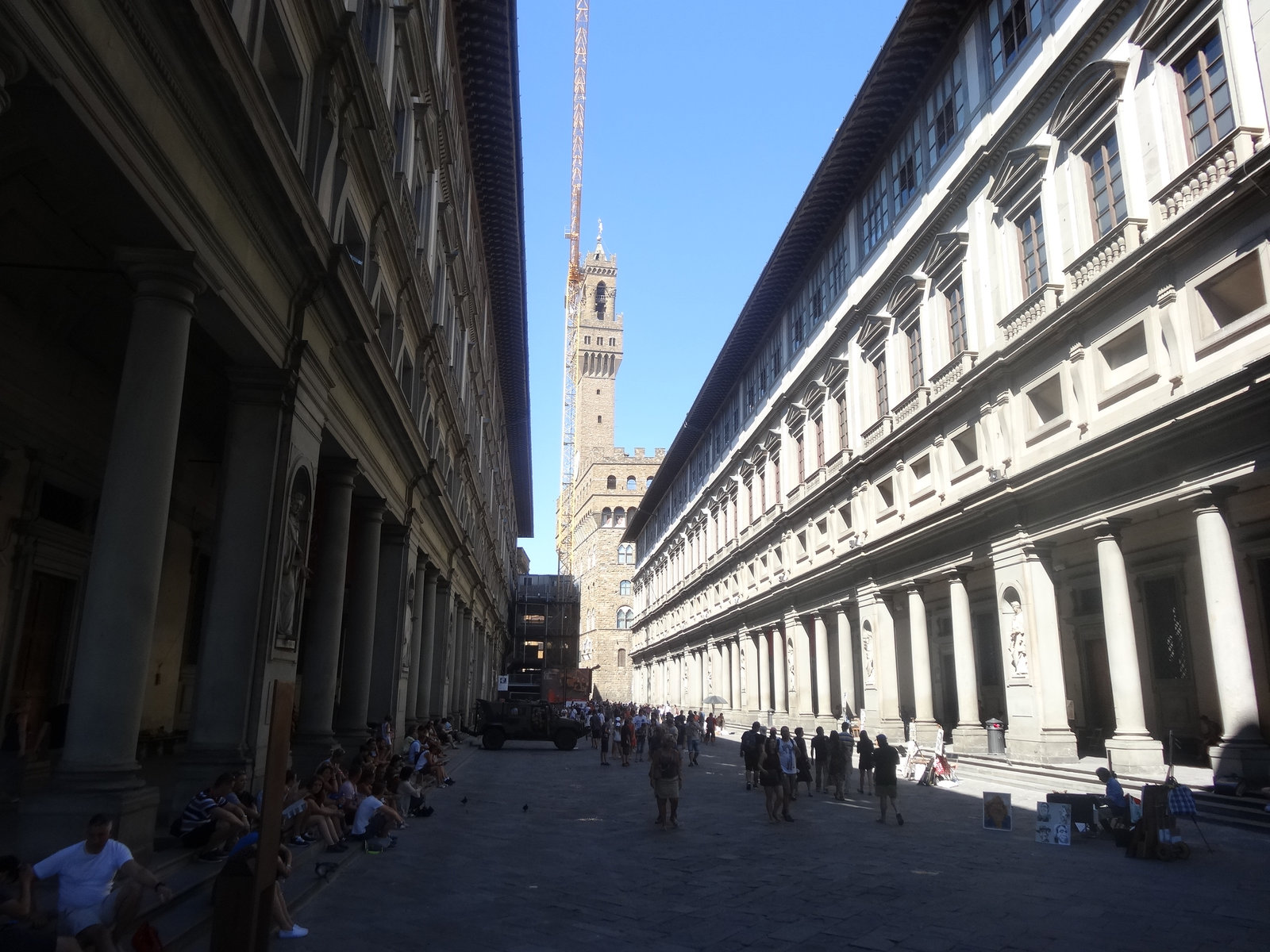
The Uffizi colonnade, Florence, with statues of famous Tuscans in the niches (photo: Jordiferrer, CC BY-SA 4.0, via Wikimedia Commons).
Portraits, all via Wikimedia Commons and cropped to fit: Fra Angelico: Luca Signorelli, public domain, Wikimedia Commons; Anna Maria Luisa de’ Medici: Antonio Franchi, public domain, Wikimedia Commons; Pietro Aretino: Titian, public domain, Wikimedia Commons; Gino Bartali: Fulgur Photo-Press (photographer unknown), public domain, Wikimedia Commons; Domenico Beccafumi: Domenico Beccafumi, public domain, Wikimedia Commons; Enrico Betti: Unknown author, public domain, Wikimedia Commons; Giovanni Boccaccio: Raffaello Sanzio Morghen / After Vincenzo Gozzini, public domain, Wikimedia Commons; Luigi Boccherini: Pompeo Batoni, public domain, Wikimedia Commons; Sandro Botticelli: Sandro Botticelli, public domain, Wikimedia Commons; Filippo Brunelleschi: Masaccio, public domain, Wikimedia Commons; Francesco Carrara: Unknown author, public domain, Wikimedia Commons; St Catherine of Siena: Le Tour du monde (ed. Édouard Charton), public domain, Wikimedia Commons; Roberto Cavalli: Manfred Werner (Tsui), CC BY-SA 3.0, Wikimedia Commons; Benvenuto Cellini: Giovanni Carlone, public domain, Wikimedia Commons; Cimabue: Giorgio Vasari, Le Vite (1568), public domain, Wikimedia Commons; Matteo Civitali: Arildto, CC0, Wikimedia Commons; Carlo Collodi: Unknown author, public domain, Wikimedia Commons; Dante Alighieri: Sandro Botticelli, public domain, Wikimedia Commons; Donatello: Frieda (it.wikipedia), CC BY-SA 3.0, Wikimedia Commons; Duccio di Buoninsegna: Giorgio Vasari, Le Vite (1767 ed.), public domain, Wikimedia Commons; Oriana Fallaci: GianAngelo Pistoia, CC BY 3.0, Wikimedia Commons; Giovanni Fattori: Giovanni Fattori, public domain, Wikimedia Commons; Galileo Galilei: Justus Sustermans, public domain, Wikimedia Commons; Lorenzo Ghiberti: Richardfabi, CC BY-SA 3.0, Wikimedia Commons; Domenico Ghirlandaio: Domenico Ghirlandaio, public domain, Wikimedia Commons; Giotto di Bondone: Frieda (it.wikipedia), CC BY-SA 3.0, Wikimedia Commons; Benozzo Gozzoli: Benozzo Gozzoli, public domain, Wikimedia Commons; Guccio Gucci: Unknown author, public domain, Wikimedia Commons; Francesco Domenico Guerrazzi: Unknown author, public domain, Wikimedia Commons; Pietro Alessandro Guglielmi: Unknown author, public domain, Wikimedia Commons; Francesco Guicciardini: Cristofano dell’Altissimo, public domain, Wikimedia Commons; Guido d’Arezzo: Ввласенко, CC BY-SA 3.0, Wikimedia Commons; Guittone d’Arezzo: Unknown engraver, public domain, Wikimedia Commons; Margherita Hack: Cassinam, CC BY-SA 3.0, Wikimedia Commons; Leonardo da Vinci: Attributed to Francesco Melzi, public domain, Wikimedia Commons; Leone Leoni: Leone Leoni (self-portrait medal), CC0, Wikimedia Commons; Filippino Lippi: Filippino Lippi, public domain, Wikimedia Commons; Filippo Lippi: Filippo Lippi, CC BY-SA 2.5, Wikimedia Commons; Ambrogio Lorenzetti: Giorgio Vasari, Le Vite (1568), public domain, Wikimedia Commons; Pietro Lorenzetti: Giovanni Battista Cecchi, public domain, Wikimedia Commons; Lorenzo de’ Medici, the Magnificent: Workshop of Bronzino, public domain, Wikimedia Commons; Niccolò Machiavelli: Santi di Tito, public domain, Wikimedia Commons; Simone Martini: Giovanni Battista Cecchi, public domain, Wikimedia Commons; Masaccio: Masaccio, public domain, Wikimedia Commons; Pietro Mascagni: Bushnell, San Francisco, public domain, Wikimedia Commons; Michelangelo Buonarroti: Attributed to Daniele da Volterra, public domain, Wikimedia Commons; Michelozzo: Giovanni Battista Cecchi, public domain, Wikimedia Commons; Amedeo Modigliani: Unknown author, public domain, Wikimedia Commons; Dario Niccodemi: Agence Rol, public domain, Wikimedia Commons; Antonio Pacinotti: Unknown author, public domain, Wikimedia Commons; Petrarch: Altichiero, public domain, Wikimedia Commons; Piero della Francesca: Giovanni Battista Cecchi, public domain, Wikimedia Commons; Pisanello: Antonio Marescotti, CC BY-SA 3.0, Wikimedia Commons; Nicola Pisano: Giorgio Vasari, Le Vite (1568), public domain, Wikimedia Commons; Pope Pius II: Fabrizio Garrisi, public domain, Wikimedia Commons; Antonio del Pollaiolo: Giorgio Vasari, Le Vite (1568), public domain, Wikimedia Commons; Jacopo Pontormo: Pontormo, public domain, Wikimedia Commons; Giacomo Puccini: Unknown author, public domain, Wikimedia Commons; Jacopo della Quercia: Giorgio Vasari, Le Vite (1568), public domain, Wikimedia Commons; Luca della Robbia: Giorgio Vasari, Le Vite (1568), public domain, Wikimedia Commons; Ippolito Rosellini: Unknown author, public domain, Wikimedia Commons; Pellegrino Rossi: Zéphirin Belliard, CC0, Wikimedia Commons; Rosso Fiorentino: Giorgio Vasari, Le Vite (1568), public domain, Wikimedia Commons; Giuliano da Sangallo: Piero di Cosimo, public domain, Wikimedia Commons; Andrea del Sarto: Andrea del Sarto, public domain, Wikimedia Commons; Luca Signorelli: Luca Signorelli, public domain, Wikimedia Commons; Pietro Tacca: Chabe01, CC BY-SA 4.0, Wikimedia Commons; Taddeo di Bartolo: Taddeo di Bartolo, public domain, Wikimedia Commons; Pietro Tenerani: Francesco Gaj (1835- 1907), public domain, Wikimedia Commons; Giorgio Vasari: Attributed to Jacopo Zucchi, public domain, Wikimedia Commons; Andrea del Verrocchio: Nicolas de Larmessin, public domain, Wikimedia Commons; Amerigo Vespucci: Unknown author, public domain, Wikimedia Commons. Where there is no picture, I couldn’t find one that was clearly free to use.