
When I lived in the hills above Pescia, Florence was the big city down the line. Close enough for a day out, far enough that you felt you’d been somewhere.
You can’t see Florence in a day. Nobody can. But you can have a very good day, and coming back to the hills in the evening, after the noise and the crowds, is part of the pleasure. Here’s my guide to the city, from our side of Tuscany.

Florence quick facts
- Province: Florence (the city is the capital of Tuscany and of its metropolitan city)
- Population: 361,625 (ISTAT estimate, 1 January 2026)
- Altitude: about 50 metres, on the Arno
- Main station: Firenze Santa Maria Novella (SMN), right in the centre
- Pistoia: about 37 km by road, or direct by train
- Lucca: about 76 km by road, roughly an hour, or direct by train
Visiting Florence
Getting there and parking
Take the train. Really. Don’t drive into Florence. The centre is a big ZTL and the fines arrive by post months later. One railway line ties our patch to Florence: Lucca, Pescia, Montecatini, Pistoia, Prato, Firenze Santa Maria Novella. Get off at SMN and you can walk almost everywhere. Check the last train home before you set off, and keep an eye out for strikes (sciopero).
- Pisa or Florence airport to Lucca, Pescia and Pistoia
- Getting around Tuscany: trains, buses or driving?
- Trains, buses and how not to get fined
- Driving in Tuscany: ZTL zones, fines, tolls and car hire
Good to know
- The ZTL. In the main sectors it runs Monday to Friday 7.30am to 8pm and Saturday 7.30am to 4pm. It’s off on Sundays and public holidays. From early April to early October there’s a night ZTL too. Santa Maria Novella station is inside the zone.
- Driving anyway? Park at Villa Costanza. It’s a car park right on the A1, between the Firenze Scandicci and Firenze Impruneta exits, and you can only get in from the motorway. It’s open 24 hours, with 457 spaces. The T1 tram runs to Alamanni-Stazione SMN in about 22 minutes, every 6 minutes at peak times. The tram ticket is €2 from the machines at the stop, separate from the parking.
- The Uffizi is shut on Mondays. It’s open Tuesday to Sunday, 8.15am to 6.30pm, with last entry at 5.30pm. It also closes on 1 January and 25 December.
- Trains. Pistoia to Santa Maria Novella takes 39 to 53 minutes.
Sources: Parcheggio Villa Costanza, Gallerie degli Uffizi, ztl-info.com and Trenitalia timetables (checked October 2026), checked October 2026.
A short history of Florence
Florence began as Florentia, a Roman colony for army veterans, probably founded in 59 BC by the Arno. The name means something like “may you flourish”.
In the Middle Ages it grew rich on wool, cloth and banking, and in the 15th century, under the Medici, it became the cradle of the Renaissance: Brunelleschi, Donatello, Botticelli, Leonardo and Michelangelo all worked here. It’s also where the Italian language took shape, from the Florentine of Dante, Petrarch and Boccaccio.
The Medici went on to rule all of Tuscany as Grand Dukes. From 1865 to 1871 Florence was the capital of the new Kingdom of Italy, before Rome took over. Its historic centre has been on UNESCO’s World Heritage list since 1982.
What to see in Florence
The Duomo. The cathedral of Santa Maria del Fiore, Giotto’s bell tower and the Baptistery, in white, green and pink marble. To climb Brunelleschi’s dome you need the Brunelleschi Pass with a booked slot. It’s 463 steps with no lift, narrow in places and steep near the top. Go up early, before the heat and the crowds.
Piazza della Signoria and the Uffizi. The Palazzo Vecchio and the outdoor statues of the Loggia dei Lanzi, with the Uffizi, the great gallery of Renaissance painting, right next door. Book a timed ticket.
The Accademia. Home of Michelangelo’s David. Book a timed ticket. The Uffizi and the Accademia are both closed on Mondays, so plan round it.
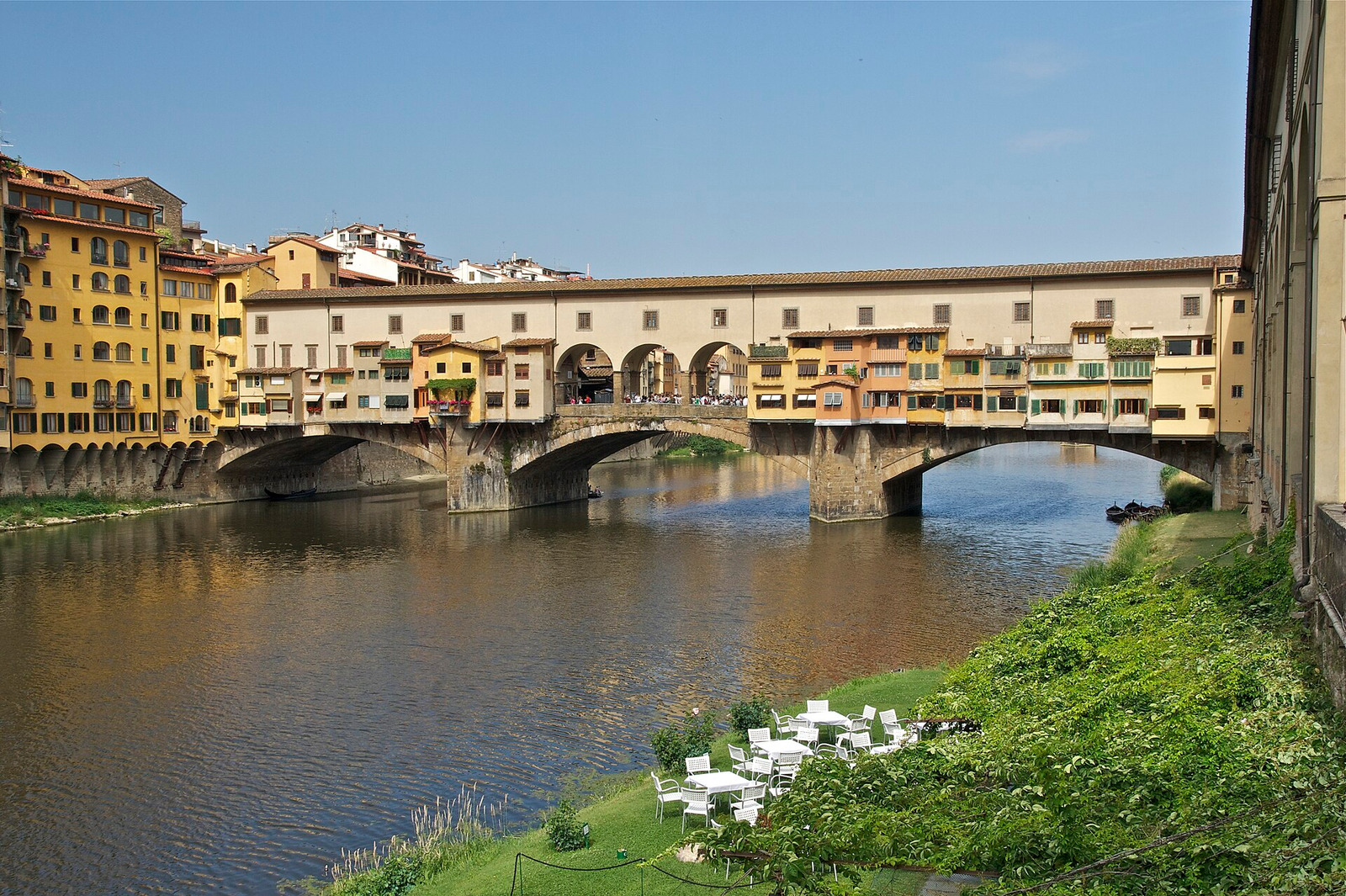
The Ponte Vecchio and the Oltrarno. Cross the old bridge, lined with jewellers’ shops, into the quieter side of the river and wander the artisans’ streets round Santo Spirito. If your legs are willing, the Boboli Gardens behind Palazzo Pitti are a lovely green escape.
Piazzale Michelangelo. Walk up before your train for the view over the whole city. It’s a climb, but that’s the Florence you’ll remember.
The markets. The Mercato Centrale in San Lorenzo is a covered food market with stalls upstairs, handy for lunch near the station. Sant’Ambrogio is the locals’ food market, and the Cascine has a huge general market on Tuesday mornings. My Florence day trip has a full plan for one day.


The villages of Florence
The comune of Florence is almost all city, but it takes in old villages that the city grew round, like Settignano and Ponte a Mensola in the hills to the east, Arcetri and Galluzzo to the south, and Peretola, by the airport. For real villages, see the rest of the province, or head west along the railway to our side of Tuscany.
All the villages of Florence (44)
Arcetri, Badia a Ripoli, Bandino, Baronta, Brozzi, Callai, Careggi, Cascine del Riccio, Castello, Coverciano, Croce di Via, Fusi, Galluzzo, Isolotto, La Lastra, Mantignano, Marignolle, Montignano, Mulino, Nave a Rovezzano, Novoli, Parigi, Peretola, Pian di San Bartolo, Piazza Calda, Pieve a Ripoli, Poggio Imperiale, Ponte a Ema, Ponte a Mensola, Ponte Nuovo, Pontignale, Rifredi, Rovezzano, Sacro Cuore, San Bartolo a Cintoia, San Felice a Ema, San Michele a Monteripaldi, San Silvestro, Serpiolle, Settignano, Sorgane, Trespiano, Ugnano, Varlungo
For the neighbouring towns, see Villages of Florence province.
Food and festas
For lunch, head to the Mercato Centrale or find a small trattoria in a side street. Avoid anywhere with photos of the food outside.
Florence’s big days are Easter Sunday, when a cart of fireworks is set off outside the Duomo in the Scoppio del Carro, and 24 June, the feast of San Giovanni, the patron saint, with the final of the Calcio Storico. See my Easter in Tuscany and Tuscany’s big festivals posts.
Where to stay
Florence is the easiest base for trains, but it’s the most expensive and the busiest. Pistoia or Prato are cheaper, and only a short train ride away. For the bigger picture, my where to stay in Tuscany guide weighs up villages, towns and agriturismi, and where to stay near Lucca and the Svizzera Pesciatina covers my old patch.
Useful numbers
In any emergency, call 112. The main hospital is Careggi, Largo Brambilla 3, with a 24-hour Pronto Soccorso (A&E). For children, the Meyer children’s hospital, Viale Pieraccini 24, has its own 24-hour A&E.
Every other number you might need, from the doctor to the train strike line, is in my useful numbers in Tuscany post.
Map
Florence is one of the towns of Florence province. See Florence on the Florence page, or browse all of Villages of Tuscany.
Susan x
Photo credits: The Ponte Vecchio over the Arno, Florence (photo: Jebulon, CC0, via Wikimedia Commons); The Duomo at dusk, from Piazzale Michelangelo (photo: Petar Milošević, CC BY-SA 4.0, via Wikimedia Commons); The Palazzo Vecchio on Piazza della Signoria (photo: Txllxt TxllxT, CC BY-SA 4.0, via Wikimedia Commons).