Throw a stone in Tuscany and you’ll hit a masterpiece. Then you’ll be arrested, so don’t. But it’s true: a lot of the artists you learnt about at school were born here, from Giotto to Leonardo and Michelangelo, and on to Modigliani.
This is my who’s who, roughly in date order, with where you can see their work today. It’s not every Tuscan artist. It’s the ones you’re most likely to bump into on a trip.
The Middle Ages: Florence, Siena and Pisa
Cimabue (c. 1240–c. 1302), Florence
One of the last great painters in the Byzantine style, and one of the first to move away from it towards something more lifelike. His big painted crucifix in Santa Croce was badly damaged in the 1966 flood. There’s another in San Domenico, Arezzo. Vasari says he discovered the young Giotto.
Giotto di Bondone (c. 1267–1337), Florence
Often called the father of Western painting, because his people look solid and feel real. He painted the Scrovegni Chapel in Padua and, in Florence, the Bardi and Peruzzi chapels in Santa Croce. His painted Crucifix in Santa Maria Novella dates from about 1290 to 1300. He also designed the cathedral bell tower, which still carries his name.
Duccio di Buoninsegna (c. 1255–c. 1319), Siena
The founder of the Sienese school. His Maestà, the Virgin in majesty, was carried in procession to Siena cathedral in 1311. You can see it in the Museo dell’Opera del Duomo.

Simone Martini (c. 1284–1344), Siena
The great Sienese painter after Duccio, all elegance and gold. His Maestà fills a wall of the Palazzo Pubblico in Siena, and he finished his career at the papal court in Avignon.
Pietro (c. 1280–1348) and Ambrogio Lorenzetti (c. 1290–1348), Siena
Brothers, both probably killed by the Black Death in 1348. Ambrogio painted the Allegory of Good and Bad Government in Siena’s Palazzo Pubblico, one of the first big pictures of everyday town and country life. Pietro’s frescoes are in the Lower Church at Assisi.
Nicola Pisano (c. 1220–c. 1284), Apulia, and his son Giovanni (c. 1250–c. 1315), Pisa
Father and son, and the most important sculptors of their day. Nicola’s pulpit in the Pisa Baptistery dates from 1260, and he made another for Siena cathedral. Giovanni carved pulpits for Sant’Andrea in Pistoia and for Pisa cathedral, plus the front of Siena cathedral.
The early Renaissance
Jacopo della Quercia (c. 1374–1438), Siena
A Sienese sculptor who worked in Lucca, Siena and Bologna. His tomb of Ilaria del Carretto in Lucca cathedral is one of the loveliest things in Tuscany. He also made the Fonte Gaia in Siena’s Campo, now a copy, with the originals in Santa Maria della Scala.

Filippo Brunelleschi (1377–1446), Florence
A goldsmith turned architect, who worked out the rules of perspective and then built the dome of Florence cathedral without the usual wooden framework. Also his: the Foundling Hospital, San Lorenzo and Santo Spirito.
Lorenzo Ghiberti (1378–1455), Pelago
Ghiberti won the 1401 competition for the Florence Baptistery doors, beating Brunelleschi. His second set, the Gates of Paradise, took him decades. The originals are in the Museo dell’Opera del Duomo. The ones on the Baptistery are copies.
Donatello (c. 1386–1466), Florence
The greatest sculptor of the early Renaissance, in marble, bronze and wood. He trained in Ghiberti’s workshop. His bronze David, once in the Medici palace, is now in the Bargello. He also made the outdoor pulpit at Prato cathedral with Michelozzo.
Luca della Robbia (c. 1400–1482), Florence
He started in marble, with the singing gallery for Florence cathedral, now in the Museo dell’Opera. Then he perfected glazed terracotta in white and blue, and the family workshop carried it on for generations. Once you spot della Robbia work, you’ll see it everywhere.
Masaccio (1401–1428), San Giovanni Valdarno
Masaccio died at 26 and changed painting anyway. His frescoes in the Brancacci Chapel in Florence, and his Trinity in Santa Maria Novella, gave figures real weight and real space. His early San Giovenale triptych is in the Museo Masaccio d’Arte Sacra at Cascia di Reggello.

Fra Angelico (c. 1395–1455), near Florence
A Dominican friar and painter. His frescoes are in the cells of San Marco in Florence, where he lived, and his Annunciation is in the Museo Diocesano in Cortona.
Filippo Lippi (c. 1406–1469), Florence
An orphan who grew up in the Carmelite friary in Florence, where Masaccio was painting the Brancacci Chapel. He painted the main chapel of Prato cathedral, and caused a scandal there with his relationship with Lucrezia Buti, a nun. Their son Filippino became a painter too.

Michelozzo (1396–1472), Florence
The Medici’s architect. He built the Palazzo Medici in Via Larga and rebuilt the convent of San Marco.
Sassetta (c. 1392–1450), Siena
A Sienese painter of fairy-tale colour. His Madonna of the Snow is in the Uffizi collections, part of the Contini Bonacossi gift.
Matteo Civitali (1436–1501), Lucca
Lucca’s own Renaissance sculptor and architect. He made the Tempietto in Lucca cathedral that holds the Volto Santo.
Andrea del Verrocchio (1435–1488), Florence
A sculptor and painter whose workshop trained the next generation, including Leonardo. His bronze David is in the Bargello.
Domenico Ghirlandaio (1449–1494), Florence
Florence’s top fresco painter of his day, with a busy workshop where the young Michelangelo trained. His frescoes are in Santa Maria Novella, Santa Trinita, and the Santa Fina chapel in San Gimignano.
Sandro Botticelli (1445–1510), Florence
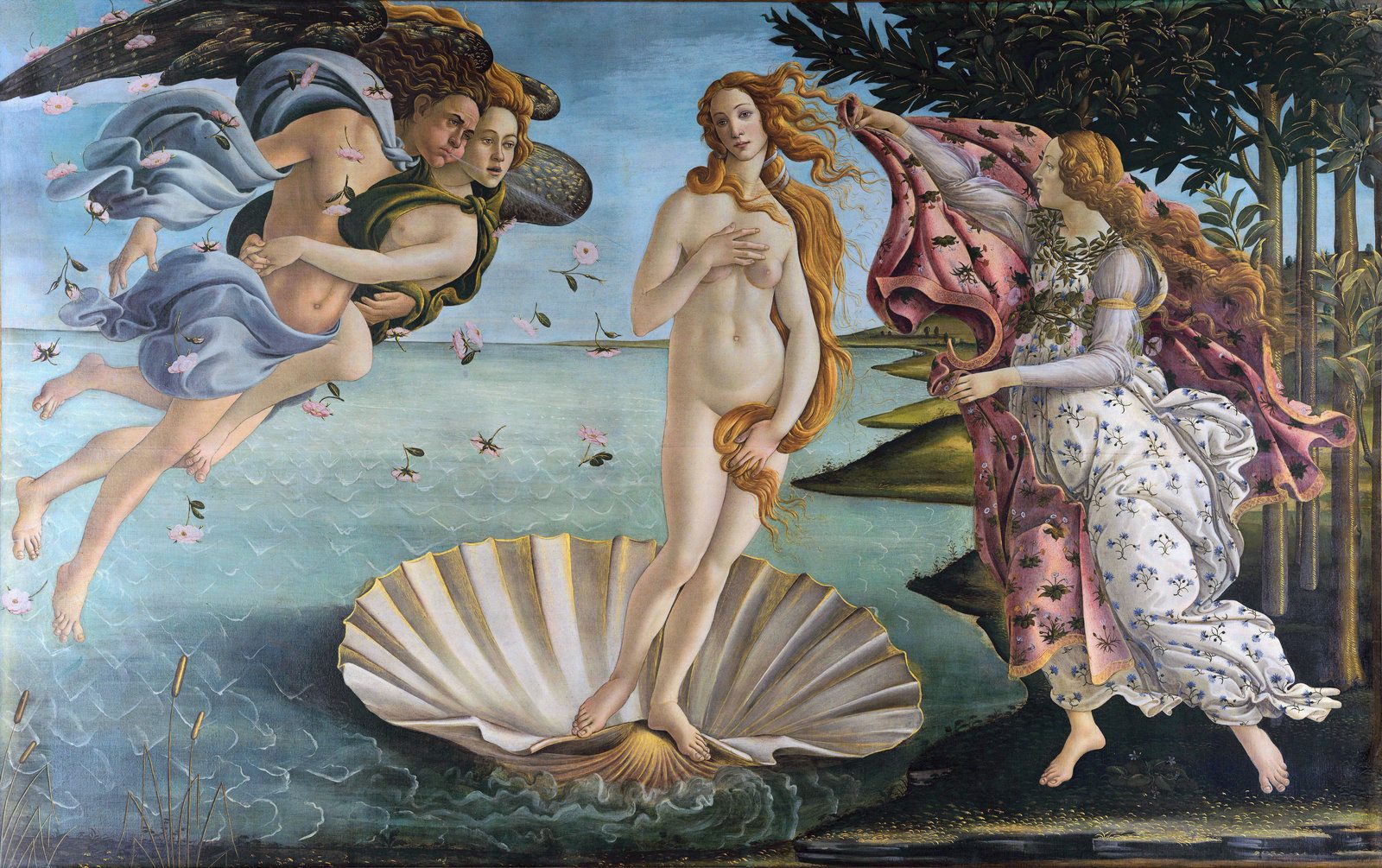
Trained with Filippo Lippi, and became a favourite of the Medici circle. The Birth of Venus and Primavera are both in the Uffizi.

The High Renaissance and Mannerism
Leonardo da Vinci (1452–1519), Vinci
Born in Vinci, west of Florence, and trained with Verrocchio. Painter, engineer, anatomist and more. Most of his paintings are outside Tuscany now, but the Uffizi has his Annunciation and his unfinished Adoration of the Magi. Vinci has a museum about him.

Michelangelo Buonarroti (1475–1564), Caprese
Born in Caprese, east of Florence near Arezzo, and raised in Florence. Sculptor, painter, architect and poet. In Florence you’ll find his David in the Accademia, the New Sacristy at San Lorenzo, and his tomb in Santa Croce.

Luca Signorelli (c. 1450–1523), Cortona
A Cortona painter who did nine of the St Benedict scenes at Monte Oliveto Maggiore, as well as his famous frescoes in Orvieto cathedral.
Andrea del Sarto (1486–1530), Florence
Admired for his flawless drawing and soft colour. His frescoes are in the cloisters of Santissima Annunziata and the Chiostro dello Scalzo.
Jacopo Pontormo (1494–1557), near Empoli
According to Vasari, he spent time with Leonardo and worked under Andrea del Sarto. His Deposition in Santa Felicita, Florence, is Mannerism at its strangest and most beautiful.
Domenico Beccafumi (c. 1486–1551), Siena
A farmer’s son taken up by his family’s landlord, Lorenzo Beccafumi, whose name he took. He’s Siena’s great Mannerist and worked on the marble floor of the cathedral.
Benvenuto Cellini (1500–1571), Florence
Goldsmith, sculptor and brawler. His bronze Perseus is in the Loggia dei Lanzi, and his autobiography is a cracking read.
Giorgio Vasari (1511–1574), Arezzo
Painter and architect, he built the Uffizi for the Medici. He’s best known for his Lives of the artists, first published in 1550, which is where a lot of these stories come from. His house in Arezzo is open to visit.
Later on
Pietro Tacca (1577–1640), Carrara
He made the four bronze Moors, the Quattro Mori, on the monument to Ferdinando I in Piazza Micheli, Livorno. The marble statue of Ferdinando on top is by Giovanni Bandini.
Pietro Tenerani (1789–1869), Carrara
A neoclassical sculptor who trained with Canova and Thorvaldsen in Rome and spent most of his career there.
Giovanni Fattori (1825–1908), Livorno
The leading painter of the Macchiaioli, who painted in patches of light and shade. He trained at the Accademia di Belle Arti in Florence. The best place to see him is the Museo Fattori in Livorno.

Amedeo Modigliani (1884–1920), Livorno
Born in Livorno to a Jewish family, he studied there before moving to Paris, where he painted his long-necked portraits. He died young, at 35.

Where to see them
- Florence: the Uffizi, the Bargello, the Accademia, the Museo dell’Opera del Duomo, San Marco, the Brancacci Chapel and Santa Croce. See my Florence day trip post.
- Siena: the Museo dell’Opera, the Palazzo Pubblico and the Pinacoteca Nazionale.
- Lucca: the cathedral for Jacopo della Quercia and Civitali. See my Lucca page.
- Pisa: the Pisano pulpits and the Museo di San Matteo. See Pisa beyond the Leaning Tower.
- Prato: Lippi in the cathedral. See my Prato page.
- Livorno: the Museo Fattori and the Quattro Mori. See my Livorno page.
To see these works for yourself, follow my Tuscan art trail. And for every famous Tuscan in one list, artists and everyone else, see my Famous Tuscans A to Z.
You might also enjoy:
- San Gimignano, Volterra and Pienza: three Tuscan hill towns
- A Florence day trip from Lucca, Pescia or Pistoia
- A rainy day in Lucca, Pescia and Pistoia
Susan
Photo credits
Photo credits: Duccio, the Maestà, Museo dell’Opera del Duomo, Siena (photo: Zairon, CC0, via Wikimedia Commons); Jacopo della Quercia, tomb of Ilaria del Carretto, Lucca Cathedral (photo: Sailko, CC BY 3.0, via Wikimedia Commons); Masaccio, The Tribute Money, Brancacci Chapel, Florence (public domain, via Wikimedia Commons); Filippo Lippi, Herod’s Banquet, Prato Cathedral (public domain, via Wikimedia Commons); Sandro Botticelli, The Birth of Venus, Uffizi, Florence (public domain, via Wikimedia Commons); Leonardo da Vinci, presumed self-portrait, red chalk (Biblioteca Reale, Turin) (public domain, via Wikimedia Commons); Michelangelo, unfinished portrait attributed to Daniele da Volterra (public domain, via Wikimedia Commons); Giovanni Fattori, La Rotonda dei Bagni Palmieri (1866) (public domain, via Wikimedia Commons); Amedeo Modigliani, Jeanne Hébuterne (1918), Norton Simon Museum (CC0, via Wikimedia Commons).