Last updated: October 2026
You don’t need to know any history to love Tuscany. But it helps. Suddenly the towers, the walls and the hilltop villages all make sense.
So here’s my short history of Tuscany, from the Etruscans to now, with the places you can still see it. No exam at the end.
Etruscans and Romans
Long before Rome, the Etruscans ran central Italy. From around the 8th century BC they built towns such as Arezzo, Cortona, Fiesole and Volterra. Their language still isn’t fully understood, which only makes them more intriguing. They were farmers too, and good ones.

Rome gradually swallowed them up, and the Etruscan language and culture faded. The Romans founded new towns, Florence among them, in the 1st century BC, and built roads that tied the whole lot together. Christianity spread here early.

The Western Roman Empire fell in 476. What followed was messy: the Goths, then the long war between the Goths and the Byzantines in the 500s, then the Lombards from the north and the Franks after them. People wanted to be safe, so they built on hilltops and put walls round everything. That’s why so many Tuscan villages sit where they do, and why you’ll see towers, castles and fortresses everywhere you drive.
Rival republics: the 1100s to the 1300s
By the 1100s, many Tuscan cities were running themselves as independent communes. Florence, Pisa, Siena and Lucca got rich on cloth, trade, farming and banking. Pisa was a sea power, one of the maritime republics with Venice, Genoa and Amalfi, trading right across the Mediterranean.
The cities fought each other constantly, but slowly Florence came out on top. By 1300 it was one of the biggest and richest cities in Europe.

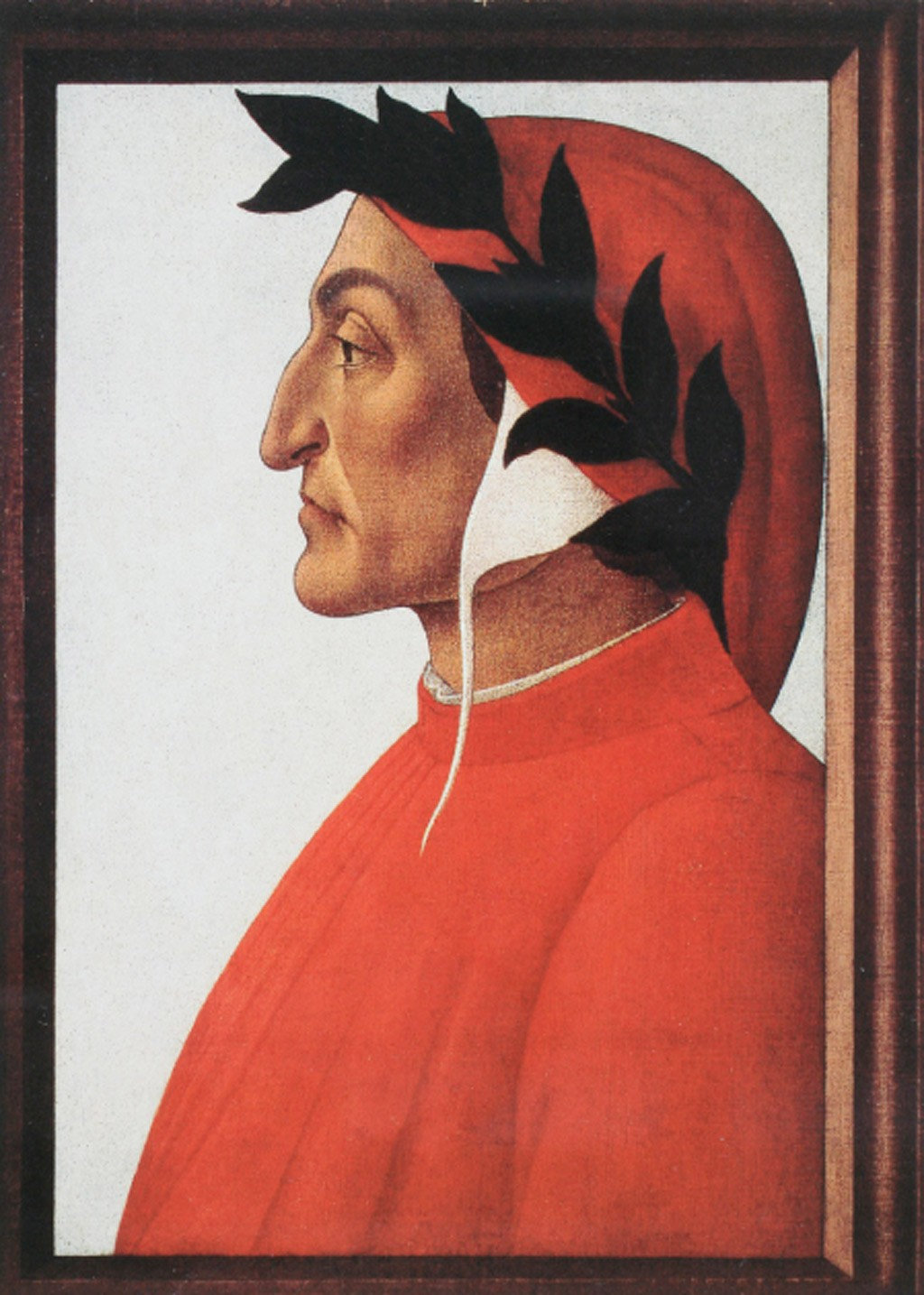
This is when Italian literature really begins, with Dante, Petrarch and Boccaccio writing in Tuscan. Painters were changing too: Cimabue and Giotto in Florence, and Duccio, Simone Martini and the Lorenzetti brothers in Siena. Nicola Pisano was doing the same for sculpture. All of it set the stage for the Renaissance.
The Renaissance: the 1400s
The 1400s are when the Renaissance properly takes off, and Florence is at the heart of it. Brunelleschi, Donatello, Masaccio, Botticelli, and then the young Leonardo and Michelangelo. Leonardo is the classic Renaissance man: painter first, but also writing about anatomy, machines and water.
Much of this was paid for by the Medici, a banking family who turned money into political power. They built the Palazzo Medici, now the Palazzo Medici Riccardi, and filled it with art. Donatello’s bronze David once stood in its courtyard. Lorenzo the Magnificent was the most famous of them all.

Upheaval and Mannerism: the 1500s
The 1500s were rough for Italy. France and Spain fought over it, and the Medici were thrown out of Florence and came back more than once. Machiavelli wrote The Prince in the middle of all this.
The arts kept going regardless. Michelangelo finished his David in 1504. From the 1520s, painters like Pontormo in Florence and Beccafumi in Siena took the Renaissance style somewhere stranger and more stylised: Mannerism. In the end the Medici came out on top, as Grand Dukes of Tuscany.
Grand Dukes and the Baroque: the 1600s and 1700s
The Medici Grand Dukes ruled Tuscany until the family died out in 1737. Then Tuscany passed to the House of Habsburg-Lorraine. It was a fairly quiet time, and the Lorraine dukes did a fair bit of reforming.
Churches got Baroque makeovers: curves, twisting columns, gilding and lots of it. The Church also pushed back hard on new ideas. Galileo worked in Florence under Medici protection from 1610, but in 1633 he was tried in Rome and forced to recant his support for a Sun-centred universe.

This was also the age of the Grand Tour. Young gentlemen from all over Europe came to Italy to see the classical sites and the Renaissance, and Florence was a must.
Napoleon and a united Italy: the 1800s
Napoleon invaded Italy in 1796, and the French army reached Florence in 1799. French rule lasted until 1815. It left a taste for a united Italy, and after decades of uprisings the Kingdom of Italy was declared in 1861 under Victor Emmanuel II.
Florence was the capital of Italy from 1865 to 1871, before the government moved to Rome. Cities were modernised, and new theatres went up, including Pisa’s Teatro Verdi. This was Puccini’s century too, and in the 1880s Carlo Collodi, born in Florence, gave the world Pinocchio.
Wars and Fascism: 1900 to 1945
The new Italy was poor in many places, and the countryside was emptying. Millions of Italians emigrated, mostly from the south. Florence, though, was still a magnet for foreign writers. E. M. Forster set A Room with a View there.
Italy entered the First World War in 1915. The hardship afterwards fed extremist politics, and in 1922 Benito Mussolini became prime minister after the March on Rome. Within a few years he’d turned Italy into a dictatorship. Florence and much of Tuscany were Fascist strongholds.
In 1940 Mussolini took Italy into the Second World War alongside Germany. The Allies landed in Sicily in 1943, and Tuscany was fought over in 1944. Partisan groups were active in the hills. In August 1944 the retreating Germans blew up every bridge in Florence except the Ponte Vecchio.
Modern Tuscany
After the war came the rebuilding. Then, on 4 November 1966, the Arno flooded Florence. In places the water was around six metres deep, and mud covered churches, libraries and museums. Volunteers came from all over the world to help, and many works of art took decades to restore.

Since then tourism, fashion and food have done well, and the countryside has found new life with farm stays and foreign buyers (hello). Books and films like Under the Tuscan Sun did their bit.
And the past is still very much alive. The Scoppio del Carro in Florence, the Palio in Siena, and flag-throwers in piazzas all over Tuscany. See my Tuscan festivals post for dates.
Where to see Tuscan history
- Etruscans: Volterra’s Porta all’Arco and Guarnacci museum, and the Etruscan museum in Cortona. See my Volterra page.
- The Middle Ages: the towers of San Gimignano, the walls of Lucca, and Siena’s Palazzo Pubblico. See my hill towns post.
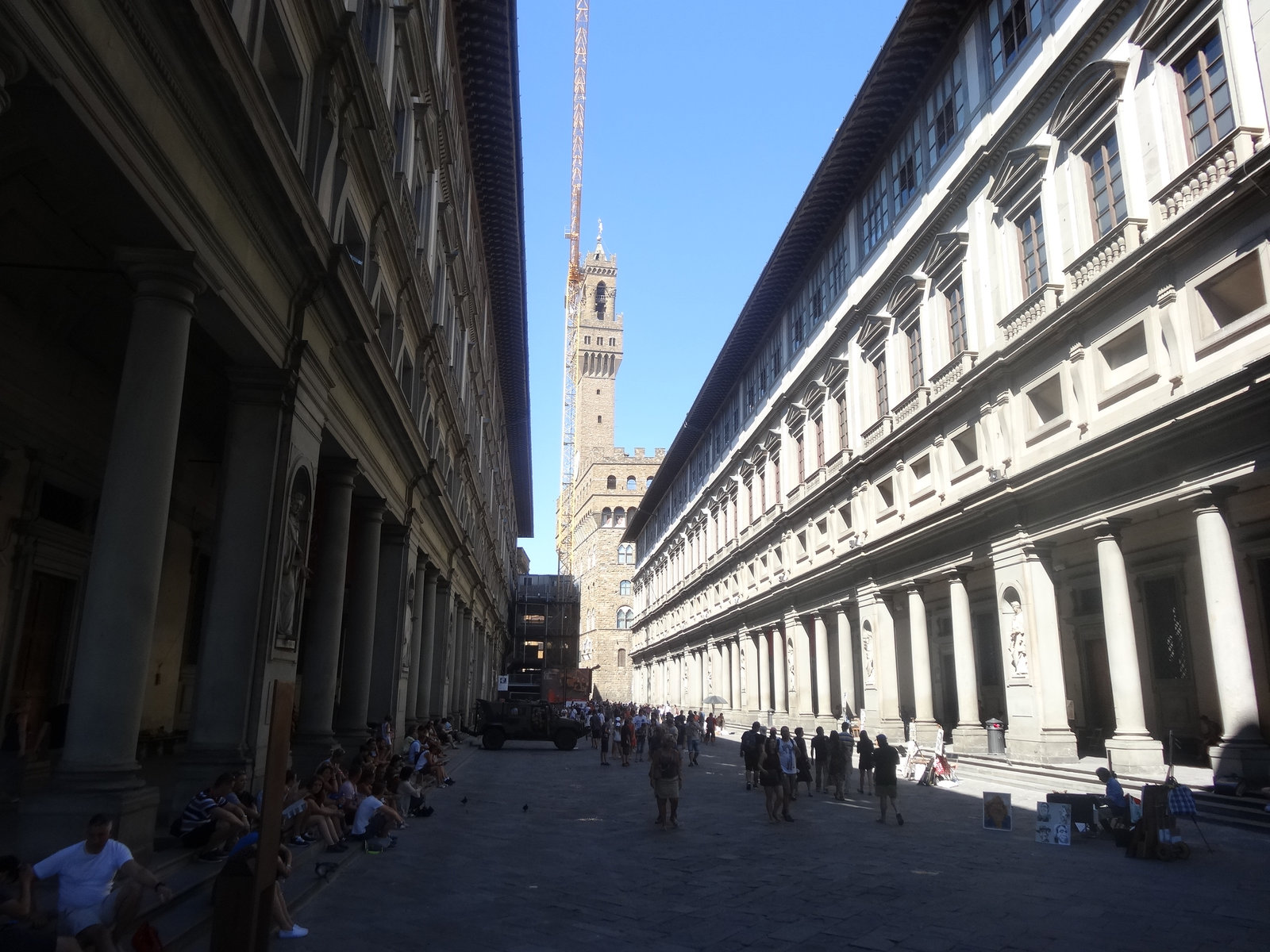
- The Medici: the Palazzo Medici Riccardi, the Uffizi and the Medici Chapels in Florence.
- Galileo: the Museo Galileo in Florence and his tomb in Santa Croce.
- Walled villages: the ten castles of the Svizzera Pesciatina. See my Dieci Castella route.

Want to know who’s who? My Famous Tuscans A to Z has every famous Tuscan on the site, with what they did and where they came from.
You might also enjoy:
- Tuscan festivals: the Palio, the Giostra and the Luminara
- San Gimignano, Volterra and Pienza
- Best day trips from Lucca
Susan
Photo credits: Porta all’Arco, Volterra (photo: Diego Baglieri, CC BY-SA 4.0, via Wikimedia Commons); The Chimera of Arezzo, Etruscan bronze, Museo Archeologico Nazionale, Florence (photo: sailko, CC BY-SA 3.0, via Wikimedia Commons); Ambrogio Lorenzetti, Effects of Good Government in the City, Palazzo Pubblico, Siena (public domain, via Wikimedia Commons); Lorenzo the Magnificent, portrait by Giorgio Vasari (public domain, via Wikimedia Commons); Galileo before the Holy Office, by Joseph-Nicolas Robert-Fleury (1847) (public domain, via Wikimedia Commons); A plaque marking the 1966 flood level, Florence (photo: Panek, CC BY-SA 4.0, via Wikimedia Commons); The Palazzo dei Priori, Volterra (photo: Renato camilli, CC BY-SA 4.0, via Wikimedia Commons).