Here’s the thing about Tuscany. You don’t have to queue for the Uffizi to see world-class art. Half of it is sitting in a village church down the road, with the lights on a coin meter and nobody else there.
This is my art trail. It starts close to home, around Lucca, Pistoia, Prato and Pisa. Then it does Florence (briefly, I promise). Then it heads south to Siena, the hill towns and Arezzo. Pick a stretch, not the lot.
Close to home: Lucca, Pistoia, Prato and Pisa
Lucca
Lucca is the city of a hundred churches, and it’s not far off. Start with the cathedral of San Martino. Inside is the Volto Santo, a carved wooden crucifix that’s carried through the streets every 13 September for the Luminara di Santa Croce. Also inside is Jacopo della Quercia’s tomb of Ilaria del Carretto. She’s carved in marble with a little dog at her feet. Lovely.

Then do San Michele in Foro, with its wedding-cake marble front, and San Frediano, with a golden mosaic on the facade and a big carved Romanesque font inside. San Giovanni, next to the cathedral, has excavations under the floor going back to Roman times.

For paintings, there are two national museums: Villa Guinigi (sculpture and paintings from Lucca’s churches) and Palazzo Mansi, a grand palace with a picture gallery. Puccini was born here too, and his birthplace is now the Puccini Museum. He’s not buried in Lucca, mind. He’s at his villa in Torre del Lago.
And climb something. The Guinigi tower has oak trees growing on the top, and the Torre delle Ore still keeps the time. Then walk or cycle the walls, about 4.2 km round.
Pistoia
Pistoia gets overlooked, which is daft. The cathedral of San Zeno has the silver altar of San Jacopo, worked on by goldsmiths over about two centuries. Brunelleschi made two small figures for it before he turned to buildings.
Then go pulpit-hunting. Sant’Andrea has a marble pulpit by Giovanni Pisano, finished in 1301. San Giovanni Fuorcivitas has one by Fra Guglielmo, a della Robbia Visitation in glazed terracotta, and a striped green and white side that you can’t miss.
Don’t leave without looking up at the old Ospedale del Ceppo. Its porch has a long frieze of glazed terracotta showing the Works of Mercy, made in the della Robbia style. The Marino Marini museum is here too. Marini was born in Pistoia in 1901.

Come in July for the Giostra dell’Orso on the 25th, Pistoia’s joust for San Jacopo.
Prato
Prato’s cathedral has the outdoor pulpit by Donatello and Michelozzo, from which the Holy Girdle (the Virgin’s belt, so the story goes) is shown to the crowds on feast days. The original panels are kept in the cathedral museum. Inside the cathedral, Filippo Lippi’s frescoes of the lives of St Stephen and St John the Baptist fill the main chapel.
Also in Prato: Santa Maria delle Carceri by Giuliano da Sangallo, the Castello dell’Imperatore built for Frederick II, the Textile Museum, and the Centro Pecci for contemporary art. Paintings including works attributed to Caravaggio and Giovanni Bellini hang in the Palazzo degli Alberti. And look out for Henry Moore’s big marble sculpture in Piazza San Marco.
Pisa
Yes, the Tower. But the Campo dei Miracoli is a full art lesson. The Baptistery has Nicola Pisano’s pulpit from 1260. His son Giovanni carved the pulpit in the cathedral. It was damaged in the fire of 1595, packed away for centuries, and put back together in 1926. Then there’s the Camposanto, and the Museo delle Sinopie with the drawings found under its frescoes.

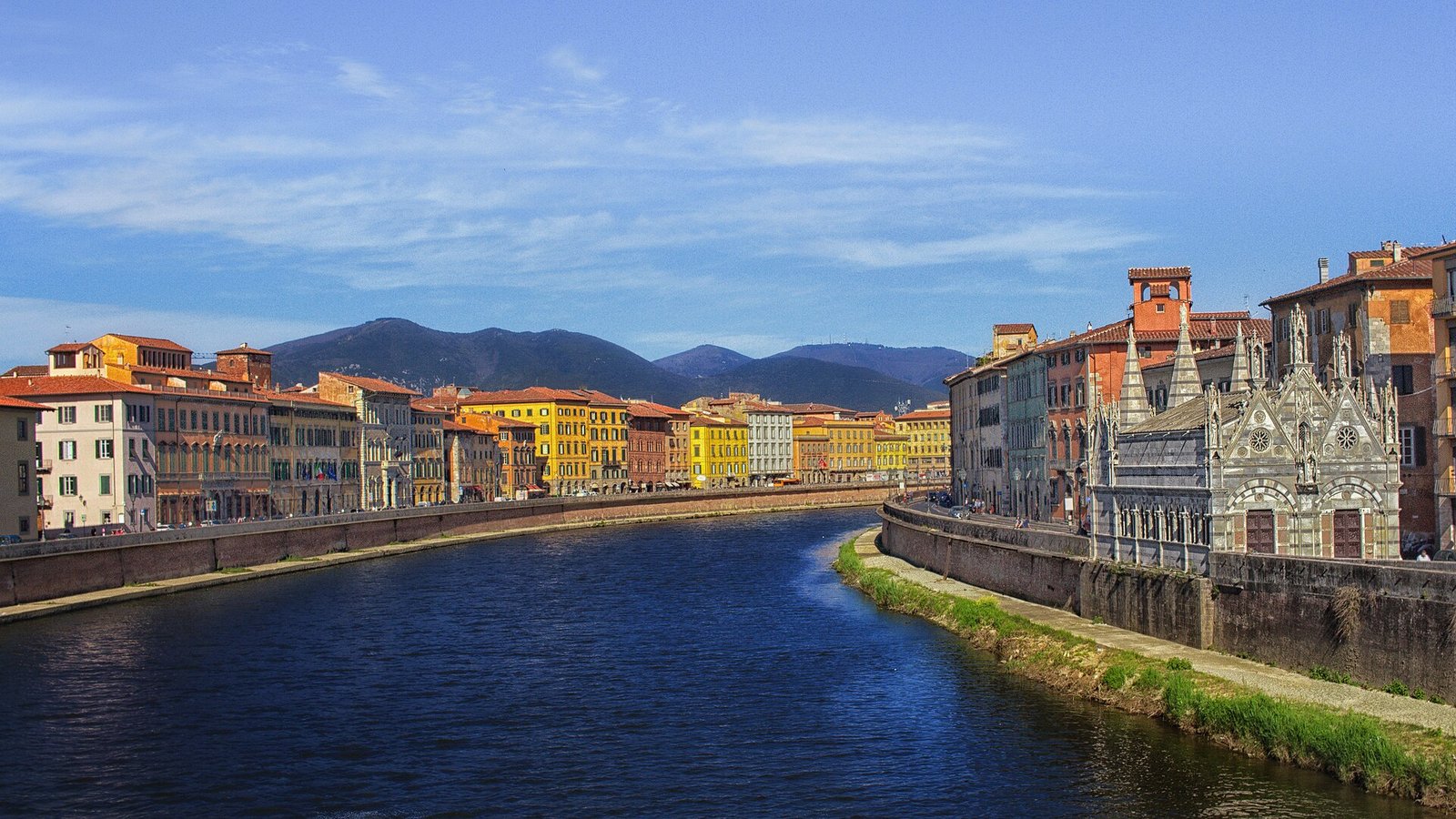
Away from the crowds, the Museo Nazionale di San Matteo has a superb collection of medieval painting and sculpture. Santa Maria della Spina is a tiny Gothic jewel box on the Arno, and Piazza dei Cavalieri was redesigned by Vasari for the Medici.
June is the month for Pisa. The Luminara is on the evening of 16 June, when more than 100,000 little lights line the river. The Palio di San Ranieri boat race is the next day, 17 June, and the Gioco del Ponte is on the last Saturday of the month. More in my Pisa beyond the Leaning Tower post.
Collodi and Vinci
Collodi is just along the valley from Pescia. The Parco di Pinocchio opened in 1956, and it’s art as well as play: Emilio Greco’s big bronze of Pinocchio and the Fairy, and Venturino Venturi’s mosaic square. Kids love it, and grown-ups secretly do too. See my Tuscany with kids post.

Vinci, Leonardo’s home town, is a pretty drive away. The Museo Leonardiano, in and around the old castle, opened in 1953 and is full of models built from his drawings. His traditional birthplace is a short way outside town at Anchiano.
Pietrasanta, Carrara, Massa and Livorno
Up on the coast, Pietrasanta is a working town for sculptors, with marble and bronze studios everywhere and big modern pieces dotted around the piazzas. Fernando Botero painted the frescoes in the little Chiesa della Misericordia in 1993. The Museo dei Bozzetti keeps sculptors’ models and sketches.

Carrara is where the marble comes from. Go up to the quarries, and then see the Museo del Marmo and the cathedral. In Massa, the Palazzo Ducale is on the main square. The Malaspina castle above town has been closed for works, so check before you climb up.

Livorno has the Museo Civico Giovanni Fattori, in Villa Mimbelli, for the Macchiaioli painters. Then walk past the Fortezza Vecchia and the Fortezza Nuova and have a nose round the old covered market.
Getting there and parking
Lucca, Pescia, Montecatini, Pistoia, Prato and Florence are all on the same railway line, so you can do this bit without a car. Pisa is a short train hop from Lucca. Collodi, Vinci and the coast are easier by car, or by bus with a bit of patience. My Tuscany without a car guide has the details.
Driving? Every one of these towns has a ZTL, a no-entry zone for cars in the centre. Park outside the walls and walk in. Read my driving in Tuscany guide before you go anywhere near one.
Florence and Fiesole
You could spend a month in Florence and not see it all. So here’s my short list. The Uffizi, obviously, but book ahead. The Accademia for Michelangelo’s David. The Bargello for sculpture, including Donatello’s bronze David. The Brancacci Chapel for Masaccio. San Marco for Fra Angelico’s frescoes in the monks’ cells. The Museo dell’Opera del Duomo for the original panels of Ghiberti’s Gates of Paradise. Santa Croce. Palazzo Pitti. The Medici Chapels. And the Museo Galileo, if science is more your thing.

Florence does festivals well too: the Scoppio del Carro on Easter Sunday (see my Easter in Tuscany post) and the Rificolona lantern festival on 7 September. My Florence day trip post has how to get there from our side of Tuscany.
Fiesole sits on the hill above Florence. It’s cooler, calmer, and has a Roman theatre and archaeological park, the Museo Bandini for religious art, and a cathedral. Go in the late afternoon for the view back down.
Further afield: Siena and the south
Siena
Siena’s cathedral is the stripy wonder you’ve seen in photos. Inside is the Piccolomini Library with its brilliant frescoes. Duccio’s Maestà is in the Museo dell’Opera next door. The Palazzo Pubblico has Ambrogio Lorenzetti’s Good and Bad Government frescoes. Then there’s the Pinacoteca Nazionale, Santa Maria della Scala (an old hospital, now a museum) and the Palazzo Chigi-Saracini, home to the Accademia Chigiana music school.
The Palio is run on 2 July and 16 August. Hot, packed and unforgettable. More in my Tuscan festivals post.
San Gimignano and Volterra
In San Gimignano, head for Sant’Agostino. Benozzo Gozzoli painted the life of St Augustine around the choir in 17 scenes, in 1464 to 1465. His St Sebastian in the same church is dated 1464. The Collegiata is covered in frescoes, with Ghirlandaio in the Santa Fina chapel, and the Museo Civico has Lippo Memmi’s Maestà in the Sala di Dante.

Volterra is older than all of them. The Porta all’Arco is an Etruscan gate, the Guarnacci museum is packed with Etruscan urns, and the Palazzo dei Priori is one of the oldest town halls in Tuscany. Rosso Fiorentino’s Deposition is in the Pinacoteca. Come in August for the medieval festival, Volterra AD 1398. See my hill towns post.

Pienza, Montepulciano and Montalcino
Pienza was rebuilt by Pope Pius II, who was born here, as a model Renaissance town. Bernardo Rossellino designed the square, the Palazzo Piccolomini and the cathedral, which sits on sloping ground and has been leaning a bit ever since. Outside town is the old Pieve di Corsignano.
Montepulciano has San Biagio, Antonio da Sangallo the Elder’s church below town, a cathedral built from 1594 to 1680 with Taddeo di Bartolo’s big altarpiece, and the Marzocco lion on its column. The Bravio delle Botti barrel race is on the last Sunday of August. Montalcino has its fortress and the Museo Civico e Diocesano, plus the Brunello, of course. See my wine villages post.
The abbeys: Sant’Antimo, Monte Oliveto and San Galgano
Sant’Antimo, below Montalcino, is pale Romanesque stone in an olive grove. The monks who used to sing the services have gone, but there are still prayers, so check times before you go and keep quiet inside.

Monte Oliveto Maggiore has a cloister painted with around 36 scenes from the life of St Benedict. Nine are by Luca Signorelli, from 1497 to 1499. The rest are by Sodoma, from 1505 to 1508. Look out for his self-portrait with his pet badgers.
San Galgano is the roofless abbey you’ve seen on postcards. Up the hill, the round chapel of Montesiepi has the sword in the stone and frescoes by Ambrogio Lorenzetti.
Cortona and Arezzo
Cortona has Fra Angelico’s Annunciation in the Museo Diocesano and a fine Etruscan museum, the MAEC. Luca Signorelli was born here.
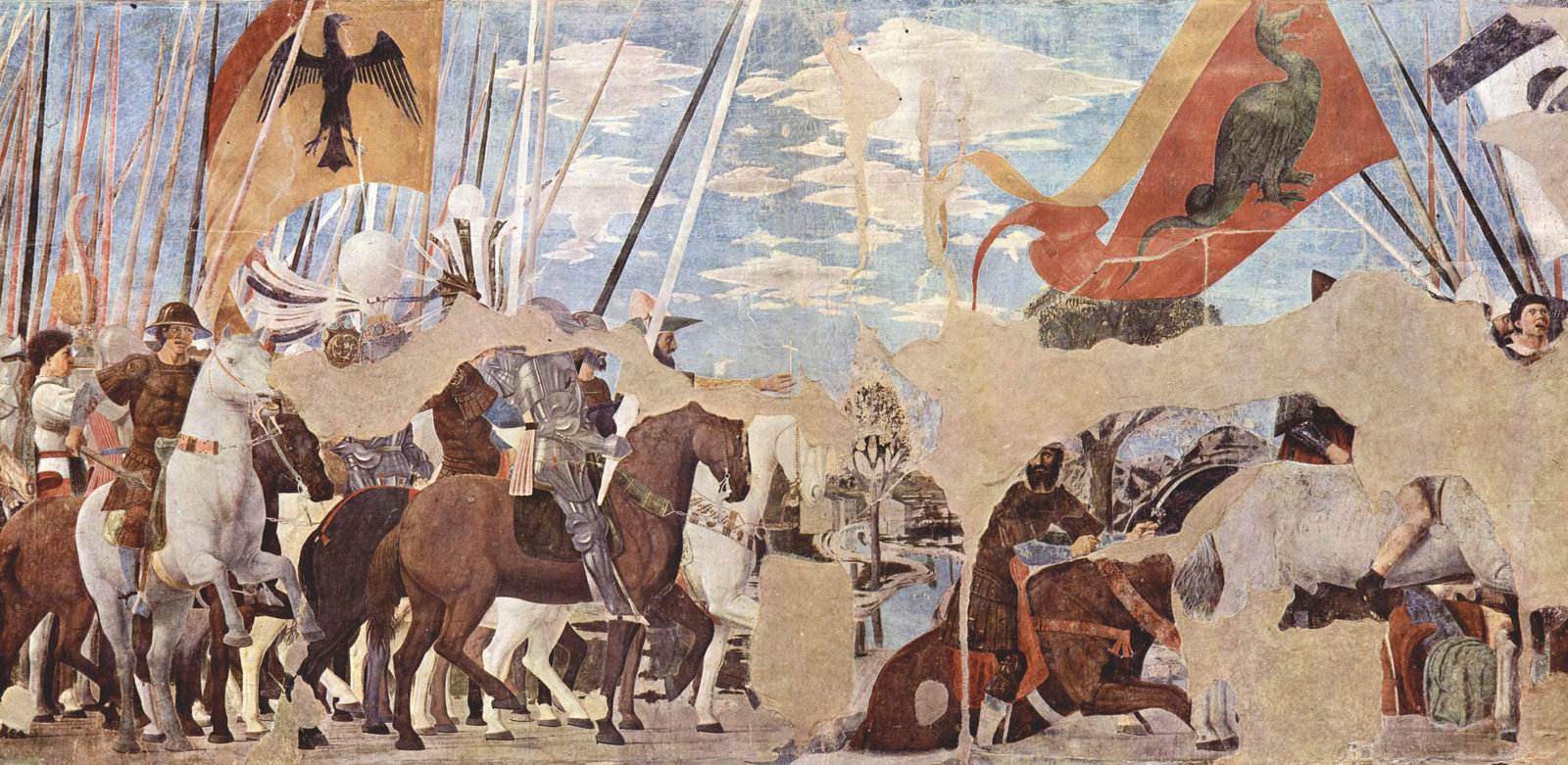
Arezzo is Piero della Francesca country. His Legend of the True Cross fills the choir of San Francesco (book ahead), and his Mary Magdalene is in the cathedral. Cimabue’s crucifix hangs in San Domenico, and Vasari’s house is open to visit. The Piazza Grande hosts the Giostra del Saracino twice a year: an evening joust on the penultimate Saturday of June, and a day one on the first Sunday of September.

My tips
- Carry coins. Lots of churches have the lights on a meter.
- Cover shoulders and knees in churches. A scarf in the bag does the job.
- Churches often shut over lunch. Plan the museums for the middle of the day.
- Book the big ones (the Uffizi, the Accademia, Piero’s frescoes in Arezzo) ahead.
- Do one area a day. Art fatigue is real.
You might also enjoy:
Susan
Photo credits
Photo credits: Pinocchios in Collodi: my own photo; San Michele in Foro, Lucca (photo: Spike, CC BY-SA 4.0, via Wikimedia Commons); Jacopo della Quercia, tomb of Ilaria del Carretto, Lucca Cathedral (photo: Sailko, CC BY 3.0, via Wikimedia Commons); Part of the glazed terracotta frieze on the Ospedale del Ceppo, Pistoia (photo: Sailko, CC BY-SA 3.0, via Wikimedia Commons); Nicola Pisano’s marble pulpit in the Baptistery, Pisa (photo: Joanbanjo, CC BY-SA 3.0, via Wikimedia Commons); Piazza del Duomo, Pietrasanta (photo: Davide Papalini, CC BY-SA 3.0, via Wikimedia Commons); Cut marble at the Fantiscritti quarries above Carrara (photo: Gabriele85, CC0, via Wikimedia Commons); Brunelleschi’s dome at dusk, from Piazzale Michelangelo (photo: Petar Milošević, CC BY-SA 4.0, via Wikimedia Commons); Benozzo Gozzoli, Saint Augustine leaving for Rome (1464–65), Sant’Agostino, San Gimignano (public domain, via Wikimedia Commons); The Palazzo dei Priori, Volterra (photo: Renato camilli, CC BY-SA 4.0, via Wikimedia Commons); The abbey of Sant’Antimo near Montalcino (photo: Dongio, public domain, via Wikimedia Commons); Piero della Francesca, the Battle of the Milvian Bridge from the Legend of the True Cross, San Francesco, Arezzo (public domain, via Wikimedia Commons).