Last updated: November 2026
See Celle dei Puccini on the map
These days the Puccini family home asks visitors not to sit on the furniture. I may be partly to blame.
I once went to see the house in Celle dei Puccini, a tiny hill village above Lucca. I was heavily pregnant at the time. And yes, I sat on the bed. The actual bed Giacomo Puccini was born in. Or, as I’ve called it ever since, the same bed he gave birth in. (He didn’t. His mum did. You know what I mean.)
Now. Had Giacomo had a premonition that some pregnant Brit would be snooping round his family home, about to pop a baby all over the family bed, and then play a dreadful rendition of “Three Blind Mice” on the very piano he composed on… well. I think he’d have had words.
But I’d go back tomorrow. It’s one of my favourite little museums in Tuscany. Here’s what’s inside, how to get there and when it’s open.

Celle dei Puccini museum at a glance
- What: the Museo Pucciniano di Celle dei Puccini, the old Puccini family house. Seven small rooms on two floors.
- Where: Via Meletori 27, Celle dei Puccini, 55064 Pescaglia (Lucca). About 22 to 24 km north of Lucca.
- Open: Thursday 2pm to 6pm. Friday and Saturday 9am to 1pm and 2pm to 6pm. Sunday 2pm to 6pm. Last entry 30 minutes before closing. Other times by request: info@museodicelledeipuccini.it.
- Tickets: €4. €3 each for groups of 20 or more. Under-12s free. A guided visit is included.
- Getting there: by car, 25 to 35 minutes from Lucca. The bus is possible but very rare.
- Phone: +39 320 6077784.
- Good to know: no flash, no sitting on the furniture (ahem), and only partly accessible, as it’s an old listed house over two floors.
Opening times and prices checked on the museum’s own website on 3 November 2026. They can change, so check before you go.
Where the Puccini story starts
Puccini wasn’t born in Celle. He was born in Lucca, on 22 December 1858, in the family house in Corte San Lorenzo. That house is now the Puccini Museum, and it’s well worth a visit too.

Celle is where the family came from. Giacomo Puccini senior (also called Iacopo), Giacomo’s great-great-grandfather, was born here on 26 January 1712. He moved down to Lucca as a young man and started five generations of musicians. Five! No pressure, then.
After Giacomo’s father Michele died, his mum Albina had to sell the Celle house. But the family never really let go of the place. Giacomo spent his childhood holidays up here, and he came back for the last time on 26 October 1924, just over a month before he died. There’s a plaque on the house about it.
In 1973 the Associazione Lucchesi nel Mondo, an association for people from Lucca living all over the world, bought the house and made it “la casa dei Puccini” again. Much of what you see came from the family itself, given by the daughters of Puccini’s sister Ramelde. The rooms were all redone in 2008 for the 150th anniversary of his birth. Today there are over 100 photos, over 50 letters and more than 20 manuscripts.
So if Lucca is where the story happens, Celle is where it starts.
What’s inside
It’s small and homely. You walk through it like a house, because it is one. Here’s what to look out for, room by room.
The entrance hall: the family tree and the piano

The first thing you see is the huge Puccini family tree on the wall, with portraits of the musician ancestors: Giacomo senior, Antonio and Domenico. Then the good stuff.
- The piano. The museum says Puccini composed part of Madama Butterfly on it. Yes, the one I murdered “Three Blind Mice” on. I’m told you’re not allowed to touch it now. I wonder why.
- The laurel crown he was given after his first opera, Le Villi, in 1884. He took it to his mum’s bedside when she was dying.
- His favourite armchair. Don’t sit in it. Learn from me.
- A gramophone that, the museum says, Thomas Edison himself gave Puccini.


The bedroom: the bed he was born in

This is the furniture from his parents’ bedroom in their house in Via di Poggio, in Lucca. That includes the big marital bed Giacomo was born in. So the bed lives in Celle now, but he was born in it down in Lucca. There’s a painting above it attributed to Giuseppe Antonio Luchi, a local painter known as “il Diecimino”.
And this is the bed I sat on. Heavily pregnant. Just for a moment. In Giacomo’s defence, he’d probably have preferred I didn’t.
The kitchen

My favourite room, if I’m honest. It’s been kept the way it was two hundred years ago, with the original wooden floor, a stone sink, a charcoal stove and the big paiolo pot for polenta. There’s a chest for chestnut flour and the testi, the round stone moulds for cooking necci, the chestnut-flour pancakes these hills still love.
Walking round, I kept picturing the Puccini family table back in the day. A house full of musicians, all very artistic. Were there artistic temperaments battering away amidst the olio, pomodoro and vino? I like to think so.
The cot and the christening gown

The “Sala degli affetti” is the room of family keepsakes. There’s baby Giacomo’s cot and his christening gown, his father’s desk with a bust of him, his mum’s sewing machine and sewing box, and the “Codice di Celle”, an 18th-century manuscript.
The family rooms
Upstairs it’s all about the people. There are portraits of his parents, his sisters, his brother Michele, his uncle Fortunato Magi, and Nicolao Cerù, who helped pay for Giacomo’s studies in Milan. There are letters he wrote to his mum, too.
One room is about his sister Ramelde, her husband Raffaello Franceschini and their three daughters. You’ll also find manuscripts and sketches for his early operas Le Villi and Edgar, and a corner for his other loves, hunting and cars. There are photos of his car crash in 1903, taken by his friend Alfredo Caselli.

The scores
The glass cases are full of printed scores, several with dedications in his own hand. Some of them went to family:
- Manon Lescaut, the 1893 opera that made his name, in a lovely red binding.
- Madama Butterfly, dedicated to his sister Ramelde.
- Il Trittico, La Fanciulla del West and La Rondine, all dedicated to his niece Albina.
- Pages of his handwritten music, which I couldn’t read but stared at for ages anyway.


Then I sang
They played us Madama Butterfly as we went round, and by the time I left his music was in my blood. I came out of Giacomo’s front door feeling compelled to sing for my life. Opera. Full volume.
When I sing it’s far from beautiful. It’s soul-piercing and bone-shattering. The whole valley shook that day. I reckon it hit a 5 on the Richter scale.
Sorry, Celle.
Celle, Lucca or Torre del Lago?
There are three Puccini houses to visit, and they’re very different. If you love him, do all three. If you’ve only time for one, here’s how they compare.
| Celle dei Puccini | Lucca | Torre del Lago | |
|---|---|---|---|
| What it is | The family’s ancestral home in the hills | The house where he was born | The lakeside villa where he lived and worked |
| Feel | Small, homely, family keepsakes | City museum in the old town | His own home, as he left it |
| Don’t miss | The piano, the birth bed, the kitchen | The rooms where he grew up, in the old town | His tomb in the villa chapel |
| Getting there | Car, about 30 minutes from Lucca | Walk, it’s in the centre | Car or train, near Viareggio |
He first came to Torre del Lago in June 1891, by Lake Massaciuccoli, and bought the tower-house there in 1899. He wrote much of his best-known music there, and he’s buried in the villa’s little chapel. It became a museum in 1925, opened by his son Antonio. Tickets are €7 (€3 for ages 6 to 13), and the hours change with the season. In November 2026 it’s open at weekends only, so check before you go. It pairs nicely with a day in Viareggio and the Versilia beaches.
Celle is the quiet one. Lucca and Torre del Lago tell you about Puccini the star. Celle tells you about the Puccinis.
A sad story worth getting right
When I first wrote about this visit, I joked that Puccini might have joined “his lover, Doria Manfredi” in drowning himself in the lake at Torre del Lago. I’ve since learned I had that very wrong, and Doria deserves better.
Doria Manfredi was a young maid in the Puccini household at Torre del Lago. Puccini’s wife, Elvira, became convinced Doria was having an affair with him and hounded her publicly round the village. In January 1909, Doria swallowed poison and died a few days later, aged 23. An autopsy showed she had been a virgin. Elvira was convicted and sentenced to prison, and Puccini paid Doria’s family a large sum so the case was dropped and Elvira never served her sentence.
She wasn’t his lover, and nobody drowned. Historians now think Puccini’s actual affair was with Doria’s cousin, Giulia. It’s a tragic story, and a reminder that real people sit behind the opera legends.
The village

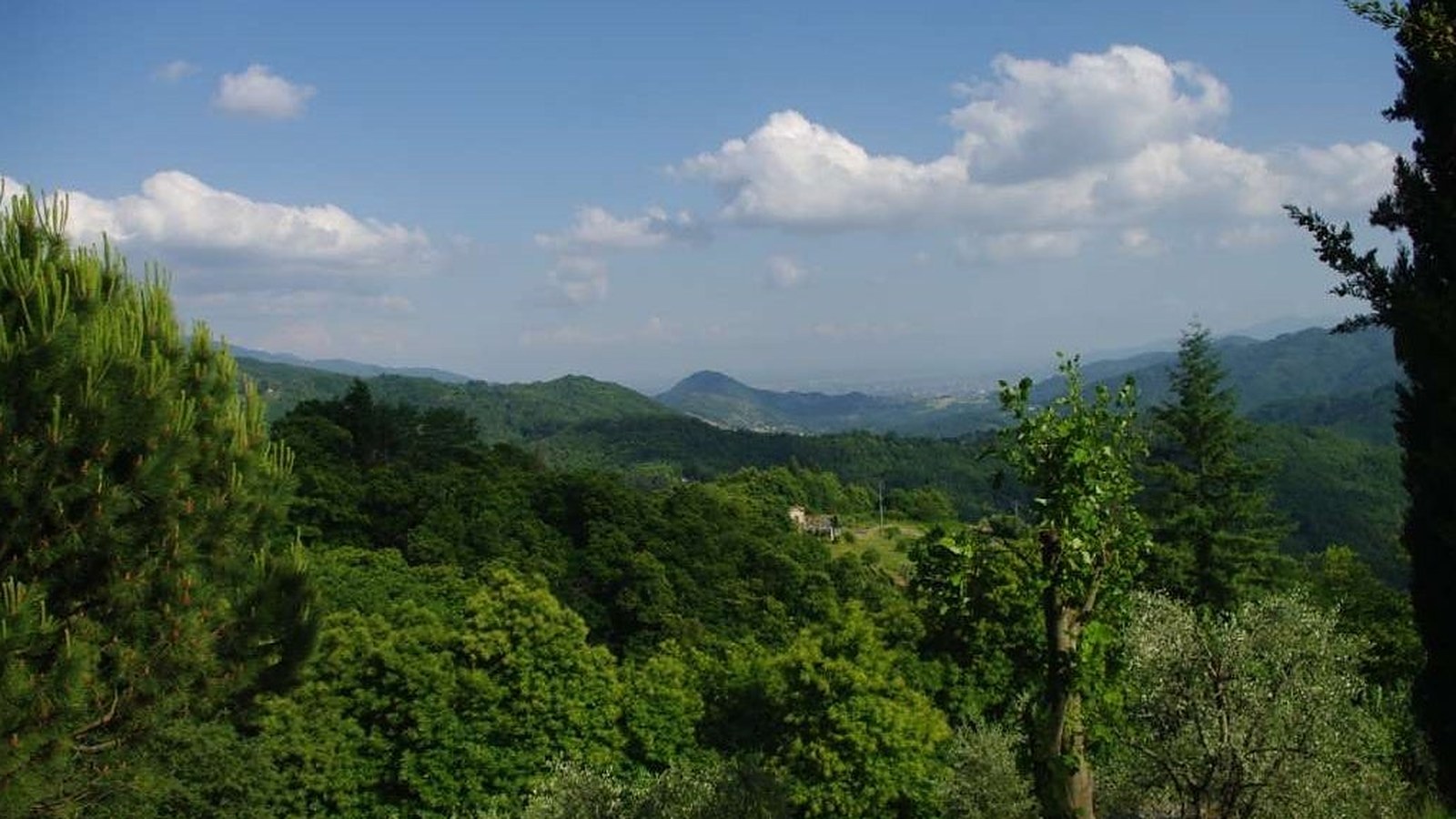
Celle dei Puccini is tiny. A handful of stone houses, cobbled lanes, steps, geraniums on the windowsills and the most enormous views. Have a wander before or after the museum. It takes ten minutes and you’ll want to take a hundred photos.


Getting there
Celle is a frazione (hamlet) of Pescaglia, in the hills north of Lucca. From Lucca, take the SS12 up the Serchio valley to Ponte a Moriano, carry on along the Lodovica road to Diecimo, then turn left for Pescaglia and follow the signs up to Celle. It’s about 22 to 24 km and takes 25 to 35 minutes.
The last bit is narrow and twisty. Take it slowly and use your horn on the blind bends like the locals. Put “Celle dei Puccini, Pescaglia” in the satnav, not just “Celle”, because there are other Celles in Tuscany. If you’re hiring a car, have a read of my guide to driving in Tuscany and car hire tips first.
By bus? Technically, yes. Autolinee Toscane’s E12 bus (Lucca to Pescaglia and Pascoso) stops at “Via Provinciale bivio Celle”, at the turn for Celle. But there are only a handful of buses a week, and there’s a diversion on the route until 31 December 2026. Realistically, you’ll want a car. If you’re car-free, my day trips from Lucca by train and bus are a better bet.
Tips for your visit
- Go Thursday to Sunday. Afternoons are the safe bet, as it’s open 2pm to 6pm on all four days.
- Check before you set off. The Comune lists set times and so does the museum, but in practice it’s a bit of both. It’s run by an association, and the lovely lady who looks after it doesn’t sit there all day waiting for visitors. So when you get there, ring the number on the door and she’ll come. If it’s a long trip, check the museum or Comune website first, or email and ask. They do open by request.
- Ask for a leaflet in your language. They have them in several, and the guided visit is included in your €4.
- No flash, please. And ask before photographing the handwritten letters and manuscripts, as they can’t be reproduced.
- Don’t sit on the furniture. I know. I know.
- Dogs: only small dogs and guide dogs.
- Mobility: it’s an old listed house on two floors, so it’s only partly accessible. Worth emailing ahead if that matters.
- There’s a little bookshop, so bring a few euros.
- Make a day of it. Pair it with lunch in the hills and one of the villages below, or head on to Torre del Lago at the weekend.
Nearby villages worth a stop

- Pescaglia, the main village of the comune, spread across a green hillside with its big stone church.
- Vetriano, home of the Teatrino di Vetriano. Guinness lists it as the smallest public historic theatre in the world. It’s adorable.
- Colognora di Pescaglia, with its chestnut museum, the Museo del Castagno. Lovely in autumn.
- Diecimo and Borgo a Mozzano, down in the Serchio valley on your way back, where you can see the Ponte della Maddalena, the Devil’s Bridge.
- Fancy more? Here are my favourite villages near Lucca, and further up the valley, the Garfagnana mountain villages.
Where to stay
Lucca makes the easiest base, with the hills on your doorstep. For something quieter, try my where to stay near Lucca and the Svizzera Pesciatina guide. That’s my neck of the woods, the hills above Pescia.
In and around Celle dei Puccini
A Booking.com search for Lucca: hotels, B&Bs and apartments. Just add your dates.
If you book through this link, I may earn a small commission at no extra cost to you. It helps keep this site going.
Celle dei Puccini FAQ
Was Puccini born in Celle dei Puccini?
No. He was born in Lucca, on 22 December 1858. Celle is where his family came from, and it has the bed he was born in, brought up from the Lucca house.
Is it worth going if I’ve seen the Puccini Museum in Lucca?
Yes. It’s small and personal, with family things you won’t see in Lucca, and the drive and the village are half the fun.
How long do I need?
About an hour for the museum, plus a wander round the village. Make it half a day with lunch.
Can I get there without a car?
Only just. There’s a bus stop at the turn for Celle, but buses are rare. A car or a taxi from Lucca is much easier.
Is it open all year?
The museum lists the same Thursday to Sunday hours, and you can ask for visits at other times. Check its website or email before you go, especially in winter and around holidays.
Can I sit on Puccini’s bed?
No. And you definitely can’t play the piano. Ask me how I know.
Explore around Celle dei Puccini
Villages nearby I’ve written about


Keep exploring
You might also enjoy:
- Best day trips from Lucca: 6 easy escapes I love
- Villages near Lucca worth the trip
- Famous Tuscans: the writers, composers and thinkers
- My Lucca page
- Rainy day ideas near Lucca, Pescia and Pistoia
- A 7-day northern Tuscany road trip
- 8 small villages in Tuscany you’ve probably never heard of
And if you hear someone singing very badly as you leave, don’t worry. It’s probably just another fan.
Susan x
Sources: Museo di Celle dei Puccini (contacts and opening times, the exhibition rooms, the museum’s history and the Puccini family pages, checked 3 November 2026); Comune di Pescaglia; Fondazione Simonetta Puccini per Giacomo Puccini (Villa Museo Puccini, Torre del Lago); Puccini Museum, Casa natale, Lucca; Autolinee Toscane, line E12 timetable and notices. Photos are my own from my visit, except where credited.
Photo credits: Puccini’s birthplace in Lucca, now the Puccini Museum (photo: kajikawa, CC BY 3.0, via Wikimedia Commons); Pescaglia (photo: sailko, CC BY-SA 3.0, via Wikimedia Commons). All other photos: Susan, Tuscany Villages.