Last updated: October 2026
Don’t drive? Don’t want to? Good news. You can see a lot of Tuscany by train and bus, and you’ll never have to think about a ZTL fine or a hairpin bend.
You just have to pick your base well, and accept that some places really do need wheels. Here’s the honest version.
The golden rule: stay on the railway
Base yourself in a town with a station and a good train service, ideally walking distance from your bed. Then do day trips. Moving hotels every two nights with suitcases on buses is no fun.
The best bases
Florence
Trains go everywhere from Santa Maria Novella: Pisa, Lucca, Pistoia, Prato, Arezzo, the coast, and fast trains to Rome and Milan. Buses to Siena leave from near the station. The downside is the price and the crowds.
Lucca
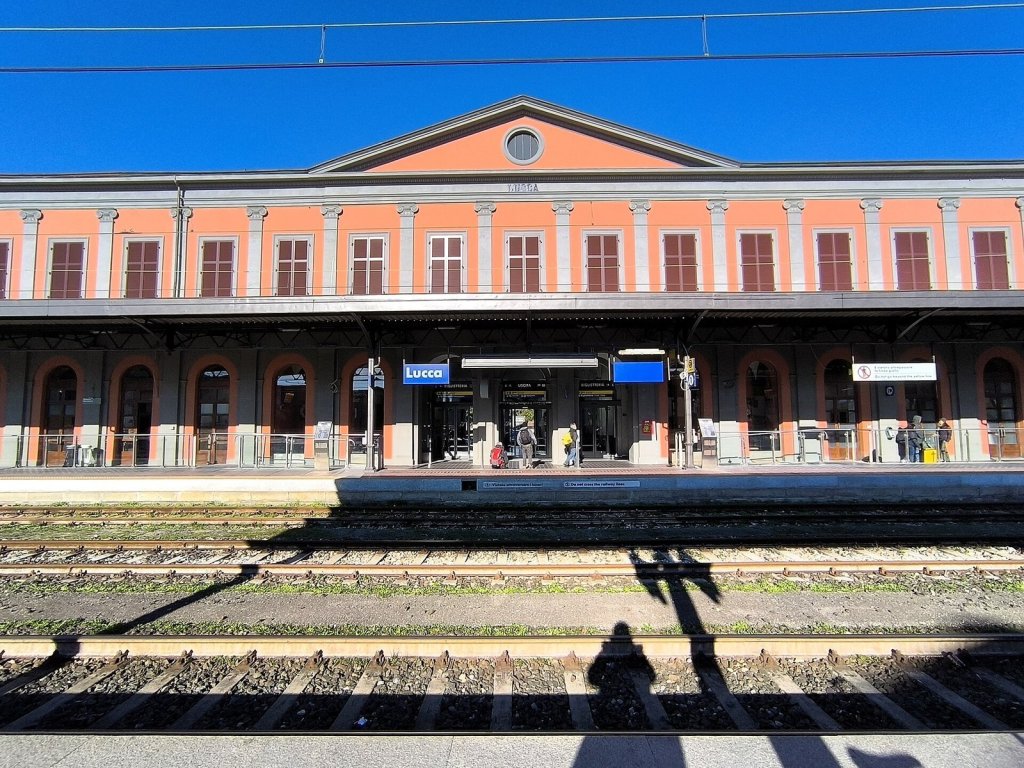
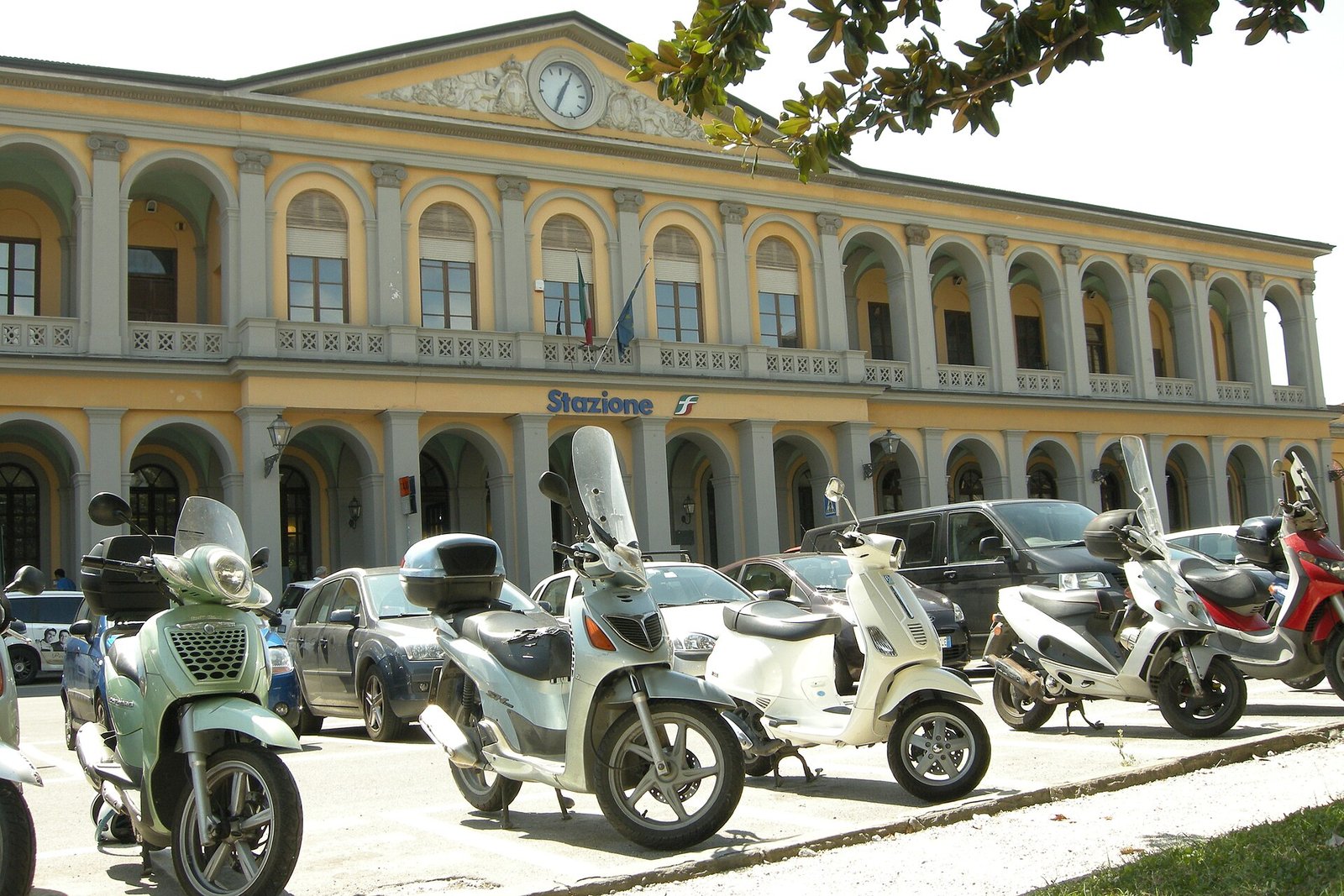
A brilliant base. Lovely, flat, walkable, with the station just outside the walls. Trains run to Pisa, Florence (via Pistoia and Montecatini), Viareggio for the beach, and up the Serchio valley to Barga. See my day trips from Lucca.
Pistoia
Underrated, cheaper than Florence, and on the line between Florence and Lucca. Easy for both, and a lovely town in its own right.
Pisa
Handy for the airport (the PisaMover shuttle links it to Pisa Centrale) and for the coast. Pisa San Rossore station is the closest to the Leaning Tower.
Siena
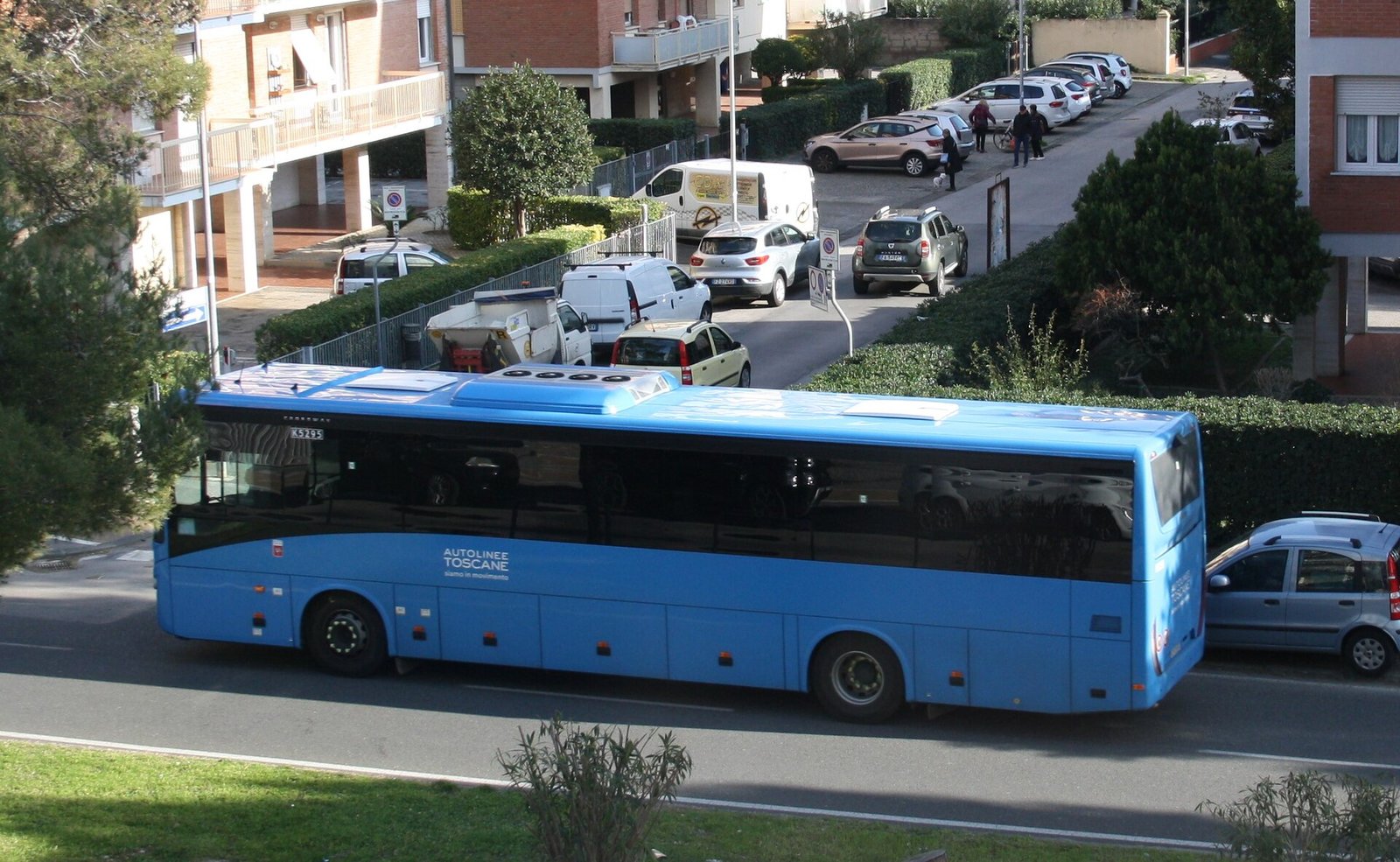
Better by bus than by train. Autolinee Toscane’s line 131 runs between Florence and Siena, via Poggibonsi. Siena’s station is below the town, so the bus is often easier.
Pescia and Montecatini
For a quieter base, Pescia and Montecatini Terme are on the line between Florence and Lucca. I’ve done a whole guide to the Pescia valley without a car.
Day trips that work well without a car
| Day trip | How |
|---|---|
| Florence | Train from Lucca, Pistoia, Pisa, Prato or Arezzo |
| Pisa | Train from Florence or Lucca |
| Lucca | Train from Florence, Pisa or Viareggio |
| Pistoia | Train from Florence or Lucca |
| Viareggio and the Versilia beaches | Train from Lucca or Pisa |
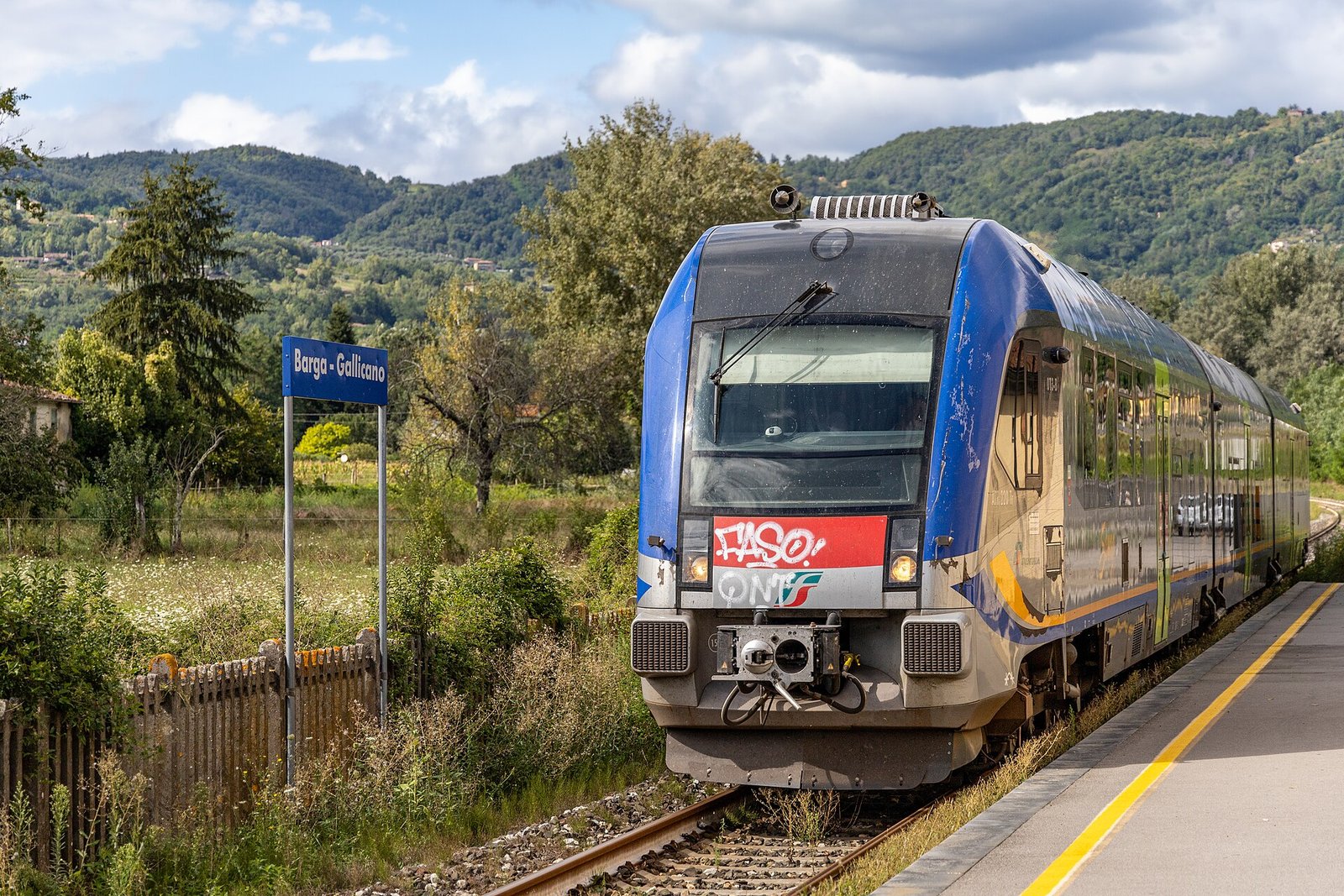
| Barga | Train from Lucca to Barga-Gallicano, then a bus or taxi up the hill |
| Siena | Bus 131 from Florence |
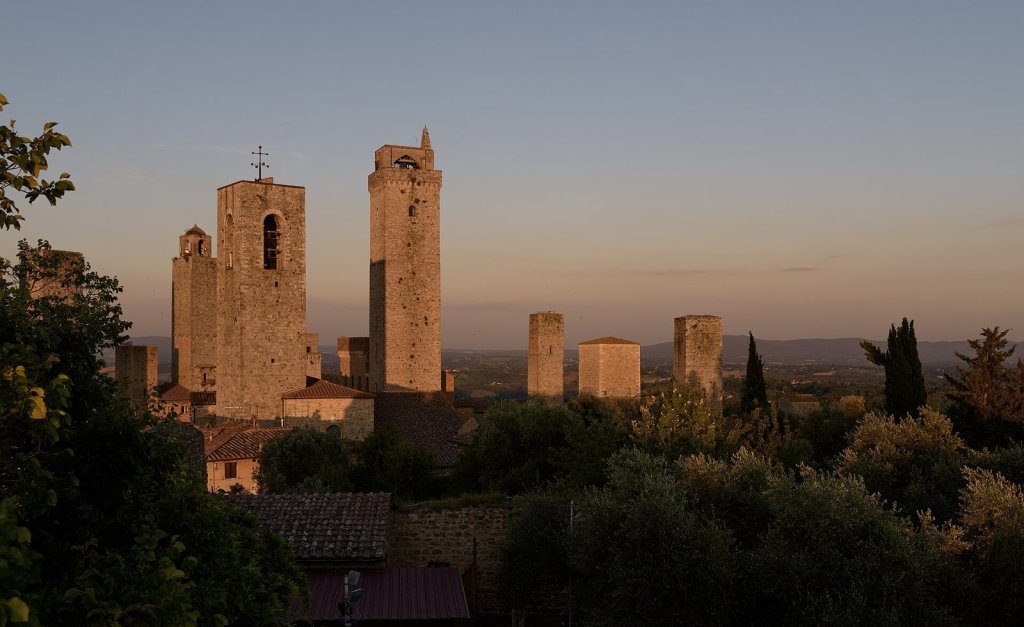
| San Gimignano | Bus 131 to Poggibonsi, then bus 130 |
| Arezzo | Train from Florence |
| Elba | Train towards Piombino (change at Campiglia Marittima), then ferry from Piombino to Portoferraio |
A few tips on those:
- Barga: the station is down in the valley, and the old town is up on the hill. Read my Barga day trip.
- San Gimignano: line 130 has timetable changes in autumn 2026. Check the Autolinee Toscane website before you set off.
- Elba: check how the last leg from the station to the ferry port works on the day, and book ferries ahead in summer. My useful numbers guide has the ferry companies.
- The beaches: see my Versilia beach guide.
Places that are hard without a car
I’d rather tell you now than have you stranded:
- The hill villages. Most have a few buses a day at best, often built around the school run. I lived in one. Trust me.
- Chianti. Some buses run from Florence, but getting between the little wine villages is tricky.
- The Val d’Orcia (Pienza, Montalcino, Bagno Vignoni). Beautiful, but buses are thin on the ground.
- The hot springs at Saturnia and the Maremma generally.
- Agriturismi. Most are at the end of a country lane.
For these, think about a guided day tour, a taxi for a day, or hiring a car for just a day or two. Read my driving guide first.
Tips to make it easy
- Check the timetable the day before. Sundays and holidays have far fewer trains and buses, and strikes (sciopero) are usually announced in advance.
- Validate your ticket. Paper regional tickets must be stamped before you get on, or you can be fined. See my train guide.
- Buy bus tickets before you board where you can. Tabacchi (tobacconists), stations and apps sell them.
- Travel light. Steps, cobbles and old stations without lifts are common.
- Know your last train. Rural lines can finish early in the evening.
The full lowdown on trains, buses and driving is in getting around Tuscany, and the airports are covered in airport to Lucca, Pescia and Pistoia.
Car free Tuscany is slower, cheaper and much more relaxing. And you can have a glass of wine at lunch.
You might also enjoy:
Susan
Photo credits: The platforms at Lucca station (photo: Dobroš, CC BY-SA 4.0, via Wikimedia Commons); Lucca railway station, just outside the city walls (photo: DV, CC BY-SA 4.0, via Wikimedia Commons); A train arriving at Barga-Gallicano station (photo: UkPaolo, CC BY-SA 4.0, via Wikimedia Commons); An Autolinee Toscane bus (photo: Piergiuliano Chesi, CC BY 3.0, via Wikimedia Commons).