Last updated: October 2026
Lucca is a lovely base. The walls, the bikes, the piazzas. I could happily potter round it for days. But I lived about half an hour away, in the hills above Pescia, and I have to tell you that some of the best of this part of Tuscany is just outside the walls.
These are the day trips from Lucca I’d send a friend on. Some are easy by train. Some really need a car. I’ve been honest about which is which.
A quick guide to getting about
Lucca sits on the railway line to Pescia, Montecatini and Florence, and on the line to Pisa. Trains are cheap and fairly frequent. For the hill villages, though, you’ll want a car or a driver.
1. Collodi: Pinocchio, a Baroque garden and a medieval village
Distance: about 17 km, around half an hour by car. The Autolinee Toscane E6 bus also runs from Lucca to Collodi and on to Pescia.
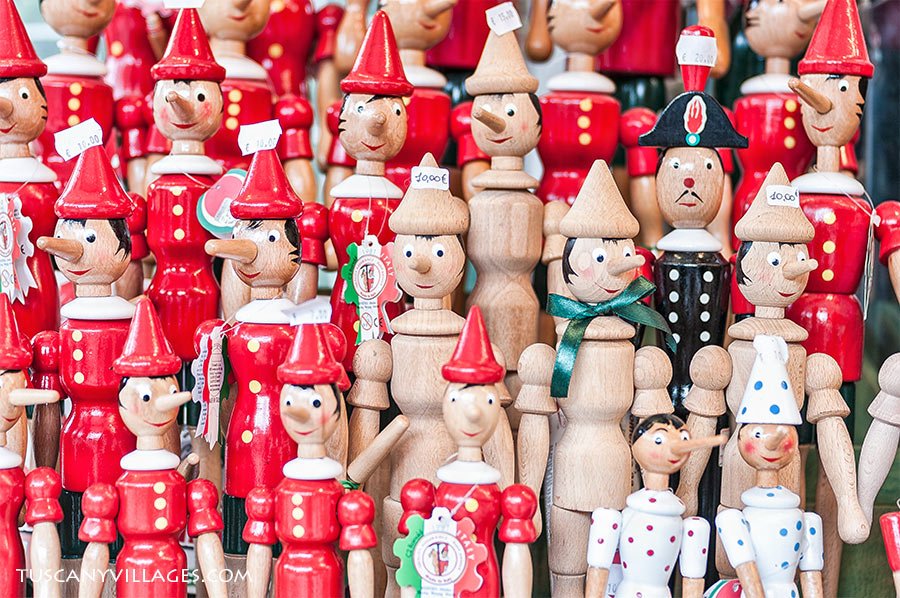
Collodi is where Carlo Lorenzini took his pen name. He was born in Florence in 1826 but grew up partly here, his mother’s home town, and as Carlo Collodi he wrote The Adventures of Pinocchio.
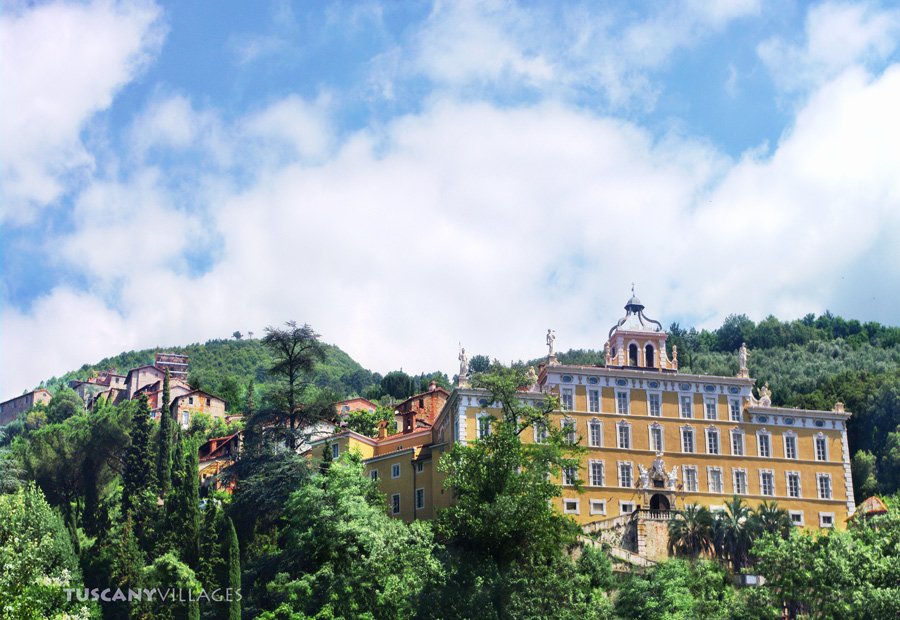
The village has three attractions. There’s the Parco di Pinocchio, a park built to tell the puppet’s story. There’s the Villa Garzoni garden, which spills down the hill in dramatic Baroque staircases, with statues, pools, waterfalls, an open-air theatre and a maze. And there’s the Butterfly House.
In 2026 an adult ticket for the park, garden and Butterfly House is €26, or €19 for the garden and Butterfly House only. The park suggests two and a half to three hours for both. Opening days drop off in winter, so check pinocchio.it before you set off.
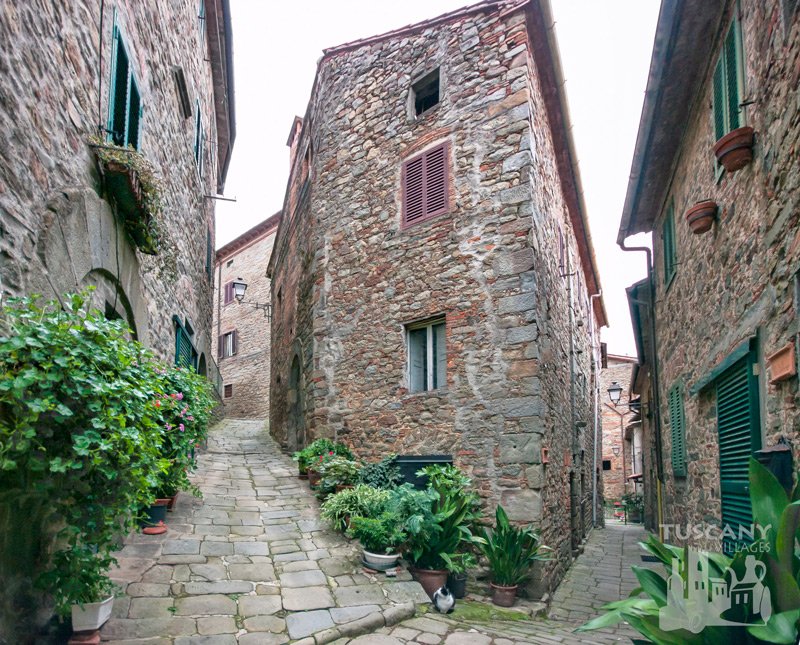
My tip: after the gardens, climb up through the old village to the church of San Bartolomeo. The stepped streets date back to the 12th century, and hardly anyone bothers. Their loss.
2. Pescia and the Svizzera Pesciatina
Distance: Pescia is about 31 km by road, around half an hour. By train it’s roughly 20 to 30 minutes.
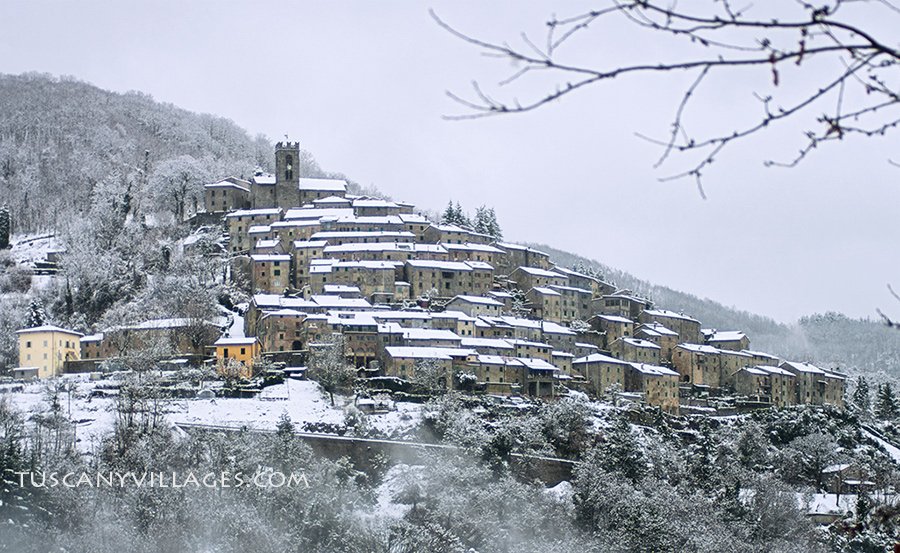
Pescia is a working market town, not a postcard. That’s what I like about it. But the real reason to come is the valley behind it, the Svizzera Pesciatina, with its ten medieval hilltop villages.
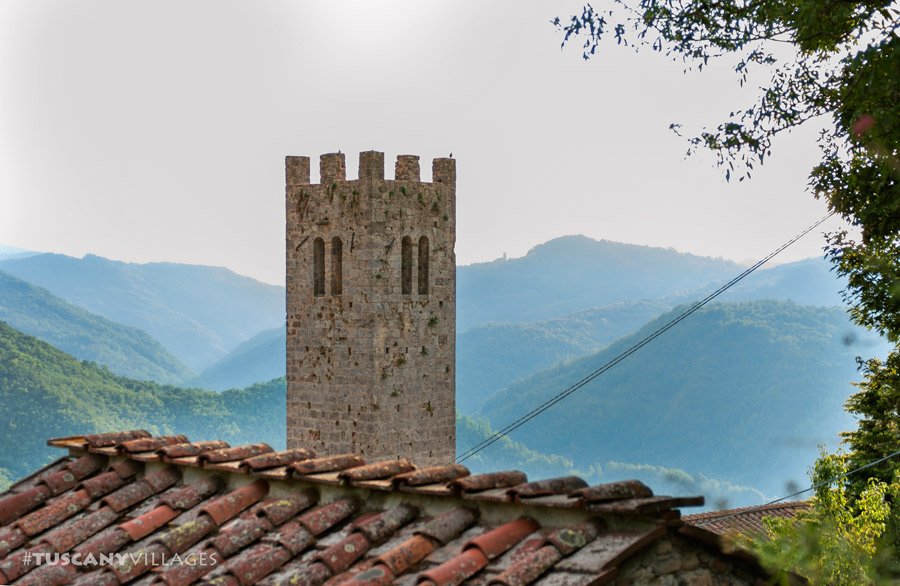
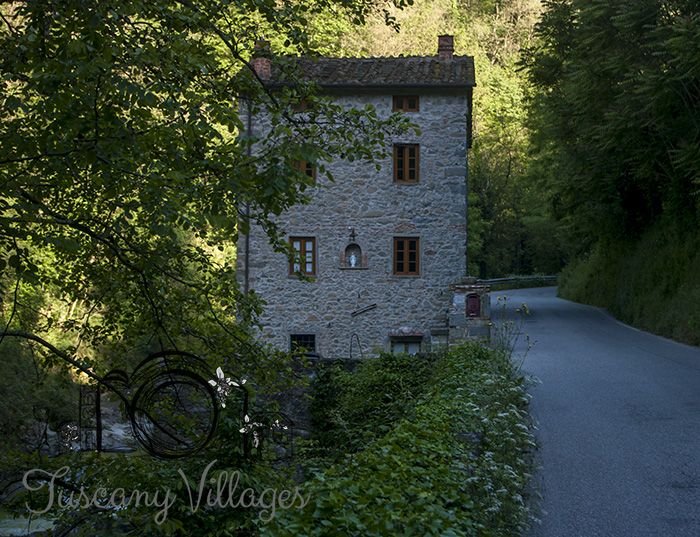
You can see a good slice in a day by car. Start at Pietrabuona, about 4.5 km from Pescia, where the old paper mill is now the Museo della Carta. In 2026 it opens Monday, Wednesday and Saturday from 10am to 6pm. Then wind up to the Romanesque pieve at Castelvecchio, quiet Stiappa, and Pontito, the village that fans out down the hillside.
If you’re coming by train, this one’s tricky. The villages have very few buses. Hire a car for the day or book a driver.
My full driving route:
3. Celle dei Puccini: the composer’s family home
Distance: about 24 km, a bit over half an hour, on hill roads north of Lucca.
Giacomo Puccini was born in Lucca in 1858, into a family with five generations of musicians behind it. Up in the hills, in the little village of Celle in the comune of Pescaglia, stands the old Puccini family house. It’s now a small museum.
The first time I went, you had to ask in the village for a lady called Barbara, who would open it up and show you round. She took us through every room. You come away with a real feel for how the family lived, and with views that would inspire anyone.
It’s more organised now. The museum opens Thursday from 2pm to 6pm, Friday and Saturday from 9am to 1pm and 2pm to 6pm, and Sunday from 2pm to 6pm. You’ll need a car.
4. Torre del Lago: Puccini’s lakeside villa
Distance: about 26 km, around half an hour by car.
If Celle is where Puccini’s family came from, Torre del Lago is where he made his home. His villa on Lake Massaciuccoli became his refuge, and he composed many of his best-known works there. He’s buried in the villa’s little chapel.
The Villa Museo Puccini is open daily from April to October, 10am to 12.40pm and 3pm to 6.20pm, with visits every 40 minutes. Hours shift in winter and during the summer Puccini Festival, so check the museum’s website first.
If you can time it right, an evening opera at the festival’s open-air theatre by the lake is a real treat.
5. Pisa: the easy one
Distance: about 30 minutes by train.
I know, I know. Everyone goes to Pisa. But it’s so easy from Lucca that it would be silly to leave it out. Hop on the train, see the Leaning Tower and the Campo dei Miracoli, and be back in Lucca for an aperitivo.
My advice is to go early or late in the day, and book the tower climb ahead.
6. Montecatini Terme and Montecatini Alto
Distance: about 33 km, around half an hour by car, or by train on the Florence line.
Montecatini Terme is the grand old spa town, all parks and elegant buildings. From town, a little red funicular has been carrying people up to the hilltop village of Montecatini Alto since 1898. It’s seasonal. In 2026 it runs daily, every half an hour, until 1 November.
Up top there’s a piazza with cafés and a view right across the Valdinievole.
Bonus: up into the Pistoia mountains
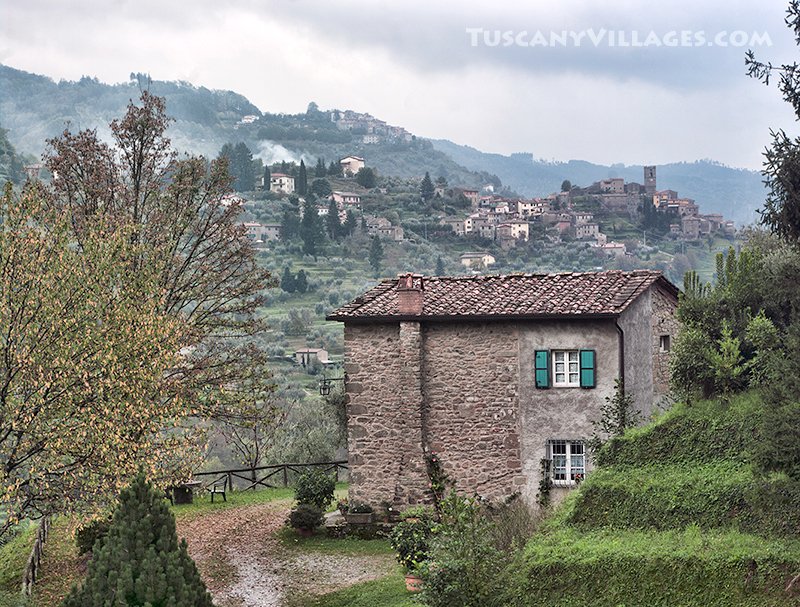
If you have a car and a spare day, keep going past Pescia into the Montagna Pistoiese. The medieval village of Calamecca is about half an hour from Pescia. A few minutes on is La Macchia Antonini, a picnic spot in the oak and beech woods at about 960 metres, with a restaurant and bar. It’s the perfect place to escape the summer heat.
You might also enjoy:
- 8 small villages in Tuscany you’ve probably never heard of
- Sorana beans: the little Tuscan bean Rossini wanted paying in
Where to stay
For train trips, stay in Lucca, ideally within walking distance of the station. For the villages and Collodi, Pescia or a farmhouse nearby makes more sense. You’re close to everything and parking is far easier than inside Lucca’s walls.
Parking in and around Lucca
Inside Lucca’s walls is a ZTL, a limited traffic zone. Don’t drive in unless your hotel has registered your number plate, or you may get a fine through the post months later. Park outside the walls and walk in.
In the hill villages, park at the edge and go on foot. The streets are mostly steps.
The easiest car parks for visitors are Carducci, on the south-west side of the walls, and Palatucci, on the north side. Both are outside the ZTL, and in 2026 both cap at €8 a day, with free parking overnight. There’s also a car park by the railway station.
My suggested week of day trips
- Day 1: Collodi in the morning, Pescia in the afternoon
- Day 2: the Svizzera Pesciatina villages by car
- Day 3: Pisa by train
- Day 4: Celle dei Puccini, then Torre del Lago for the evening
- Day 5: Montecatini and the funicular
Leave a day or two free to do nothing at all. That’s very Tuscan too.
If you try any of these, I’d love to hear how you got on.
Susan