Last updated: October 2026
If you’ve got a picture in your head of a Tuscan hill town, it’s probably one of these three. Towers on a skyline. Ancient walls above a sea of hills. A perfect Renaissance square looking out over cypress trees and rolling fields.
They’re famous for a reason. Here’s what makes each one special, and how to enjoy them without the crowds spoiling it.
San Gimignano: the town of towers
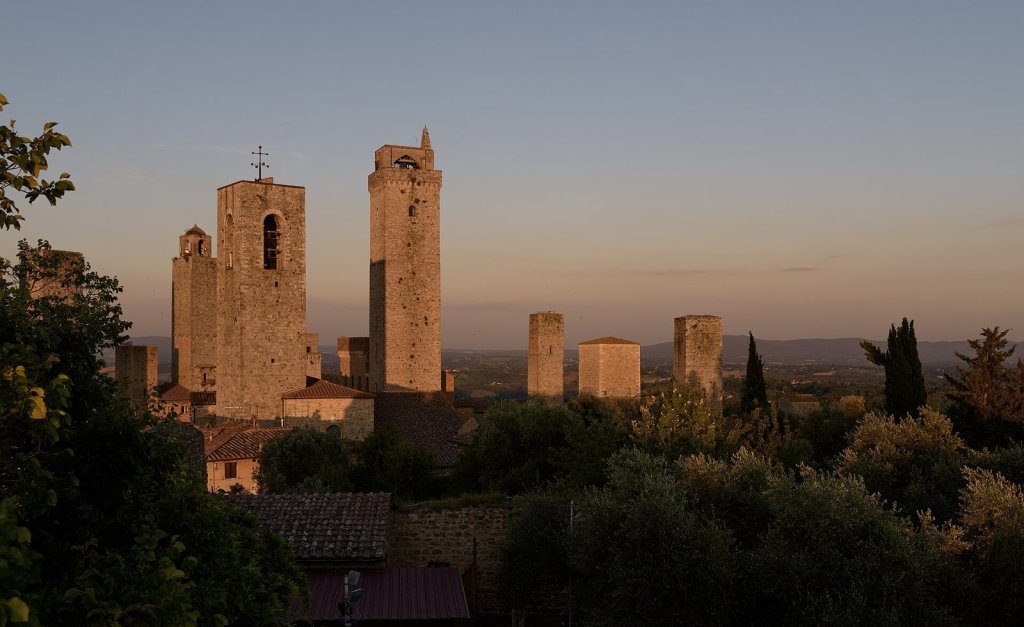
In the Middle Ages, the rich families of San Gimignano competed by building towers. The taller the tower, the more important the family. At its height the town had around 72 of them. 14 still stand, and from a distance the skyline looks like a medieval Manhattan.
The historic centre has been a UNESCO World Heritage Site since 1990.
- Piazza della Cisterna and Piazza del Duomo, side by side in the middle of town, are the places to sit and stare.
- Climb a tower. The tallest, the Torre Grossa, can be climbed through the civic museum, for a view over the whole valley.
- The Collegiata, the main church, is covered inside with frescoes.
- Walk the back streets. The main street is shop after shop. Turn off it and the town goes quiet.
The wine: Vernaccia di San Gimignano, a crisp white wine. It was Italy’s very first DOC, in 1966, and became a DOCG in 1993.
Tip: San Gimignano is mobbed by day trippers in the middle of the day. Come early in the morning, or late in the afternoon for the sunset, or best of all, stay the night.
Volterra: Etruscans and alabaster
Volterra is older, tougher and wilder. It sits high on a windswept ridge between the valleys, and it was one of the great cities of the Etruscans, long before the Romans.
- Porta all’Arco, an Etruscan gateway still standing in the walls, with three worn stone heads looking down at you.
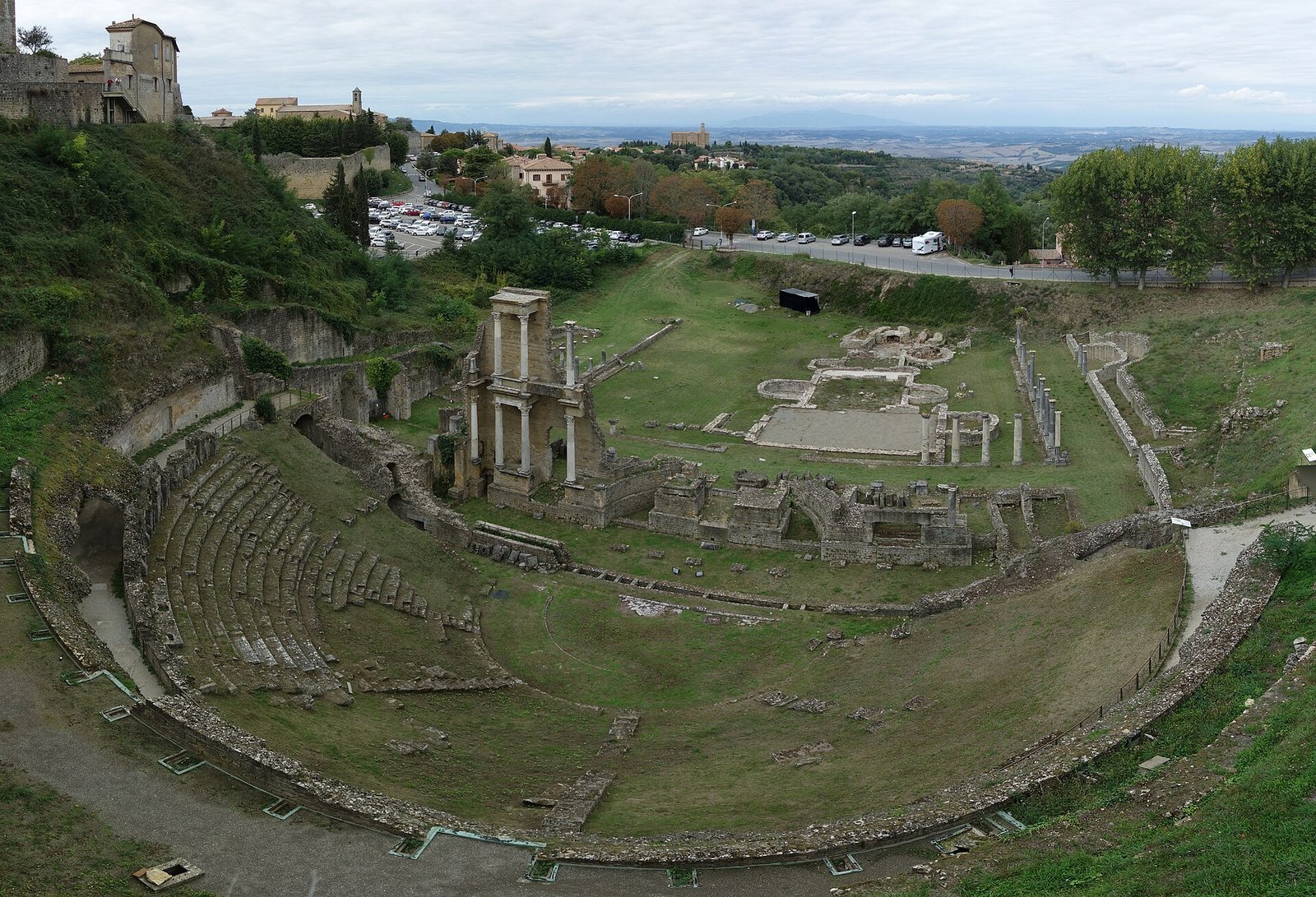
- The Roman theatre, below the walls, with its rows of stone seats and columns.
- The Guarnacci Etruscan Museum, one of the oldest public museums in Europe, full of carved Etruscan urns. Look for the Ombra della Sera (“shadow of the evening”), a strange, very tall, thin bronze figure.
- Alabaster. Volterra has carved alabaster for centuries. Visit a workshop, or the Ecomuseo dell’Alabastro, to see how it’s done.
Fans of the Twilight books will know the name: Volterra is the home of the vampires. (The film, though, was shot in Montepulciano.)
Pienza: the ideal town
Pienza is small, perfect and a bit unreal. It was a village called Corsignano until a local boy became Pope Pius II. From 1459 he had the architect Bernardo Rossellino rebuild the centre as an “ideal city” of the Renaissance, and renamed it after himself.
- Piazza Pio II, with the cathedral and the papal palace, Palazzo Piccolomini, all planned together.
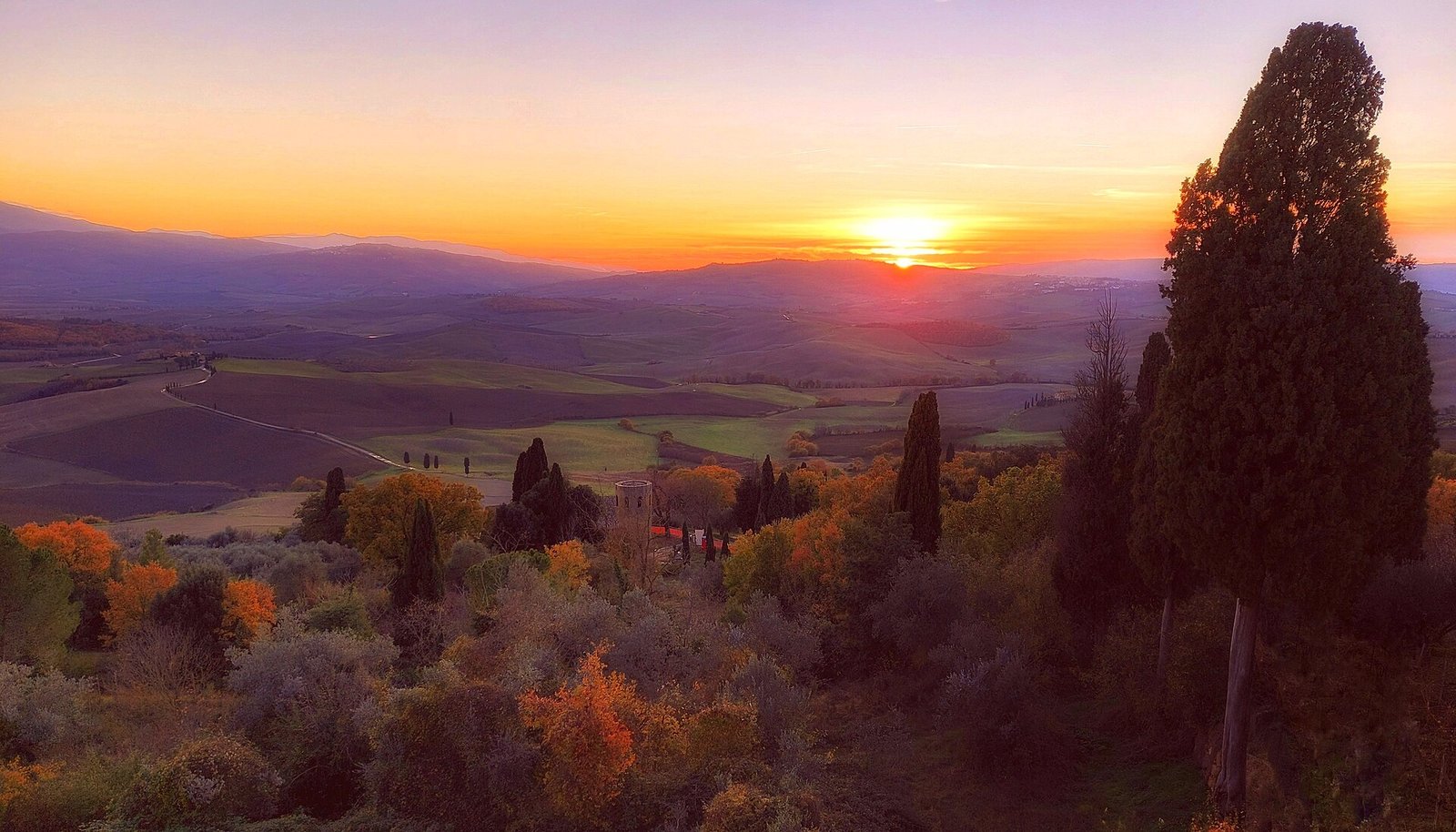
- The walk along the walls, with views straight down over the Val d’Orcia, the classic Tuscan landscape of cypress trees and soft hills. The town centre has been UNESCO-listed since 1996, and the Val d’Orcia since 2004.
- Pecorino. Pienza is famous for its sheep’s cheese. The whole town smells of it. Buy some.
- The lanes have names like Via dell’Amore and Via del Bacio (“kiss street”). Romantic, or very clever marketing. Possibly both.
How to see them
These three are a fair way from each other, and from our side of Tuscany:
- San Gimignano and Volterra are under an hour apart by car, and make a good day together.
- Pienza is further south, in the province of Siena. It pairs best with Montalcino and Montepulciano. See my post on Tuscany’s wine villages.
From Lucca or Pescia, they’re best done as a night or two away. A car makes life much easier. My driving guide explains the ZTLs, and all three towns have them. Park outside the walls. If you’d rather not drive, buses do run, but they’re slow and need planning: see my guide to Tuscany without a car.
My tips
- Stay overnight in at least one of them. Evenings and early mornings are when they’re at their best.
- Wear good shoes. Everything is up and down, on stone.
- Spring and autumn are the best times. Summer is hot and busy.
- Don’t try all three in one day. You’ll see them all and enjoy none of them.
And if all this sounds a bit busy, my small villages you’ve never heard of are waiting, with no queues at all.
You might also enjoy:
Susan
Photo credits: The towers of San Gimignano at sunset (photo: Julian Lupyan, CC0, via Wikimedia Commons); The Roman theatre, Volterra (photo: Spike, CC BY-SA 4.0, via Wikimedia Commons); Sunset over the Val d’Orcia from Pienza (photo: Anna.Massini, CC BY-SA 4.0, via Wikimedia Commons).