Last updated: October 2026
I’ll be honest with you from the start. The easiest way to explore the hill villages above Pescia is by car. The Dieci Castella are spread over steep, wooded hillsides, and the roads up to them are narrow, twisty and not exactly crawling with buses.
But. You can do a lot of this valley without driving. Some people don’t drive, some don’t fancy Italian hairpin bends, and some just don’t want the stress. Fair enough.
So here’s how to visit the Pescia valley car-free, from someone who lived up there for years and stood at a lot of bus stops.
The big picture
Think of it in two layers.
- The plain: Lucca, Pescia, Montecatini Terme and Collodi. Easy without a car. There are trains and regular buses.
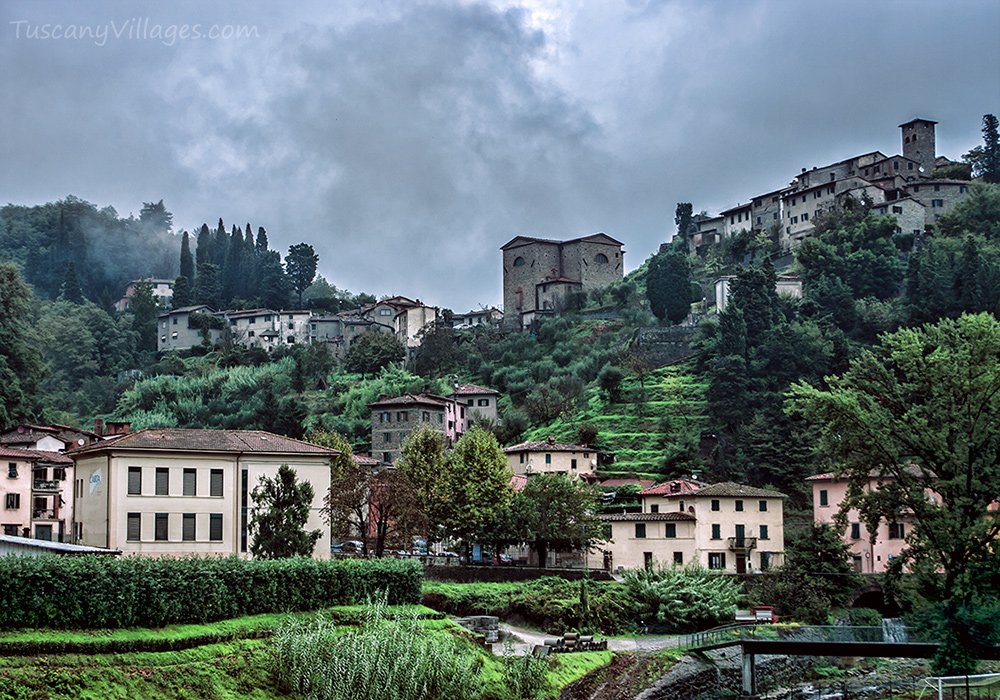
- The hills: the ten villages of the Svizzera Pesciatina (Pietrabuona, Medicina, Fibbialla, Aramo, San Quirico, Castelvecchio, Stiappa, Pontito, Sorana and Vellano). Possible, but you’ll need a plan, a taxi number and some patience.
Base yourself in the plain, then pick off the hills one or two at a time.
Getting here
From Pisa airport. Take the PisaMover shuttle train from the airport to Pisa Centrale (about five minutes), then a regional train to Lucca (about 25 to 30 minutes). Allow roughly an hour door to door with the change. From Lucca, trains carry on to Pescia and Montecatini.
From Florence airport. Take the tram into Florence, then a regional train from Santa Maria Novella towards Lucca or Viareggio. From Florence the train to Pescia takes about an hour, so allow an hour and a half or so from the airport.
Trains: the backbone
Pescia is on the railway line between Florence and Lucca (it carries on to Viareggio on the coast). Regional trains run roughly every half hour in each direction for much of the day, and stop at Pescia, Montecatini Terme, Pistoia and Prato on the way to Florence. Florence is about an hour from Pescia. Lucca is much closer.
A few things to know:
- Buy tickets before you board, at the machine or on the Trenitalia app. Regional tickets bought on paper must be validated in the little machines on the platform. Don’t skip this. The fines are not fun.
- Pescia station is out of the centre, about 1 to 1.5 km from Piazza Mazzini. That’s about a 20-minute walk, flat and easy. Local buses also link the station and the town centre. Check the timetable.
- Sundays and holidays have fewer trains. Always check the timetable for the actual day.
Buses on the plain
Autolinee Toscane runs the buses round here (look up “at-bus” online).
- Lucca to Collodi to Pescia: line E6 runs between Lucca and Pescia via Collodi. On weekdays it’s fairly frequent. On Sundays and holidays it can drop to one every couple of hours, so check before you rely on it.
- Pescia to Montecatini: there are buses between the two as well as the train.
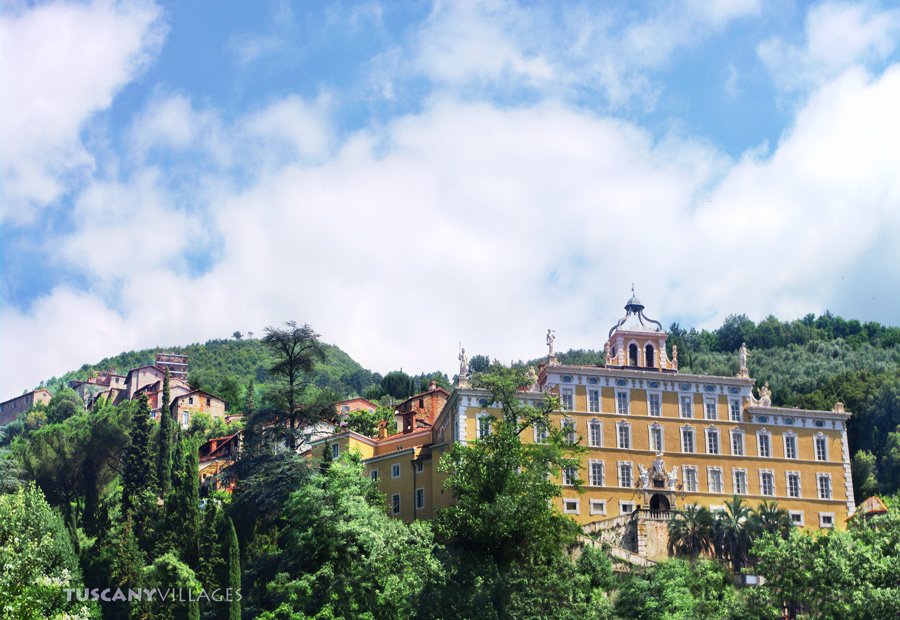
Collodi is a perfect car-free day. The Pinocchio Park and the gardens of Villa Garzoni are right by the bus stop, and the old village climbs up the hill behind.

Buses into the hills (the tricky bit)
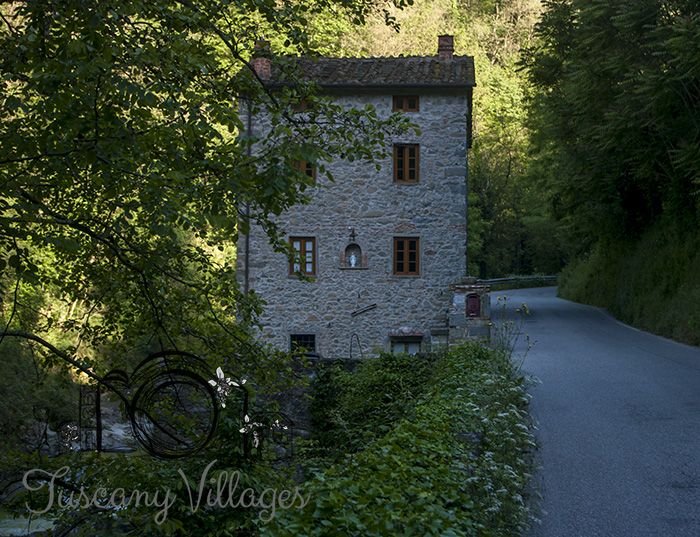
There is a bus into the Svizzera Pesciatina. Autolinee Toscane runs a line (shown as SvP) from Piazza XX Settembre in Pescia up the valley, with stops in or near Pietrabuona, Medicina, Fibbialla, Aramo, San Quirico, Castelvecchio, Stiappa, Pontito, Sorana and Vellano.
Now the catch. It’s a lifeline for locals and schoolchildren, not a tourist hop-on, hop-off. There are only a handful of runs a day, they’re timed for school and work, and there’s very little at weekends. Some villages, Sorana among them, get only a handful of runs. Landslides and roadworks sometimes force diversions on the valley roads too, so check for notices before you set off.
My advice:
- Download the timetable (PDF) from the Autolinee Toscane website and check it twice.
- Ride up, walk or taxi down. Getting up is the hard part. Coming back, you might walk down to Pietrabuona or the main road, or book a taxi.
- Ask in the bar. Seriously. Locals know whether the bus is actually running today.
Taxis and transfers
Taxis in Pescia have to be booked by phone. You won’t flag one down in the street. For a day of village hopping, a pre-booked driver for a few hours can work out cheaper than you’d think, especially split between friends. Agree the price first.
Walking
This is the bit I love. The villages were linked by mule tracks long before there were roads, and many of the old paths are still there. Some are waymarked by the CAI (the Italian Alpine Club). Check a current map for which ones are signed.
Some easy-ish ideas:
- Pescia to Pietrabuona: about 4.5 km up the valley. Visit the Museo della Carta (the paper museum). Check its opening days before you go. Then get the bus or a taxi back.
- Sorana to Lignana: a short, steep walk up through the chestnut woods to the ruins of the “lost” eleventh castle.
- Village to village: Castelvecchio, San Quirico, Stiappa and Pontito are linked by old paths. Use a proper map or app, and don’t set off in the midday heat in summer.
Take water, wear real shoes, and tell someone where you’re going. Phone signal can be patchy in the valleys.
Montecatini’s funicular
If you’re based near Pescia, don’t miss this one. From Montecatini Terme a little red funicular railway, running since 1898, climbs up to the old hilltop village of Montecatini Alto. It usually runs daily from spring to autumn, every half hour, but check this year’s dates and times before you go. The views from the top are glorious, and so is the gelato.
A sample car-free week
- Day 1: arrive at Pisa, train to Lucca. Walk or cycle the walls.
- Day 2: Lucca at leisure.
- Day 3: bus to Collodi. Pinocchio Park, Villa Garzoni, the old village.
- Day 4: train to Pescia. Wander the town, then a taxi or the bus up to one or two of the castella.
- Day 5: walk Pescia to Pietrabuona and the paper museum.
- Day 6: train to Montecatini Terme, funicular to Montecatini Alto.
- Day 7: Florence by train, or a lazy day.
Car-free Pescia valley: the short version
Trains: Florence to Lucca line, stopping at Pescia and Montecatini. Florence to Pescia is about an hour.
Buses: Autolinee Toscane. E6 for Lucca, Collodi and Pescia. SvP for the hill villages (few runs, school-focused).
Taxis: book by phone. Agree the fare first.
Walking: old mule tracks link many villages. Take water and a map.
Always: check timetables for the exact day, especially Sundays and holidays.
It takes a little more planning without a car. But you’ll see the valley slowly, and you’ll probably end up chatting to someone at a bus stop. Which, to be honest, is half the fun.
You might also enjoy:
- Where to stay near Lucca and the Svizzera Pesciatina
- Le Dieci Castella: a driving route through the Svizzera Pesciatina
- Lignana: the lost eleventh castle
Susan