Last updated: October 2026
“Do we need a car?” After “where should we stay?”, it’s the question I got asked most when I lived out there. The honest answer is: it depends where you want to go.
Tuscany isn’t one place. It’s busy art cities on a good railway line, and then it’s hills, woods and villages where the bus comes twice a day if you’re lucky. So the trick is to match the transport to the bit of Tuscany you’re visiting.
Here’s how I’d think about it.
The quick answer
- Cities only (Florence, Lucca, Pisa, Pistoia): no car. Trains are cheap and frequent, and a car is a headache in the old centres.
- Cities plus a few easy day trips (Collodi, Montecatini, Pescia): still no car. Trains and buses cover it.
- Hill villages, the Svizzera Pesciatina, the Garfagnana, agriturismi: hire a car, at least for part of the trip.
- A mix: do the cities by train, then pick up a car for the countryside days. This is what I’d do.
Trains: the easy bit
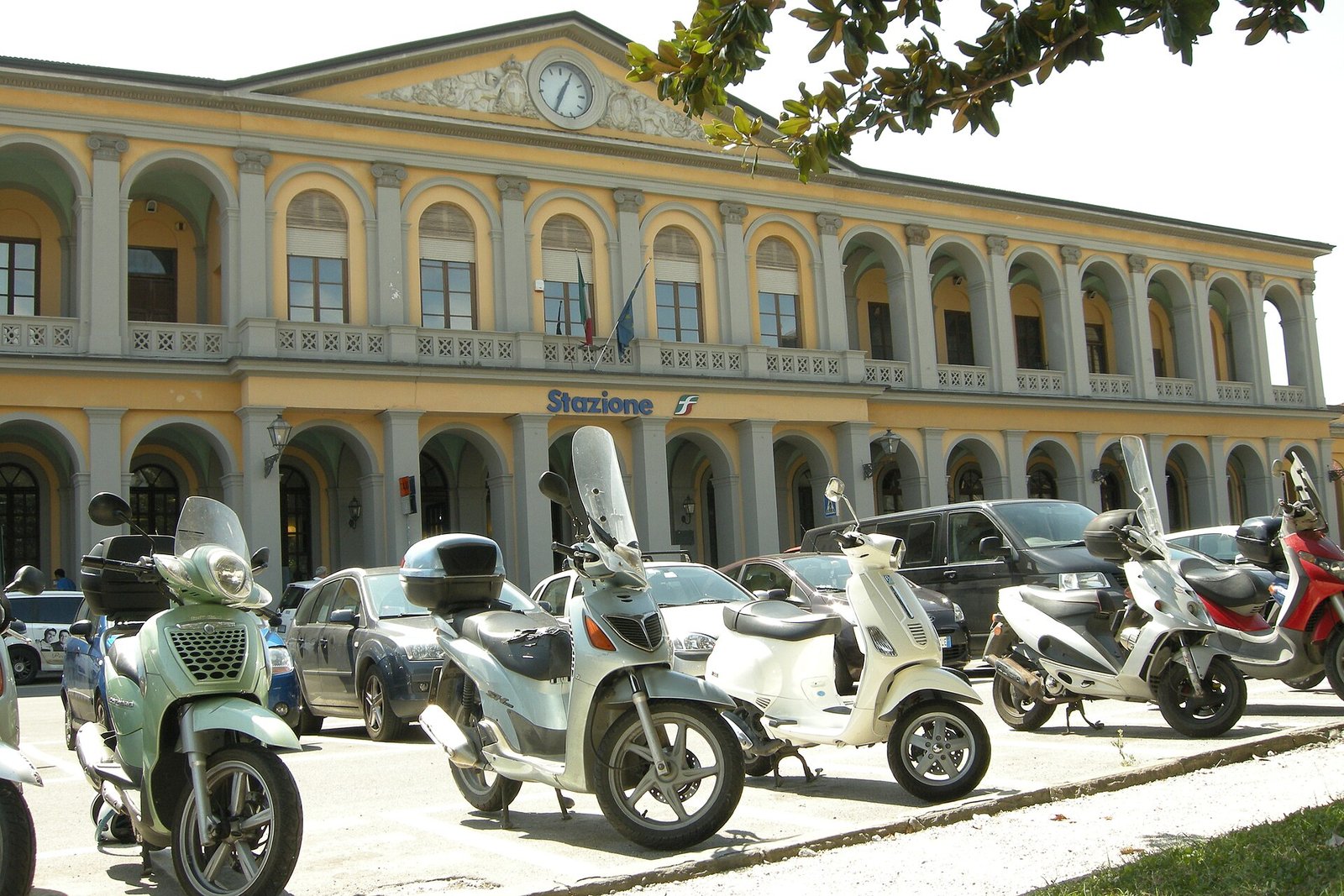
The railway is the backbone of this corner of Tuscany. The line from Florence runs through Prato, Pistoia, Montecatini Terme and Pescia to Lucca, then on to Viareggio on the coast. Pisa is about half an hour from Lucca on another line.
Rough times, to give you a feel:
- Florence to Pistoia: about 35 to 50 minutes
- Florence to Lucca: about 1 hour 20 to 1 hour 45
- Pistoia to Lucca: about 45 minutes
- Pisa to Lucca: about 25 to 30 minutes
- Lucca to Barga-Gallicano (for Barga): about 40 to 50 minutes
These are slow regional trains, and they’re cheap. Buy a ticket, stamp it if it’s paper (this matters, more in a minute), and off you go. The fast trains (Frecciarossa and Italo) only matter if you’re coming from Rome, Milan or further away, and they stop in Florence.
The full how-to, with tickets, apps, validating and strikes, is in my guide to train travel in Italy.
Buses: good on the plain, patchy in the hills
Autolinee Toscane runs nearly all the buses in Tuscany. Between towns on the plain, like Lucca, Collodi and Pescia, they’re perfectly usable. Up in the hills they’re a lifeline for schoolchildren and locals, not a sightseeing service. A handful of runs a day, timed for school, and very little on Sundays.
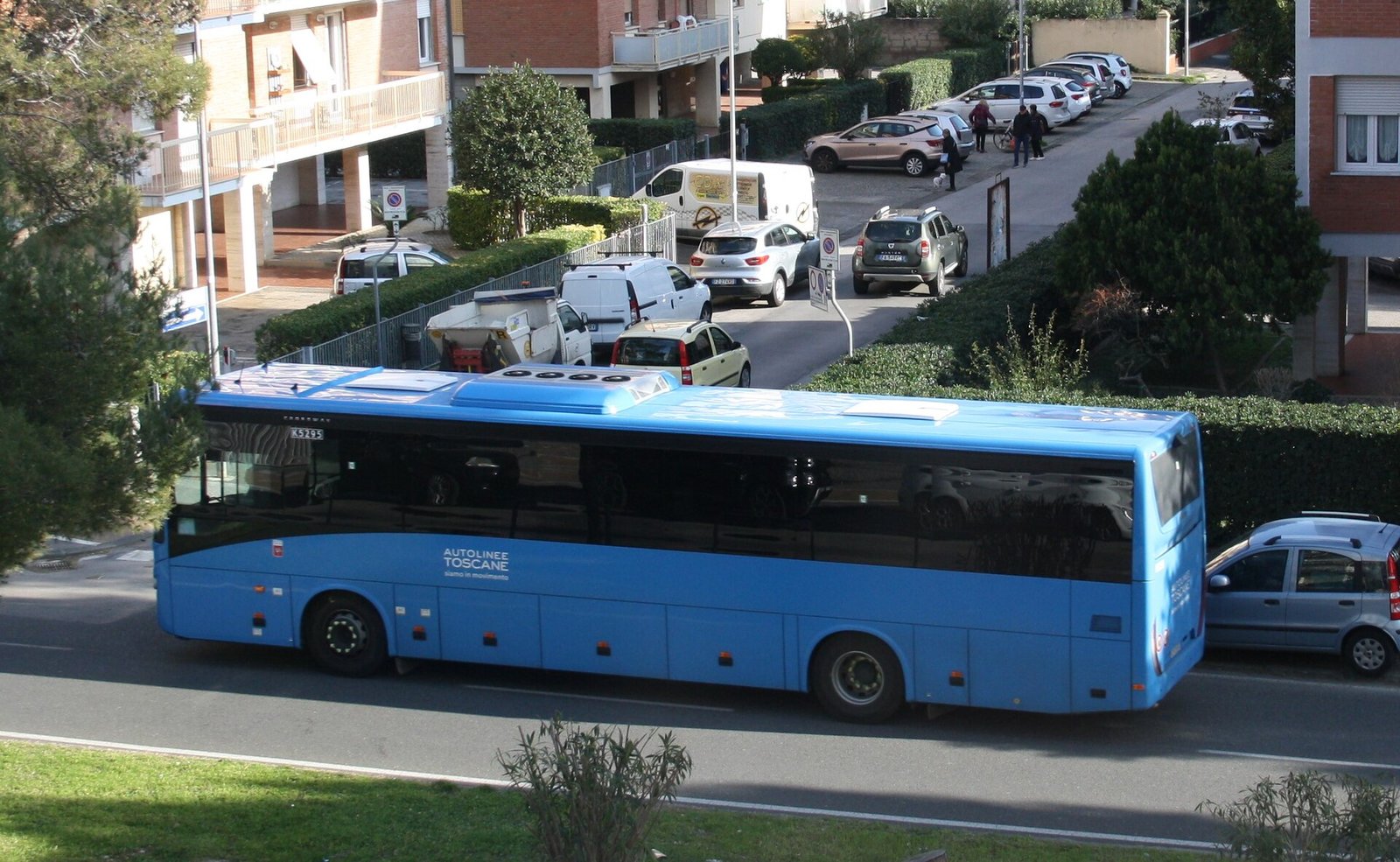
The good news is you can now pay with a contactless bank card on their buses, so you don’t need to hunt down a tobacconist for a ticket. The catch (there’s always one) is that on country routes you have to tap on and off. Details in the train and bus guide.
Driving: freedom, with a few traps
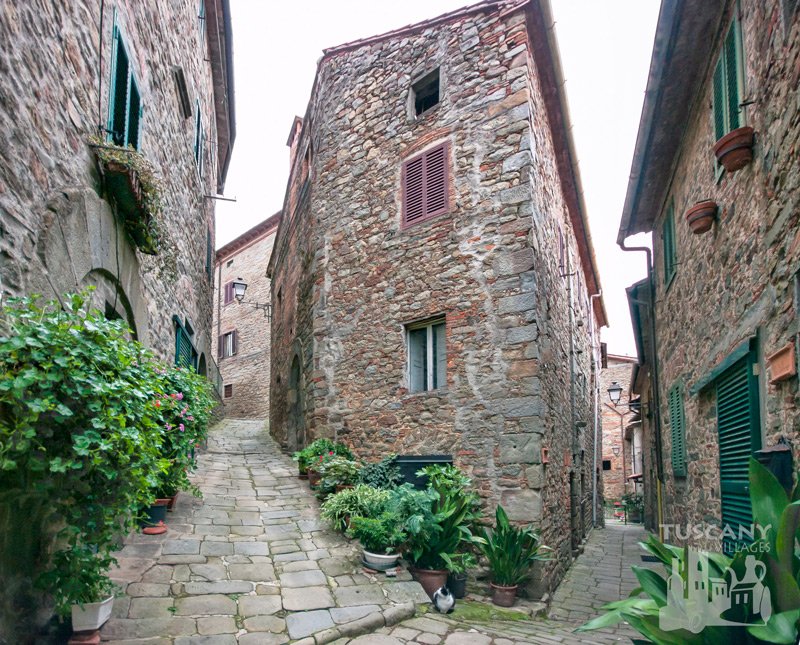
For the villages, a car makes life so much easier. The Dieci Castella above Pescia, the Garfagnana, the little sagre in the hills: you can reach them by bus, but you’ll spend a lot of time waiting at the side of the road.
Driving in Tuscany is fine once you know three things:
- Don’t drive into the old town centres. Most have a ZTL (a limited traffic zone) with cameras, and the fines arrive months later. Lucca, Pistoia, Florence and Pisa all have them.
- The motorways have tolls. Take a ticket on the way in, pay on the way out, and stay out of the yellow Telepass lanes.
- Village roads are narrow. Very narrow. Hire the smallest car your luggage allows.
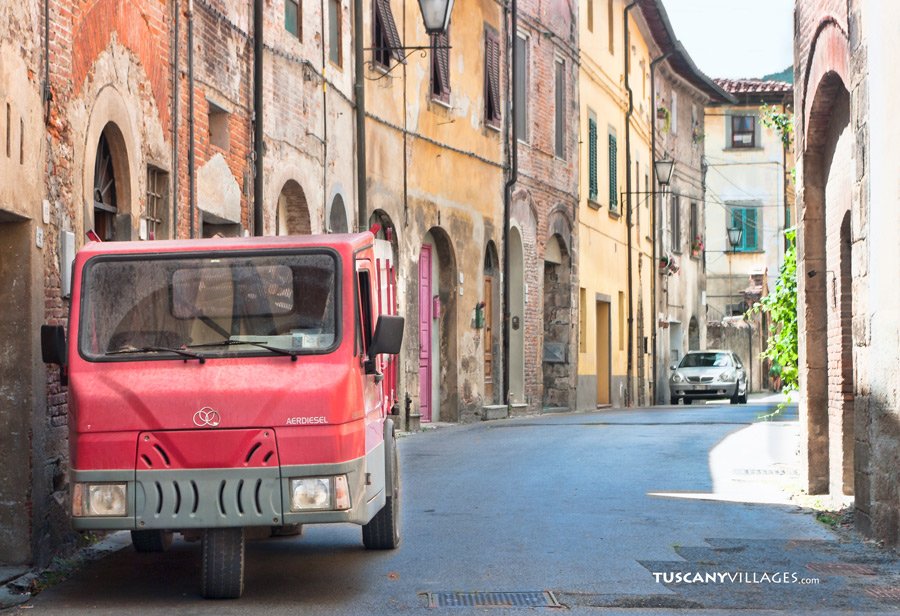
I’ve written a whole post on this: driving in Tuscany, with ZTL zones, fines and car hire tips.
No car at all?
You can still have a lovely time. Base yourself in Lucca or Pescia, use the trains along the valley, take the bus to Collodi, and book a taxi for the odd trip up into the hills. I’ve done a whole car-free plan for the Pescia valley in Visiting Tuscany without a car, so I won’t repeat it here.
Arriving by plane
Most people fly into Pisa or Florence. Both are well connected to Lucca and Pistoia by train, and both have car hire. Pisa is the easier one for Lucca, Florence for Pistoia. Step-by-step routes are in my Pisa and Florence airports guide.
My suggested mix
If I were planning a week here for a friend, I’d say:
- Days 1 to 3: stay in Lucca with no car. Walk the walls, take the train to Pisa or Pistoia for a day.
- Days 4 to 7: pick up a hire car (outside the walls!) and move to the hills. Do the Dieci Castella, Barga, a sagra in the evening.
- Drop the car at the airport on the way home.
You get the best of both. No parking stress in the cities, and no waiting for the 6.40 school bus in the hills.
Getting around Tuscany: the short version
Cities: train. Cheap, frequent, no parking.
Plain towns (Collodi, Pescia, Montecatini): train or bus.
Hill villages: car, or a taxi and a lot of patience.
Never: drive into a historic centre without checking the ZTL.
You might also enjoy:
- Visiting Tuscany without a car: the Pescia valley edition
- Where to stay near Lucca and the Svizzera Pesciatina
- Le Dieci Castella: a driving route through the Svizzera Pesciatina
Susan
Photo credits: Lucca railway station, just outside the city walls (photo: DV, CC BY-SA 4.0, via Wikimedia Commons); An Autolinee Toscane bus (photo: Piergiuliano Chesi, CC BY 3.0, via Wikimedia Commons). All other photos are my own.