Last updated: October 2026
“Where should we stay?” It’s the question everyone asks first. And the honest answer is: it depends what sort of holiday you want.
Do you want to stroll out for an aperitivo every evening? Or wake up to church bells, chestnut woods and absolutely nothing to do? Do you have a car? Have you got kids who need a pool?
This little corner of Tuscany, between Lucca, Pescia and Montecatini, gives you all of those options within about half an hour of each other. Here’s my honest run-down of each base and who it suits.
Lucca: best for first-timers and no car
If it’s your first trip, or you’re not driving, Lucca is hard to beat. It’s a proper living city wrapped in huge Renaissance walls, which you can walk or cycle right round (it’s about 4 km). There are trains to Pisa, Florence and Pescia, and buses to Collodi.
Inside the walls you get the magic: church towers, little piazzas, the oval Piazza dell’Anfiteatro, evening passeggiata. Outside the walls you get cheaper rooms, easier parking and a short walk in.
One big warning if you’re driving. The old centre is a ZTL (limited traffic zone) watched by cameras. Drive through a gate without permission and the fine follows you home, sometimes months later. If your hotel is inside the walls, ask them before you arrive whether they can register your number plate. Many can, but usually just for arriving and leaving with your bags. Then park outside the walls.
Good for: first-timers, couples, no car, people who like to eat out. Not so good for: a quiet countryside escape, or big families on a budget.
Pescia: best for the hill villages
Pescia was my local town for years, so I’m biased. It’s not a postcard town like Lucca, and that’s part of the charm. It’s a real working town with a lovely long piazza (Piazza Mazzini), a famous flower market, good food and very few coach tours.
The big plus is location. Pescia is the gateway to the Svizzera Pesciatina, the ten old castle villages in the hills above. Pietrabuona is only a few minutes up the road. Collodi, Montecatini and Montecarlo are all close, and it’s on the train line to Lucca and Florence.
Good for: village explorers, walkers, people who want everyday Italian life. Not so good for: anyone wanting big-city buzz on the doorstep.
More on the villages in my Dieci Castella driving route, and on getting about in my car-free guide.
Collodi: best for families
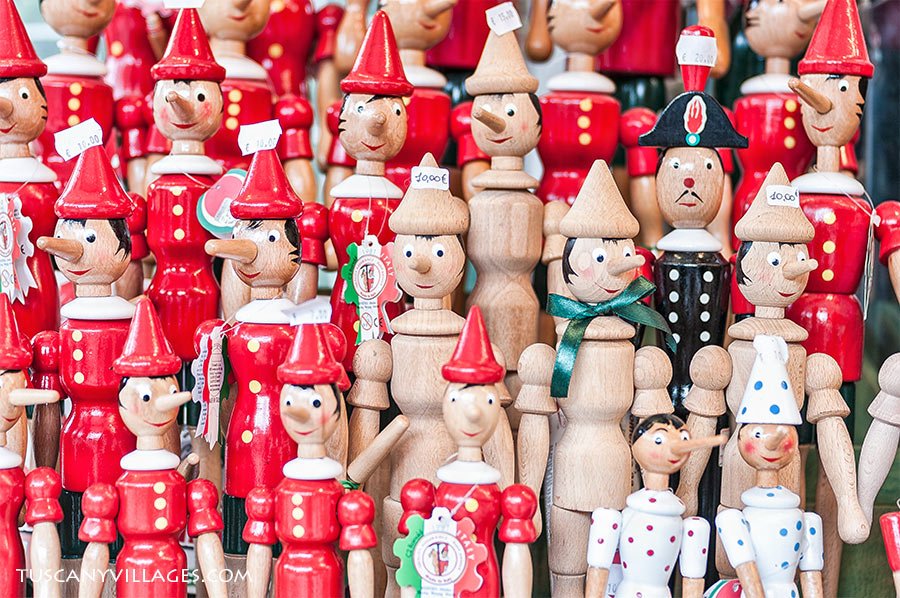
Collodi is Pinocchio’s village. Carlo Lorenzini took his pen name from it. The Pinocchio Park, the grand gardens of Villa Garzoni and the Butterfly House are all here, and the old village is a steep tumble of houses and steps up the hill behind.
Stay here with young children and you’ve got a ready-made day out on your doorstep. It’s on the E6 bus between Lucca and Pescia, too.
Good for: families, garden lovers. Not so good for: nightlife. There isn’t any. That’s the point.
Montecatini Terme: best for choice and value
Montecatini is an elegant old spa town, now part of the UNESCO “Great Spa Towns of Europe”. It has loads of hotels, which keeps prices competitive, lots of restaurants, and a fast train line to Florence and Lucca.
Don’t miss the funicular up to Montecatini Alto, the medieval village on the hill, for sunset and a glass of something.
Good for: value, choice, no car, spa lovers. Not so good for: that rustic farmhouse feel.
Montecarlo: best for wine lovers
No, not that Monte Carlo. Tuscany’s Montecarlo is a tiny walled hilltop village surrounded by vineyards, about 17 to 18 km from Lucca and around 8 km from Pescia. It has its own wine (Montecarlo DOC), a handful of good restaurants and lovely views across the plain.
It’s very quiet in the evenings, and you’ll need a car (or taxis) to get about. But for a wine-tasting break with a view? Lovely. Late summer brings its wine festival too.
Good for: couples, wine lovers, a peaceful base with a car. Not so good for: no car.
A hill village holiday let: best for the real thing
This is what I would do, but then I would say that.
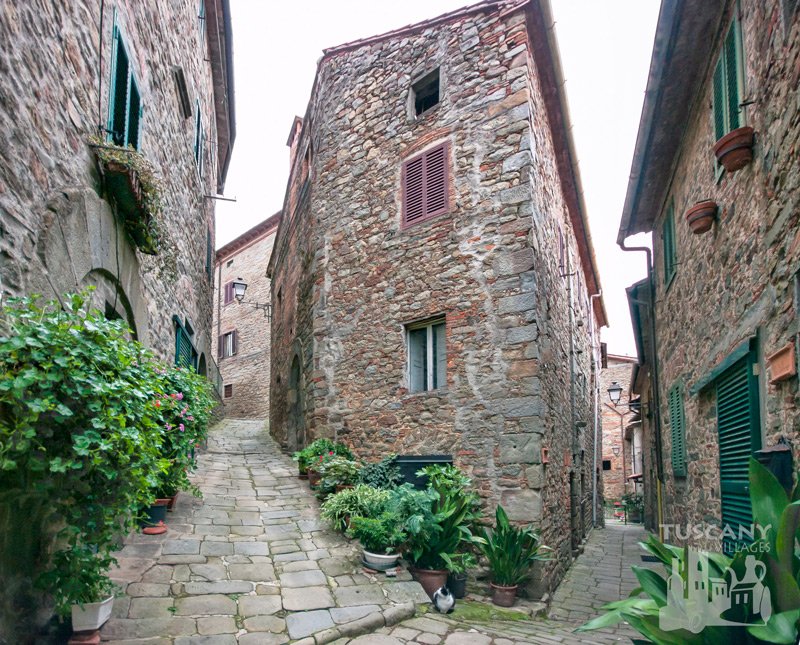
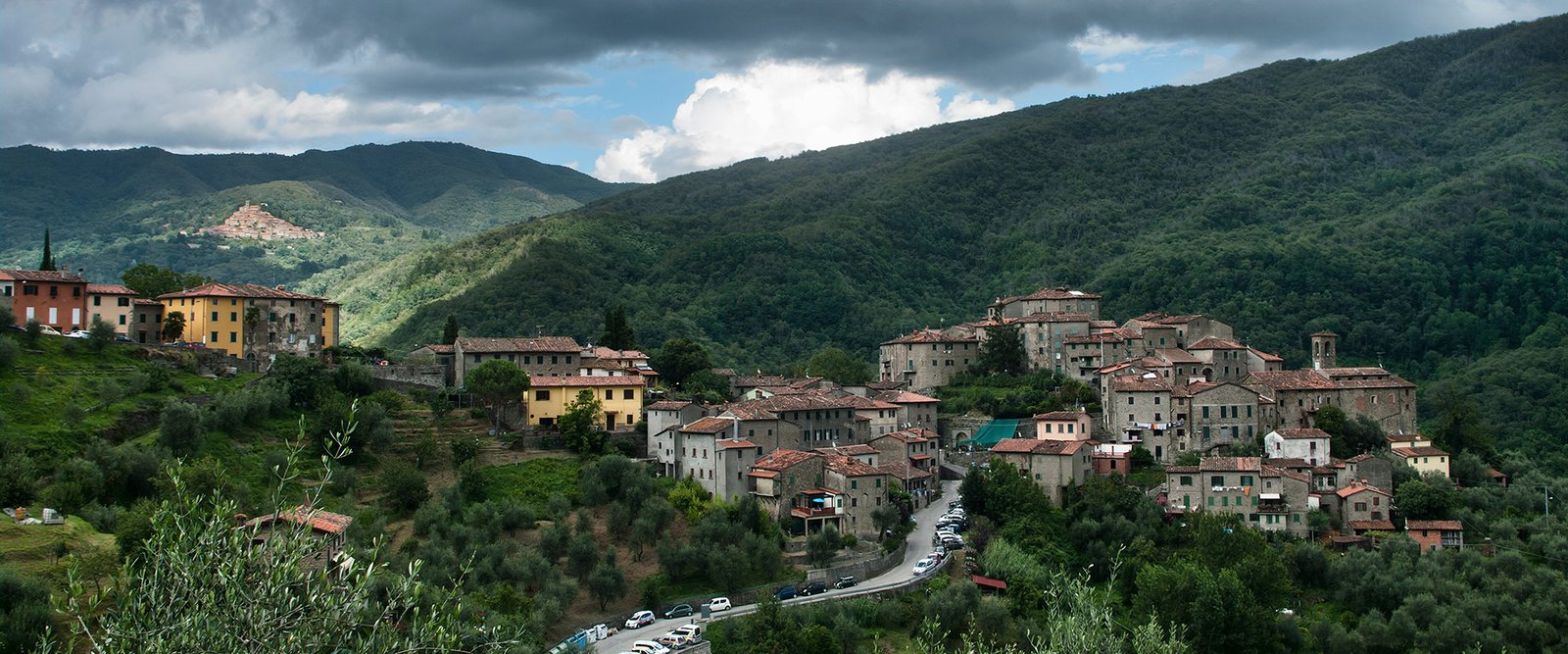
Rent a house in one of the castle villages, like Castelvecchio, Sorana, Pontito, Stiappa, Fibbialla, Vellano or Aramo, and you’ll live the village life. Bells, cats, neighbours chatting in the street, the bread van, the festa in summer and the fog in the valley in the morning.
Do go in with your eyes open, though:
- You need a car. The bus up is a school bus, not a tourist service.
- The roads are narrow and twisty. Hire a small car.
- Shops are few. Some villages have a little shop or bar, some have nothing. Stock up in Pescia.
- Check the access. Many houses are up steps or lanes where cars can’t go. Ask how far you’ll be carrying the suitcases.
- Winter is very quiet. Wonderful if that’s what you want. Some places close up altogether.
Thinking of a winter stay? Here’s what winter in the Tuscan hills is really like.
Good for: returners, writers, walkers, anyone who wants to slow right down. Not so good for: first-timers without a car, or anyone with mobility problems.
An agriturismo: best for pools and peace
An agriturismo is a working farm that takes guests. They range from simple rooms to proper countryside resorts with a pool. Many make their own olive oil or wine, and some do home-cooked dinners, which can be the best meal of your trip.
There are plenty in the countryside around Lucca, Montecarlo and Pescia. Look for one within 10 to 15 minutes of a town so you’re not driving miles for a coffee.
Good for: families wanting a pool, groups, foodies. Not so good for: no car.
Bagni di Lucca: best for green and gentle
Up the Serchio valley, then along the river Lima, Bagni di Lucca was a fashionable spa resort in the 1800s, a favourite with British visitors and poets. Today it’s quieter, greener and cheaper than Lucca, with faded grand villas and riverside walks. On the way, look out for the famous humpbacked Devil’s Bridge (Ponte della Maddalena) at Borgo a Mozzano.
It’s a bit further from the Pescia villages (the mountain roads between them are slow), so it suits a stay focused on the Garfagnana and the Lucca side.
Good for: walkers, nature lovers, a quieter Lucca-side base.
Quick picker
Where to stay: the short version
First trip, no car: Lucca (inside or just outside the walls)
Exploring the ten villages: Pescia, or a village holiday let with a car
Young kids: Collodi, or an agriturismo with a pool
Best value and trains: Montecatini Terme
Wine and views: Montecarlo
Slow, real village life: a house in the Svizzera Pesciatina
Green and quiet: Bagni di Lucca
A few booking tips
- Book early for summer (July and August) and for Lucca Comics & Games, which traditionally runs over the days around 1 November, when Lucca fills up completely. Dates are announced well ahead.
- Check for air conditioning if you’re coming in summer. Thick stone walls help, but not always enough.
- Ask about the tourist tax. Most towns charge a small nightly amount per person, paid on arrival.
- Read the parking details. In villages and old towns, “parking nearby” can mean a fair walk.
Wherever you end up, you’re never far from a good plate of food, a glass of wine and a lovely view. That’s the joy of this corner.
You might also enjoy:
- Visiting Tuscany without a car: the Pescia valley edition
- A wander around Fibbialla
- Winter in the Tuscan hills
Susan