Last updated: October 2026
When I lived in the hills above Pescia, people would ask me where the “real” Tuscany was. I’d point up the valley.
The valley of the river Pescia runs up into the foothills of the Apennines. Its old name is the Valleriana. Locals and guidebooks also call it the Svizzera Pesciatina, the “Pescia Switzerland”. The story goes that Sismondi, a Genevan historian who came to Pescia as an exile at the end of the 1700s, thought the hills looked like home. I’m not sure the Swiss would agree. But I can see what he meant on a misty morning.
Ten medieval hilltop villages still stand in this valley. They rise out of the chestnut woods like islands. Together they’re called le dieci castella, the ten castles. This is my route round them, with the practical bits I wish someone had told me.
The ten villages at a glance
The ten castella, all part of the comune of Pescia, are:
- Pietrabuona
- Medicina
- Fibbialla
- Aramo
- Sorana
- San Quirico
- Castelvecchio
- Stiappa
- Pontito
- Vellano
In the Middle Ages there was an eleventh, Lignana. More on that sad tale below.
You can’t do all ten properly in one day. Well, you can, but you’ll see them through a windscreen. I’d split it into two easy days, or pick four or five and linger.
The route
The comune’s own itinerary runs in this order, and it works well by car: Pietrabuona, Medicina, Fibbialla, Aramo, San Quirico, Castelvecchio, Stiappa, Pontito, Sorana and Vellano. Leave Pescia on the Via Mammianese heading north, signed for Pietrabuona and Abetone.
Route maps (open in Google Maps): Day one: Pescia to Pontito via Pietrabuona, Medicina, Fibbialla, Aramo, San Quirico, Castelvecchio and Stiappa · Day two: Pontito back to Pescia via Sorana and Vellano
Pietrabuona: the front door
Pietrabuona is the gateway to the valley, about 4.5 km from Pescia. It sits on a knoll that Florence and Pisa fought over for years.
Down by the road is the old paper mill, Le Carte, now the Museo della Carta di Pescia. This valley made paper for centuries, and the museum tells that story. In 2026 it opens Monday, Wednesday and Saturday, 10am to 6pm, and is closed on Sundays. Other weekdays are for booked groups only. Do check before you go, as these things change.
Medicina, Fibbialla and Aramo
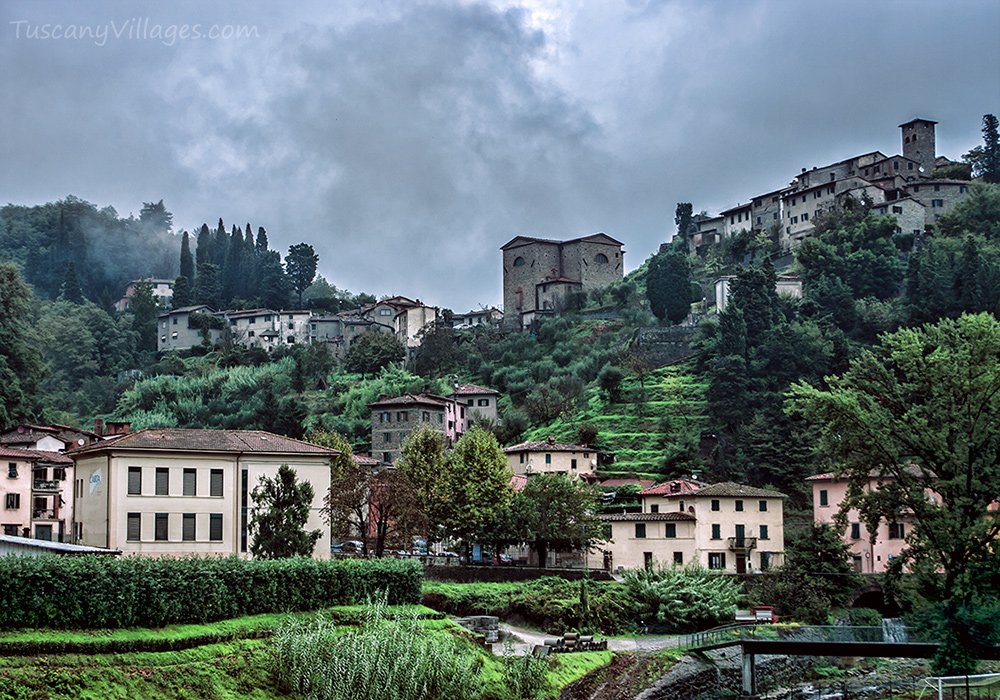
Turn on to the Val di Torbola road for this little cluster. Medicina is crowned by the church of Santi Sisto e Martino. Its bell tower is thought to have started life as a watchtower.
Fibbialla is tiny. You enter past the church of San Michele and the village wraps around it.
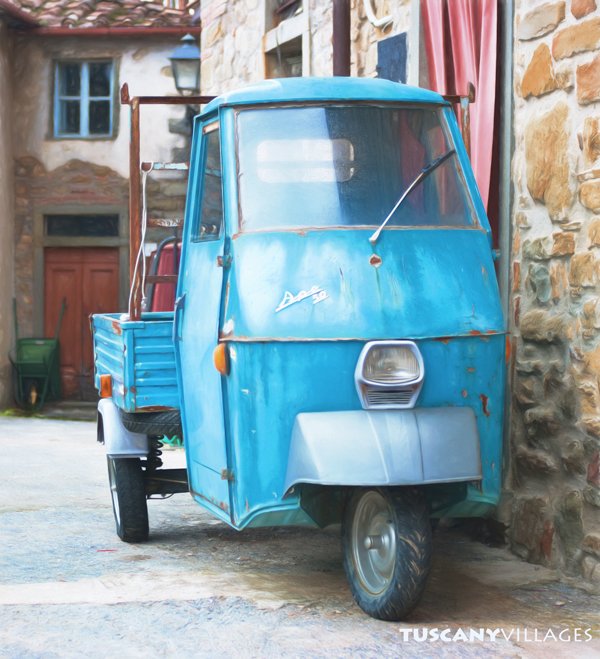
Aramo is the dramatic one. It perches on a crag above the Val di Torbola, and it was sacked more than once in the 1400s. The church of San Frediano sits at the very top. My photo of a little Ape van parked in its streets is still one of my favourites.
San Quirico
San Quirico sits on the eastern side of Monte Battifolle and looks out over the whole valley. Its church was first recorded in the 10th century.
Its history isn’t gentle. In the Middle Ages its people had a long and bloody feud with the neighbouring castles, especially Castelvecchio, which belonged to Florence at the time. By the end of the 1300s only a few villagers were left. The Republic of Lucca tried to tempt settlers back with ten years tax-free. I’m half tempted myself.
Look out for the little tunnels that run under the houses and the stone fountain in the top piazza.
Castelvecchio and its pieve
Castelvecchio followed the fortunes of Vellano. It was handed to the Garzoni family in a feud in 1333. A Garzoni later gave it to Pisa in 1362, and two years after that it was under Florence.
The star here is just outside the village. The Pieve dei Santi Ansano e Tommaso is a Romanesque church on a rocky spur, with its bell tower standing on its own like a watchtower. It’s first mentioned in a document of 879, and it was declared a national monument in 1875. Look closely at the façade for the strange carved faces. Inside there are three naves and capitals carved with odd little figures.
The pieve is usually open only for services and special events, or on request. The Comune di Pescia (0572 400115) can point you in the right direction, and there’s often a contact number on a little sign by the church door.
Up in the village, the church of San Giovanni Battista keeps a late 15th-century painting of the Madonna and Child.
If you’d like a taste of the village before you go, here’s a morning walk around Castelvecchio that I filmed.
Stiappa
Stiappa is one of my favourites, and it’s only about 6 km from Pontito. It sits at around 627 metres on the southern slope of Monte Battifolle and was once a border castle between Florentine Tuscany and Lucca.
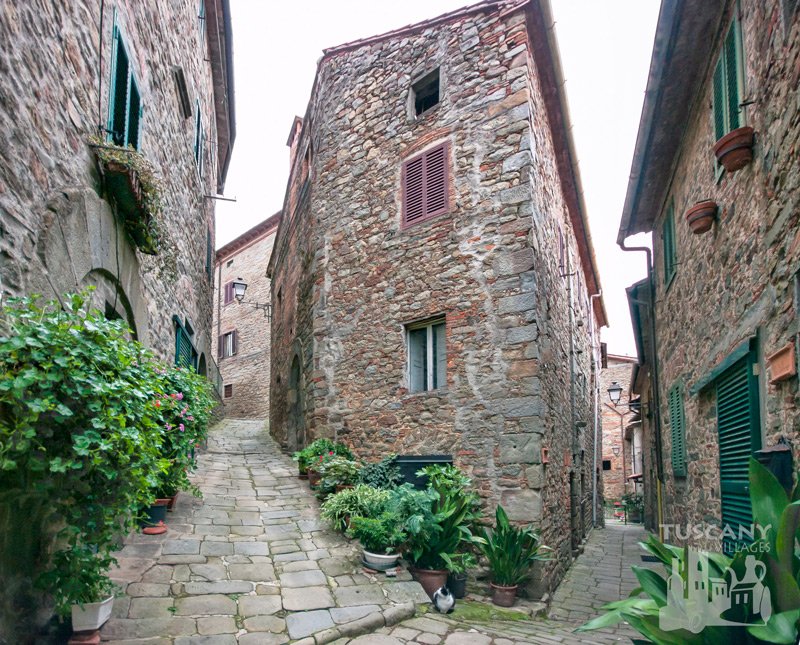
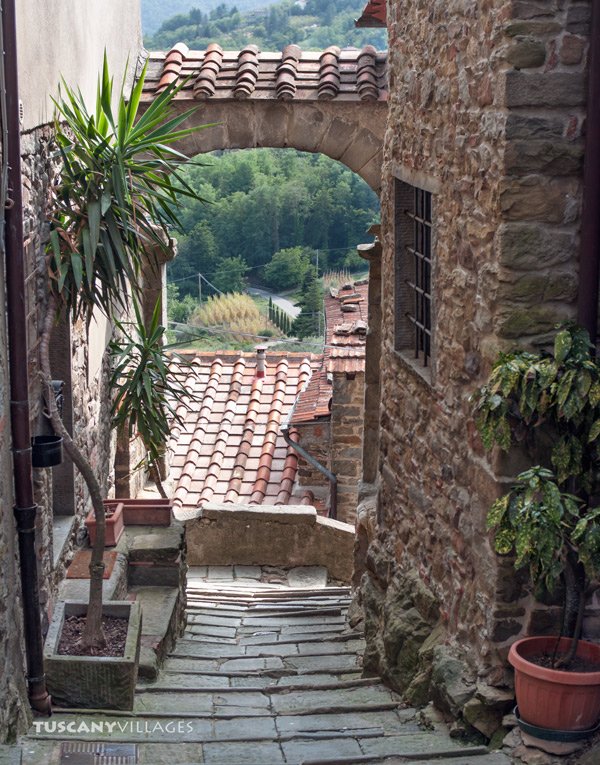
It’s quiet, and full of old doors and windows. Can you imagine the stories behind them? There are several stone tunnels through the village, the paving worn smooth by centuries of feet.
When I was last there, a lovely lady was sweeping outside her house. On my way out, there she was again, sweeping the entrance to the village. She told me the comune had stopped cleaning it years ago, and if she didn’t, no one would. I’ve thought about her many times since.
Pontito: the fan-shaped village
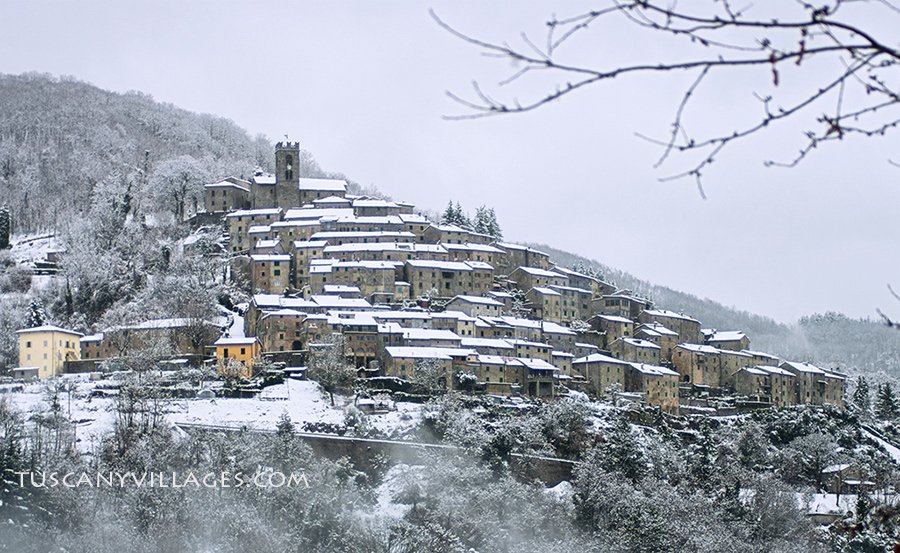
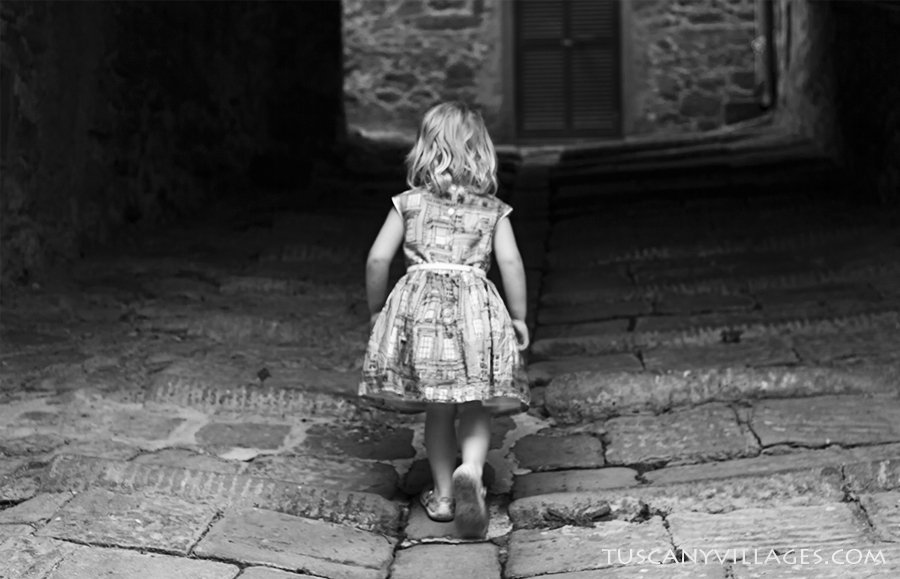
Pontito is the one people remember. It sits at about 750 metres, and the whole village fans out down the hillside. The streets run up like the ribs of an upside-down fan to the church of Santi Andrea e Lucia at the top. Most of those streets are steps. Wear proper shoes. My knees still remember.
Two Pontito stories I love. Lazzaro Papi, born here in 1763, was the first person to translate Milton’s Paradise Lost into Italian. And Franco Magnani, who left Pontito in 1958 and settled in California, painted his home village over a hundred times entirely from memory. His paintings were shown at the Exploratorium in San Francisco next to photographs of the same views.
Sorana and Vellano on the way home
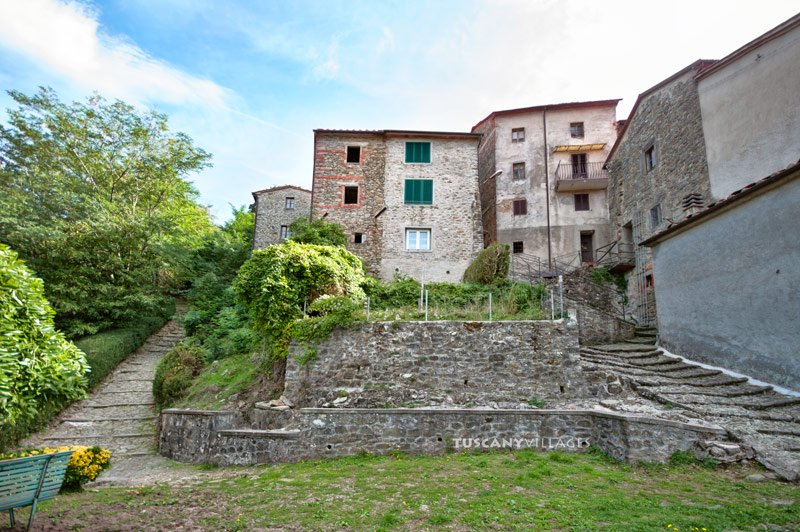
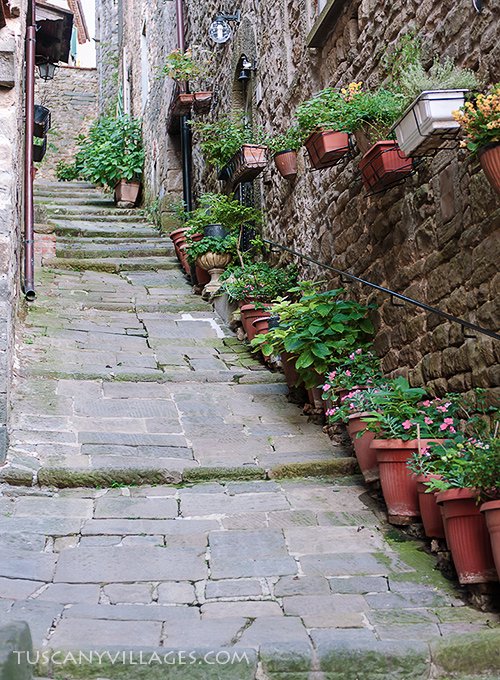
Coming back down, Sorana is famous for its beans, the fagiolo di Sorana. Vellano, on the other side of the valley, was historically the main village of the Valleriana. I have a soft spot for its lanes and flower-filled corners.
Lignana: the eleventh castle
Lignana stood on a mountain top, in the perfect spot to watch the whole valley. Pisa destroyed its castle in a raid in 1362. Two years later Florence, tired of the constant attacks, pulled the village down for good. Its people moved to Sorana, Castelvecchio and Lanciole.
Sorana built a new quarter for them. It’s still called Paradiso, because the women who came from Lignana were said to be so beautiful. Lignana’s stones still lie scattered deep in the forest. I find that very moving.
Getting there
- From Pescia: Pietrabuona is about 4.5 km, Castelvecchio about 12 km and Pontito about 19 km by road. Pontito takes around half an hour, longer behind a tractor.
- From Lucca: Pescia is about 30 km, roughly half an hour on the main road.
- From Florence: Pescia is about 64 km, roughly an hour.
- From Pisa airport: Pescia is about 64 km, roughly an hour.
- Without a car: honestly, it’s hard. Pescia has a station on the Lucca to Florence line, but buses into the valley are few. A hire car makes this trip.
Parking and driving tips
- Park outside the villages. Their streets are steps and alleys, not roads. Most have a small parking area near the entrance. Please don’t block anyone’s gate.
- The roads are narrow and twisty, with tight bends. Take it slowly and use your horn on blind corners, like the locals do.
- Fill up with fuel in Pescia. There’s little up the valley.
- Bring cash and water. Village bars keep their own hours, and some villages have no bar at all.
Nearby places
- Pescia: a proper working town with a long piazza, good for coffee and supplies.
- Collodi: about 5 km from Pescia, home of the Pinocchio Park and the Garzoni garden. Great with children.
- Calamecca and La Macchia Antonini: over the hills in the Pistoia mountains, about half an hour from Pescia. Perfect for a picnic.
You might also enjoy:
- 8 small villages in Tuscany you’ve probably never heard of
- Best day trips from Lucca: 6 easy escapes I love
Where to stay
I’d base myself in or near Pescia. You’re close to the valley, close to the station, and Lucca and Florence are both easy. For real peace, look for a farmhouse or apartment in one of the villages themselves. Just check the parking and the number of steps to the front door before you book.
Before you go
These are lived-in villages. Say buongiorno, keep your voice down, and don’t peer through windows.
If you do the route, I’d love to hear which village stole your heart.
Susan