Last updated: October 2026
Imagine a medieval hill town in Tuscany. A Romanesque cathedral on top. Narrow lanes, old doors, mountains all around. Then imagine half the people you meet have a cousin in Glasgow.
That’s Barga.
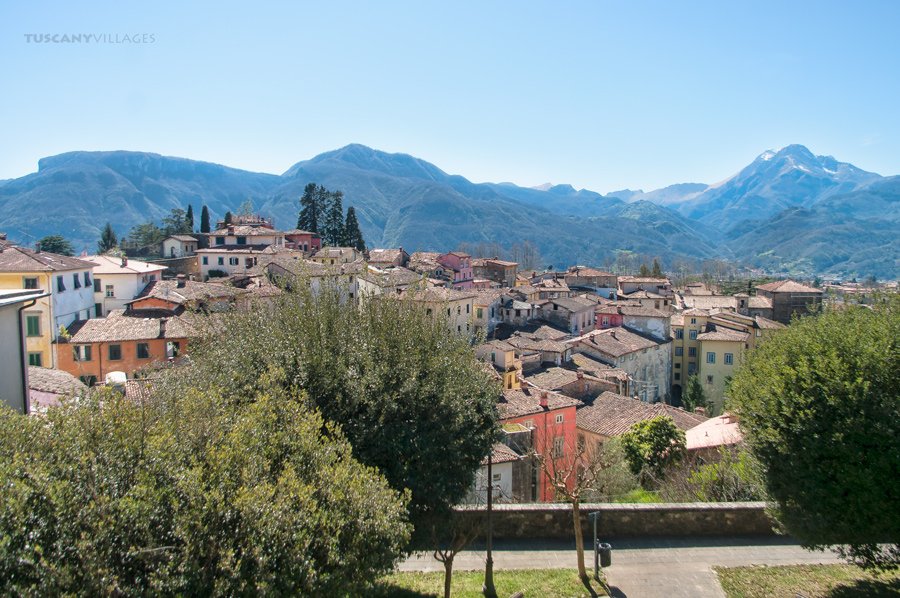
It sits in the Serchio valley, north of Lucca, between the Apuan Alps and the Apennines, at about 410 metres up. It’s one of the official “Borghi più belli d’Italia” (most beautiful villages in Italy), and it’s an easy day out from Lucca by car or train.
Why “the most Scottish town in Italy”?
In the late 1800s and early 1900s, a lot of people left Barga and the Serchio valley to find work. Many of them went to Scotland, especially Glasgow and the towns around it. They opened cafés, ice cream parlours and, of course, fish and chip shops.
Plenty came back. Plenty didn’t, but kept the family links. It’s often said that more than half the people in Barga have Scottish relatives. You’ll hear Scottish accents in the bars in summer, and the town is twinned with Prestonpans, Cockenzie and Port Seton, and Longniddry, in East Lothian, near Edinburgh.
And yes, there’s a fish and chips festival. The Sagra del Pesce e Patate runs for a couple of weeks from late July into August. In 2026 it ran from 30 July to 17 August. Check the dates for your year before you go.
If you love a sagra, my month-by-month guide to Tuscan festivals has plenty more.
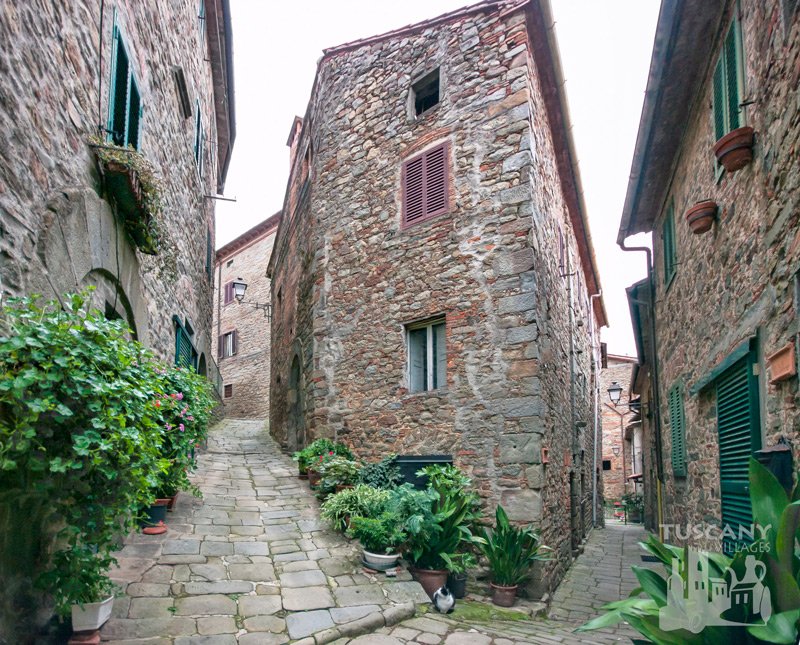
Walking up through the old town
Leave the car or the bus in the newer part of town and walk up. The old town, the “Castello”, climbs the hill to the Duomo. It’s steep, so wear proper shoes.
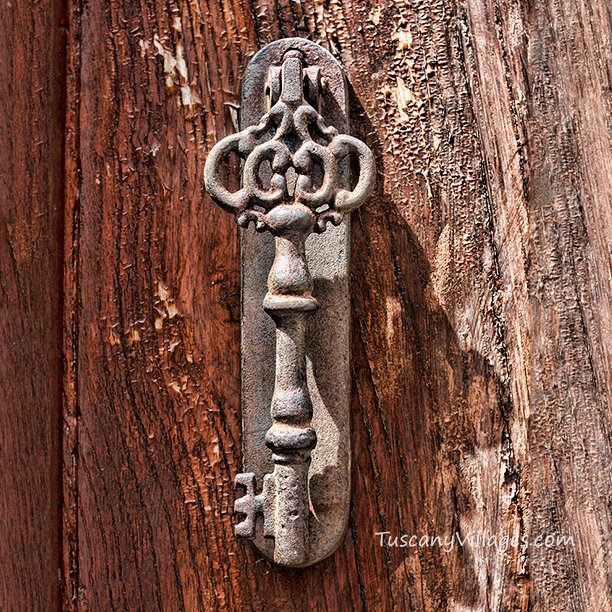
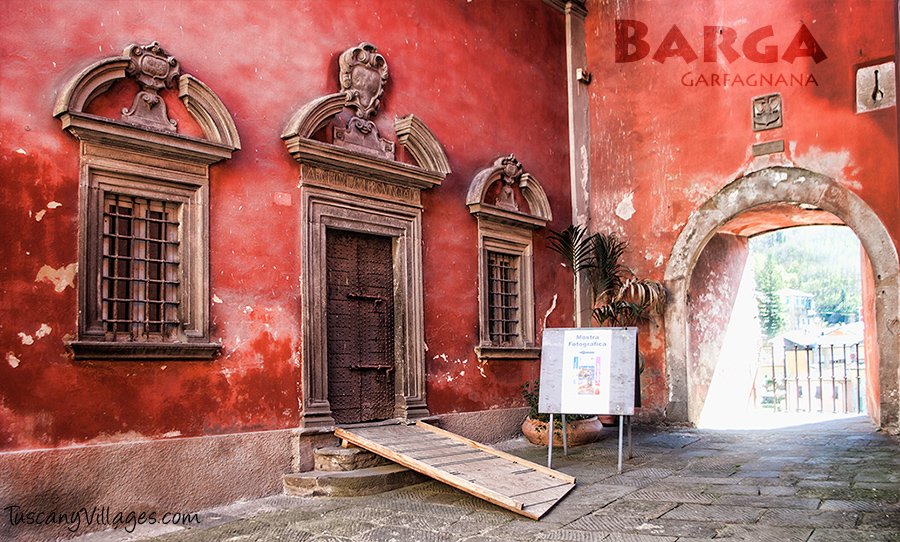
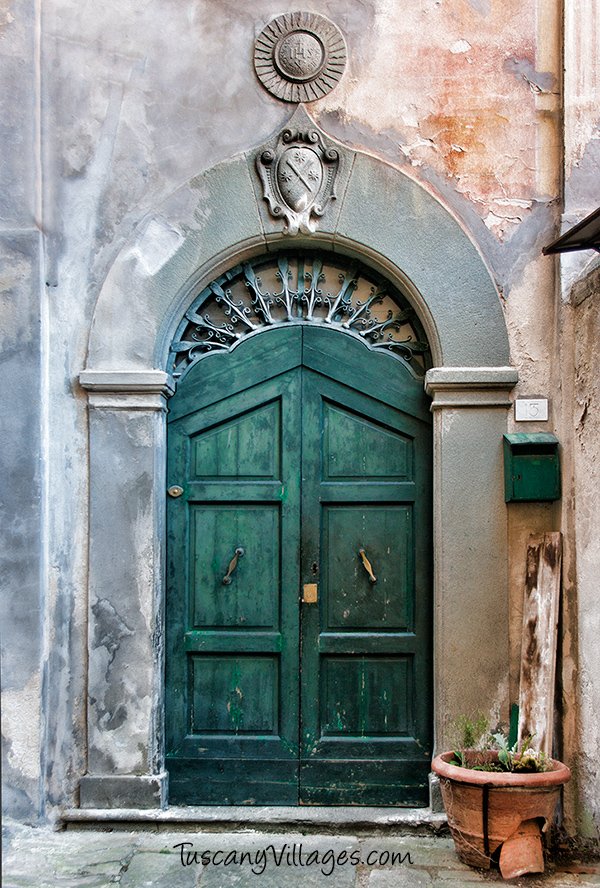
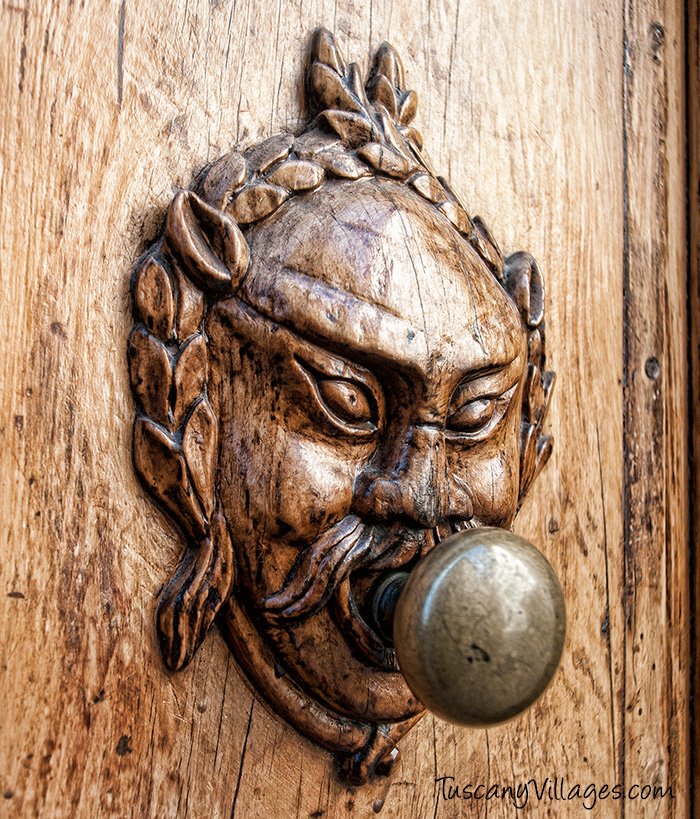
Go in through the Porta Reale, one of the old gates, and just wander. This is a town of doors. Grand carved ones, faded green ones, ones with knockers shaped like faces. I could spend a whole afternoon here with my camera and not get bored.
Along the way, look out for:
- Caffè Capretz, in the old market loggia on Piazza Salvi. It opened in 1870, and the poet Giovanni Pascoli used to drink there. Stop for a coffee.
- Teatro dei Differenti, a lovely little theatre from 1795.
- The Conservatorio di Santa Elisabetta, with an altarpiece from the Della Robbia school.
The Duomo and the view
At the top of the hill is the Duomo di San Cristoforo. It’s Romanesque, built in pale local limestone over several centuries, from the 11th century onwards. Inside, behind the altar, is a big wooden statue of St Christopher.
But the real show is outside. The lawn in front of the Duomo looks straight out over the rooftops to the Apuan Alps. On a clear day it’s one of the best views in this whole part of Tuscany. Bring a picnic, or at least sit on the wall for ten minutes. You’ve earned it after the climb.
A little history
Barga spent much of the Middle Ages caught between Lucca and Florence. Around 1330 it put itself under Florence, and it stayed with Florence for centuries while much of the valley around it belonged to Lucca. That’s part of why it feels a little different from its neighbours.
Pascoli’s house at Castelvecchio Pascoli
A few kilometres away, in the village of Castelvecchio Pascoli (not to be confused with my Castelvecchio above Pescia!), is the house of the poet Giovanni Pascoli. He moved here in 1895 and lived here until his death. The house, Casa Pascoli, is now a museum, kept much as he left it, with his study and garden.
It’s closed on Mondays, and hours change with the seasons, so check before you go.
Getting to Barga
By car from Lucca. Head north up the Serchio valley. The road follows the river past Borgo a Mozzano and its famous Devil’s Bridge (the Ponte della Maddalena), which is worth a stop on the way. There’s parking below the old town.
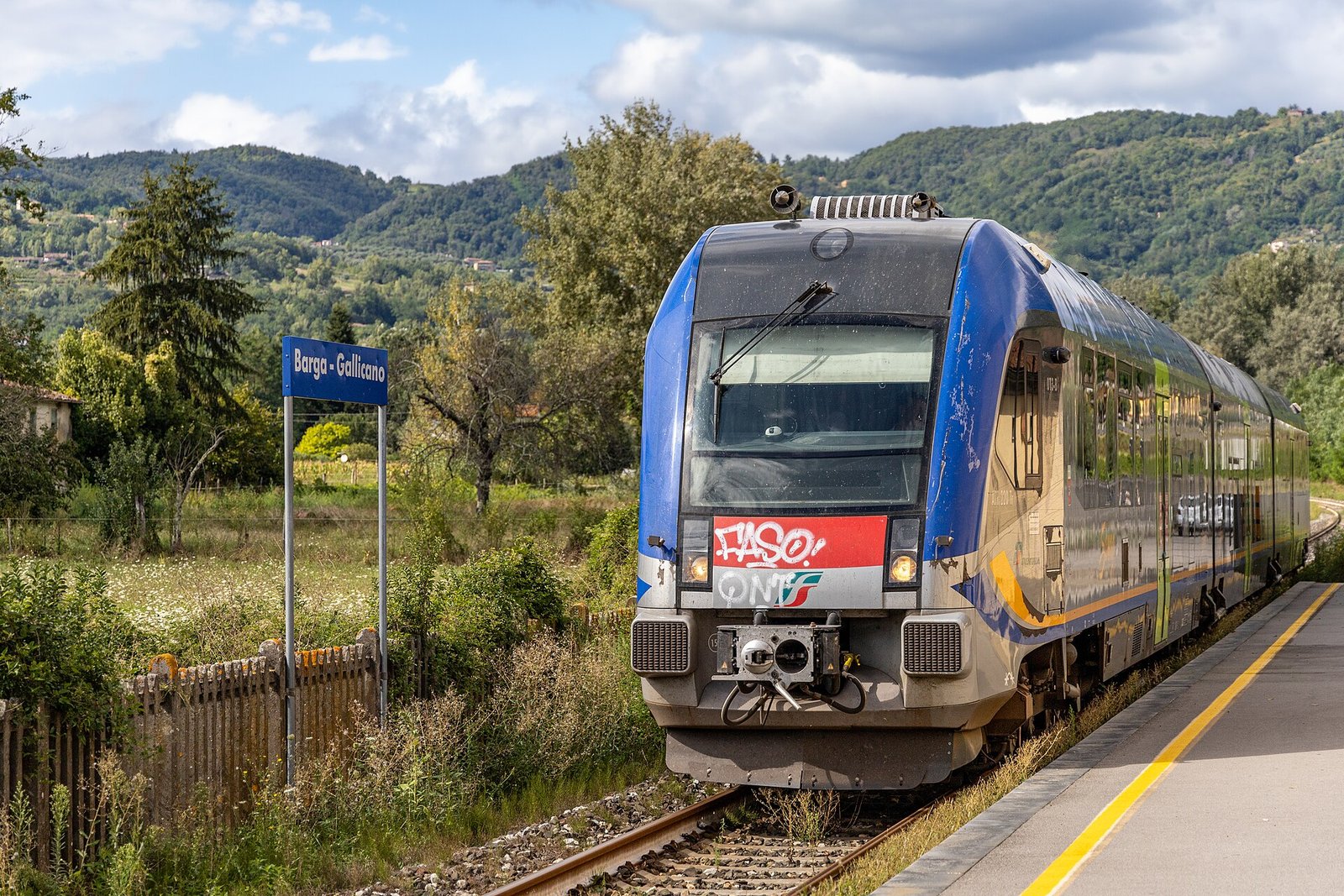
By train. Take the Lucca to Aulla line to Barga-Gallicano station. It takes about 40 to 50 minutes from Lucca. The station is down in the valley at Mologno, about 4 km from Barga, so you’ll need the local bus (line E49) or a taxi up the hill. Check the bus times before you set off, especially on Sundays.
For more on trains and tickets, see my train and bus guide. Thinking of driving? Read driving in Tuscany first.
Make a day of it
- Morning: drive up the valley, stopping at the Devil’s Bridge in Borgo a Mozzano.
- Late morning: walk up through Barga to the Duomo for the view.
- Lunch: in the old town.
- Afternoon: Casa Pascoli, or, if it’s raining, the Grotta del Vento caves across the valley near Gallicano. More about those in my rainy day guide.
Staying in Lucca? Here are more of my favourite day trips from Lucca.
You might also enjoy:
- Best day trips from Lucca: 6 easy escapes I love
- Tuscany sagre and festivals, month by month
- Where to stay near Lucca and the Svizzera Pesciatina
Susan
Photo credits: A train arriving at Barga-Gallicano station (photo: UkPaolo, CC BY-SA 4.0, via Wikimedia Commons). All other photos are my own.