Last updated: October 2026
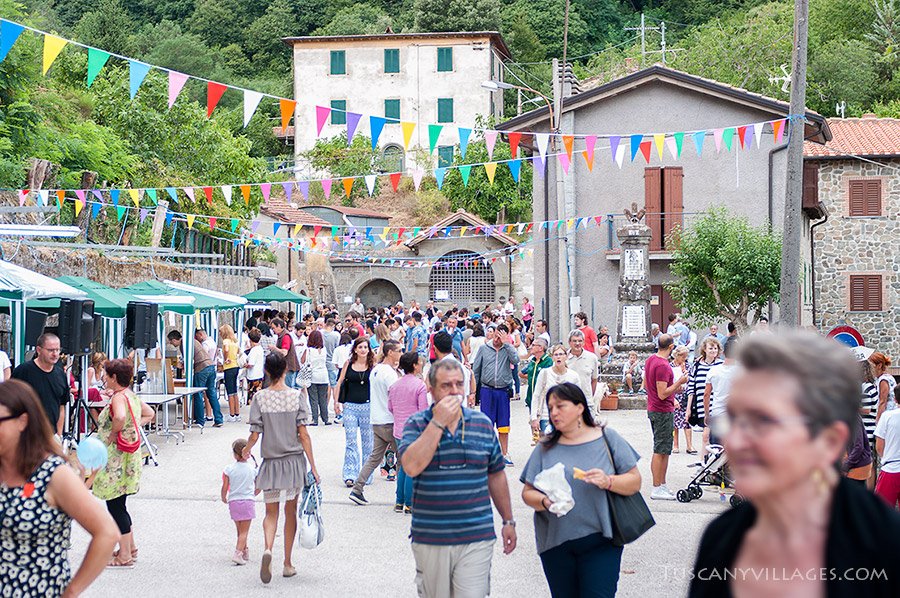
If you want to meet the real Tuscany, go to a sagra. Long tables, paper tablecloths, a plastic cup of house wine, somebody’s nonna on the fryer and a band murdering a bit of Italian pop. I love them.
I lived in the hills above Pescia for years, and our little villages have their own sagre and festas that I still wouldn’t miss for anything. So here’s my month-by-month guide to the best ones. It mixes our tiny local do’s with some of the big famous festivals.
Sagra or festa? What’s the difference?
A sagra is a food festival, almost always built round one local thing: chestnuts, beans, cherries, wild boar, a type of pasta, even a ham sandwich. It’s usually run by volunteers from the village, to raise money for the church, the football club or the local Misericordia.
A festa is a wider celebration, often for the village’s patron saint. There’ll be a Mass and maybe a procession, then food, music and dancing.
In practice they blur together, and nobody minds.
How a sagra works. Usually you queue at the cassa, pay and get your tickets, then hand them in at the food hatch. Bring cash. Go early, because popular dishes run out. Expect to share a table, and you’ll probably make friends.
A big warning about dates. Sagra dates change every year. They depend on the weather, the volunteers and the calendar. The timings below are a guide to when in the year to look. Always check the year’s posters (you’ll see them stuck on every lamppost) or the village’s Facebook page before you travel.
January
- Sant’Antonio Abate (17 January): the patron saint of animals. In many country parishes animals are blessed on or around his feast day.
- Viareggio Carnevale: starts at the end of January. It’s one of Italy’s biggest carnivals, with enormous papier-mâché floats parading along the seafront. The 2027 parades are on 30 January and 4, 7, 9, 14 and 20 February.
February and March
Carnival carries on into February. Then things go quiet for Lent, and the hills are still chilly.
- Easter: Easter 2027 falls on 28 March. In Florence, the Scoppio del Carro (the “explosion of the cart”) goes off outside the Duomo late on Easter Sunday morning. Villages have their own Holy Week processions.
April and May
Spring brings the first outdoor sagre, plus wisteria everywhere.
- Sagra dei Pici, Celle sul Rigo (southern Tuscany, near San Casciano dei Bagni): a celebration of fat, hand-rolled pici pasta. It’s usually held at the end of May, and it’s worth booking because it sells out.
June
- Lari cherry festival (Sagra delle Ciliegie, in Pisa province): one of the oldest cherry sagre in Italy. It usually runs from late May into early June.
- Pisa’s Luminara (16 June): thousands of candles along the river Arno on the eve of San Ranieri. Truly magical. The Gioco del Ponte, a historic tug-of-war on a bridge, follows on the last Saturday of June.
- Florence, Calcio Storico (24 June): the final of the “historic football” match, a cross between rugby and a brawl, held on San Giovanni’s day.
July
Sagra season is in full swing now. Every weekend, somewhere within half an hour, someone’s frying something.
- Palio di Siena (2 July): the famous bareback horse race round the Piazza del Campo. There’s a second race on 16 August (bad weather can push either race back a day). Arrive early, bring water, and be ready to stand for hours.
August: the big one
August is peak sagra month, and Ferragosto (15 August) is the heart of it. Our valley goes festa-mad.
- Sagra della Bistecca, Cortona (mid-August, around Ferragosto): famous Chianina steak, grilled on what might be the world’s biggest grill.
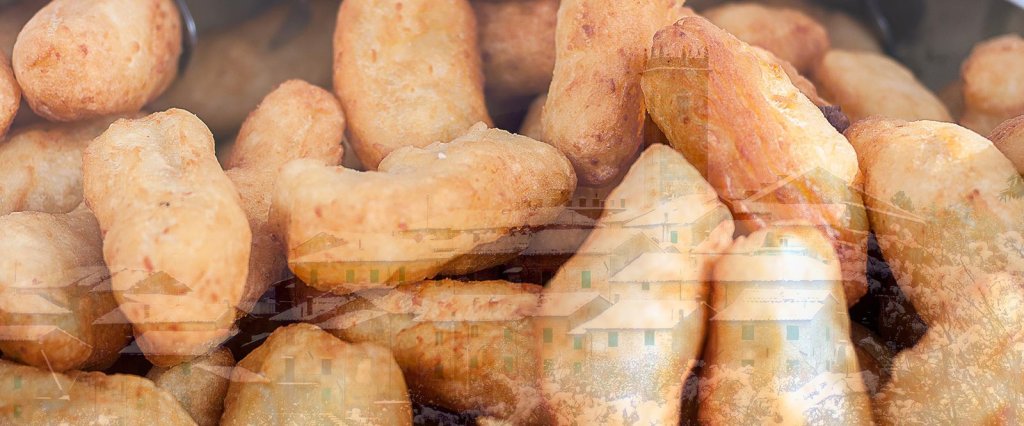
- Sagra del Beccutino, Stiappa (15 August): our own little Ferragosto festa high up in the Svizzera Pesciatina. Beccutini are little pieces of fried potato dough, sweet or savoury, and they’re addictive. More about the Stiappa festa.
- Sagra del Panino con il Prosciutto, Castelvecchio (a Sunday in late August): yes, a festa for a ham sandwich. Don’t knock it until you’ve tried it. More about the ham sandwich festa.
- Sorana bean festival (late August): celebrating the tiny, prized Fagiolo di Sorana IGP. More about Sorana beans.
September
The grape harvest starts, and the evenings cool down. A lovely time to visit.
- Montecarlo Festa del Vino (late August into early September): the wine festival in the little walled wine village near Pescia.
- Palio degli Arcieri, Pescia (early September): Pescia’s districts (rioni) compete at archery in medieval costume.
- Expo del Chianti Classico, Greve in Chianti (September): tasting stands across Greve’s lovely piazza.
- Luminara di Santa Croce, Lucca (13 September): in the evening the city turns its lights off and lights thousands of candles. The procession sets off from San Frediano at around 8pm and winds to the cathedral of San Martino. It’s one of my favourite nights of the year.
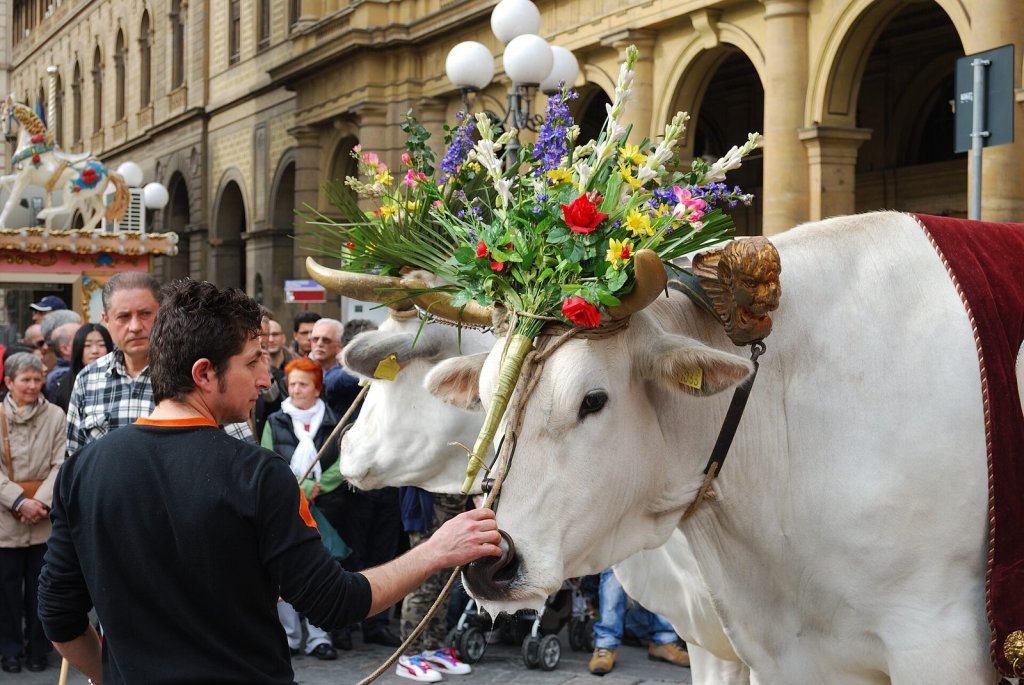
- Festa dell’Uva, Impruneta (last Sunday of September): a grape festival with decorated floats from the town’s districts.
October: chestnut season
Autumn is chestnut time in the hills. The woods round our villages are full of them, and for centuries chestnut flour fed these mountains through the winter.
- Sagra delle Frugiate, Vellano (October): frugiate are chestnuts roasted in a pan with holes, over an open fire. Smoky, sweet and messy. Vellano is one of our ten castle villages.
- Marradi chestnut festival (every Sunday in October): the famous Marrone di Marradi, on the Romagna side of the Apennines. You can get there on the Faentina railway from Florence.
- Sagra del Tordo, Montalcino (the last weekend of October): an archery contest between the town’s quarters, plus medieval costume, food and, of course, Brunello.
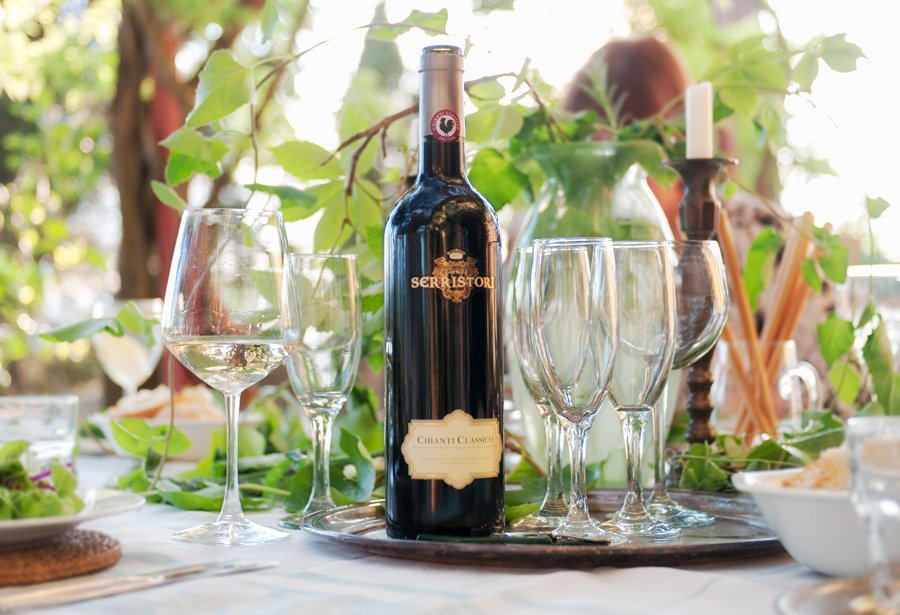
November: truffles and new oil
- San Miniato white truffle fair (the last three weekends of November): the market fills with the smell of white truffles. Expensive, but you can just sniff.
- New olive oil (olio nuovo): November is pressing time. Look out for frantoi (olive mills) holding open days, and for fettunta, toasted bread drizzled with peppery, bright green new oil. Heaven.
December
- Christmas: lights, markets, presepi (nativity scenes) in every church, and a cosy hush in the villages.
- For years Castelvecchio held a wonderful living nativity on Christmas Eve. Sadly it hasn’t run since 2018, but I wrote about what it was like.
My sagra survival tips
Sagra survival kit
Cash: many stands don’t take cards.
Go early: popular dishes sell out, and queues build fast after 8pm.
Check the poster: dates, times and menus change every year.
Parking: in hill villages, park where the volunteers tell you and walk up.
Layers: hill villages get chilly at night, even in August.
Say yes: to the house wine, the dancing and the chat with the people next to you.
If you only do one thing on your Tuscan holiday that’s not in the guidebook, make it a village sagra. You’ll eat brilliantly, spend very little and go home with stories.
You might also enjoy:
- Sagra del Beccutino: Stiappa’s Ferragosto festa
- Festa of the Ham Sandwich: Castelvecchio’s Sagra del Panino con il Prosciutto
- Sorana beans: the little Tuscan bean Rossini wanted paying in
- A living nativity in Tuscany: Christmas Eve in Castelvecchio
Susan