Last updated: October 2026
Medicina is one of the smallest of the ten castles of the Svizzera Pesciatina, and one of the quietest. A handful of lanes on a wooded hilltop above Pietrabuona, a church at the top, and an awful lot of flower pots.
I once called the hills above Pescia home, and Medicina gave me some lovely photos over the years. A cat on a wall. Geraniums by an archway. A view down the valley through a gap between two houses.
Medicina: quick facts
- Where: One of the ten castle villages of the Svizzera Pesciatina, in the comune of Pescia (province of Pistoia)
- Altitude: about 532 m
- From Pescia: about 5 km as the crow flies (further by road)
- Nearest station: Pescia, about 6 km as the crow flies
- Map: Medicina on OpenStreetMap
- More nearby: my Pescia guide and the ten castles driving route
Sources: Wikidata and it.wikipedia for altitude and coordinates; distances worked out from those.
Visiting Medicina
Getting there and parking
From Pescia, follow the signs for Abetone to Pietrabuona, then turn off into the Val di Torbola and follow the signs for Medicina. The road is narrow and twisty, so take it slowly. Park outside the village and walk in. Medicina is tiny, its lanes are for feet, and please don’t block anyone’s gate.
Distance. About 9 km from Pescia. Allow 20 minutes, because the road is slow.
By bus. Autolinee Toscane’s SVP line runs up from Pescia (Piazza XX Settembre). One branch serves the Val di Torbola villages, Medicina included. There’s also a bookable bus, the servizio a chiamata for the Val di Torbola (Pietrabuona, Medicina, Fibbialla, Aramo, San Quirico, Castelvecchio, Stiappa and Pontito). Book it the working day before, between 1.30 and 2.30pm, on freephone 800 361213. No buses on Sundays, and times change, so check at-bus.it before you go.
By train. The nearest station is Pescia, on the Florence to Lucca and Viareggio line. Lucca’s about 20 minutes away by regional train, Florence about an hour. From there, buses up the valley leave from Piazza XX Settembre in town.
Sources: Autolinee Toscane timetables and on-demand service pages (checked October 2026), RFI for trains, and distances from OpenStreetMap routing, rounded up.
Eat like a local, not a tourist
There’s no restaurant in Medicina, but there is something better. After about three years closed, the village circolo, Circolo “Ricreazione” ARCI Nuovi Sentieri per Medicina, reopened on 12 April 2026. It runs pizza nights, live music and themed suppers.
A circolo is a members’ club, run by volunteers for the village. The events are for ARCI members, so you may be asked to buy an ARCI card, and you’ll need to book. Go, though. It’s how the village eats together, and you’ll be very welcome.
Otherwise, drop down to Pietrabuona, where Da Nerone, Vialeuropa 2.0 and Bar Macchi were all open when I checked in October 2026.
Pair it with Fibbialla and Aramo, just along the valley, for a gentle morning.
Looking for a base? Try my where to stay near Lucca and the Svizzera Pesciatina guide.
A thousand years on a hilltop
Medicina is old. The first certain record of it is a deed from January 988.
For most of its history it belonged to Lucca, right on the edge of Florence’s lands, and that made it a place worth fighting over. In the long war between Lucca and Florence in the 1430s, the Florentines took it. In 1431 a French soldier of fortune called Francesco de la Motte, paid by Lucca, made Medicina his base for raids into Florentine territory. Peace came in 1441, Medicina went back to Lucca, and Lucchese it stayed until 1881, when it became part of the comune of Pescia. Even now the parish belongs to the Diocese of Lucca, not Pescia.


What to look for
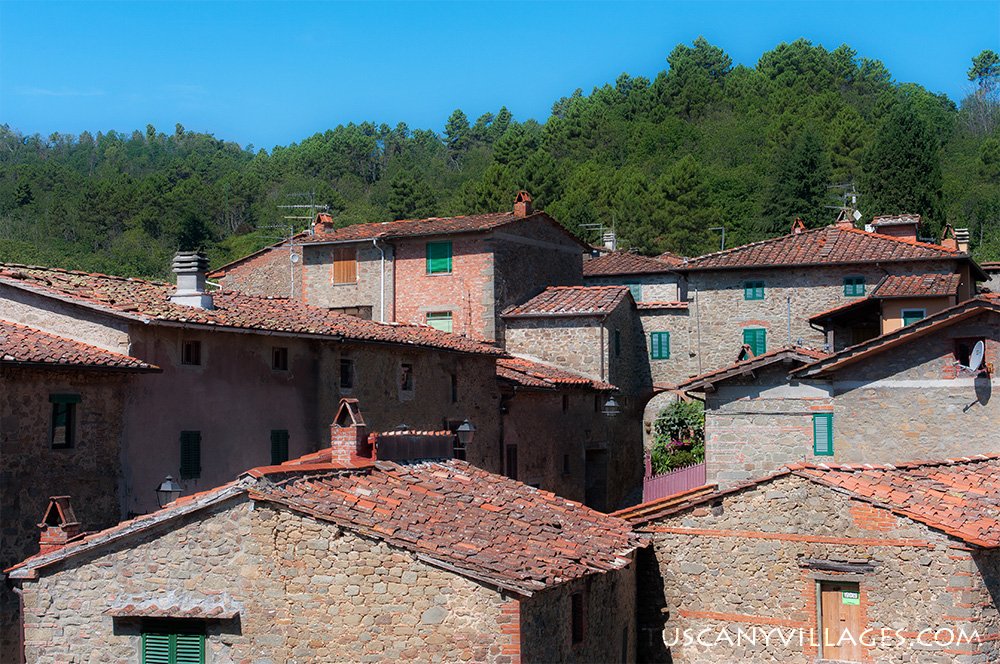
The village is a rough oval, built tight round the hilltop. Only one of the old gates survives, restored in 1900. Walk through it and you’re in a little world of stone lanes, arches and steps.
Keep your eyes on the walls. Here and there are stone plaques carved with dates from the 1500s and 1600s, left by whoever built or rebuilt the house.
At the top is the church of Santi Sisto e Martino, from the 1400s, crowning the hill. Its bell tower is thought to have started life as a watchtower, which makes sense when you see the view. Inside, if you’re lucky enough to find it open, there’s a carved wooden Madonna and Child from the 1400s.


The lady with her pots
One of my favourite Medicina memories is a very small one. A frail old lady in a blue top and white shorts, tending her potted garden. She watered every pot, one by one, and then sat down on her step to enjoy it.
That’s Medicina for me. Not grand. Just people looking after their bit of the village, and making it beautiful.

The cats
Medicina has its share of village cats, mostly asleep on warm stones and completely unimpressed by visitors. There are more of them in my cats of the Tuscan villages post.

Walking
Medicina is a lovely place to start or end a walk. CAI path 255 climbs up from Piazza della Croce in Pietrabuona, and carries on above the village to the little oratory of Sant’Anna, from the 1500s. Path 250 links Medicina with Fibbialla and San Quirico. Part of path 250 was closed when I checked, so look at caipescia.it first. More in my walking guide.

Where to stay
In and around Medicina
A Booking.com search for Pescia: hotels, B&Bs and apartments. Just add your dates.
If you book through this link, I may earn a small commission at no extra cost to you. It helps keep this site going.
Explore around Medicina
Villages nearby I’ve written about


Keep exploring
You might also enjoy:
- Le Dieci Castella: a driving route through the Svizzera Pesciatina
- San Quirico
- Eight small villages in Tuscany you’ve never heard of

There’s a page for Medicina in my Tuscany Village Journal, a little paperback for wandering the ten castles above Pescia.
Susan
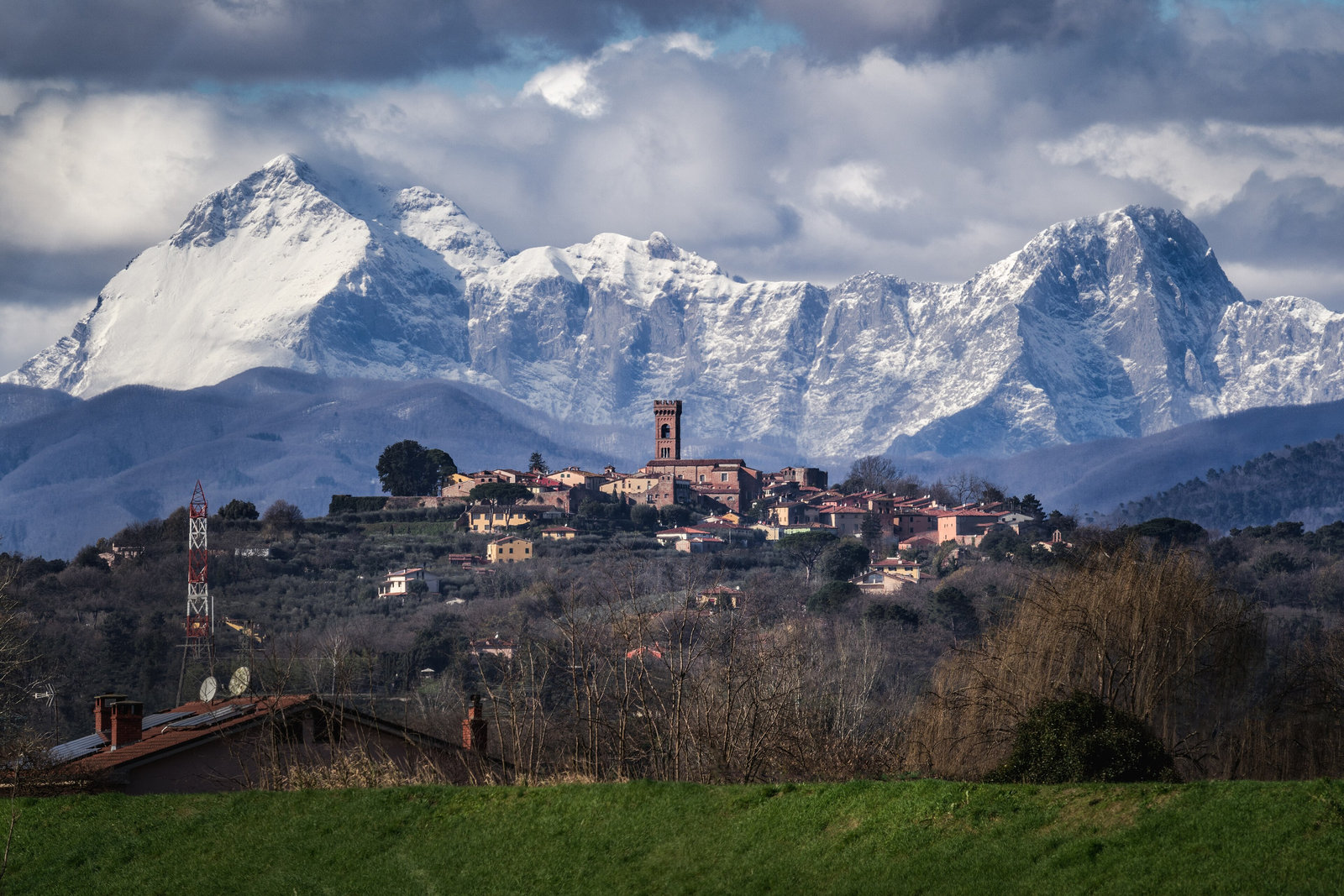
Photo credits: Medicina on its hilltop (photo: Mongolo1984, CC BY-SA 4.0, via Wikimedia Commons); In the old centre of Medicina (photo: Mongolo1984, CC BY-SA 4.0, via Wikimedia Commons). All other photos are my own.