Last updated: October 2026
Drive north out of Lucca, up the river Serchio, and the valley narrows. The hills turn into mountains. The Apuan Alps rise up on one side, white with marble at the top, and the Apennines on the other. This is the Garfagnana, and it feels a long way from the Tuscany of cypress trees and vineyards.
It’s green, wooded and wild. Chestnut woods, stone villages, rivers, lakes and castles. People here are proud, and a bit stubborn, in the best mountain way. I loved it.
Getting there
The Garfagnana starts around an hour north of Lucca by car, up the Serchio valley. On the way you’ll pass Borgo a Mozzano and its humpbacked Devil’s Bridge (Ponte della Maddalena). Stop. It’s worth it.
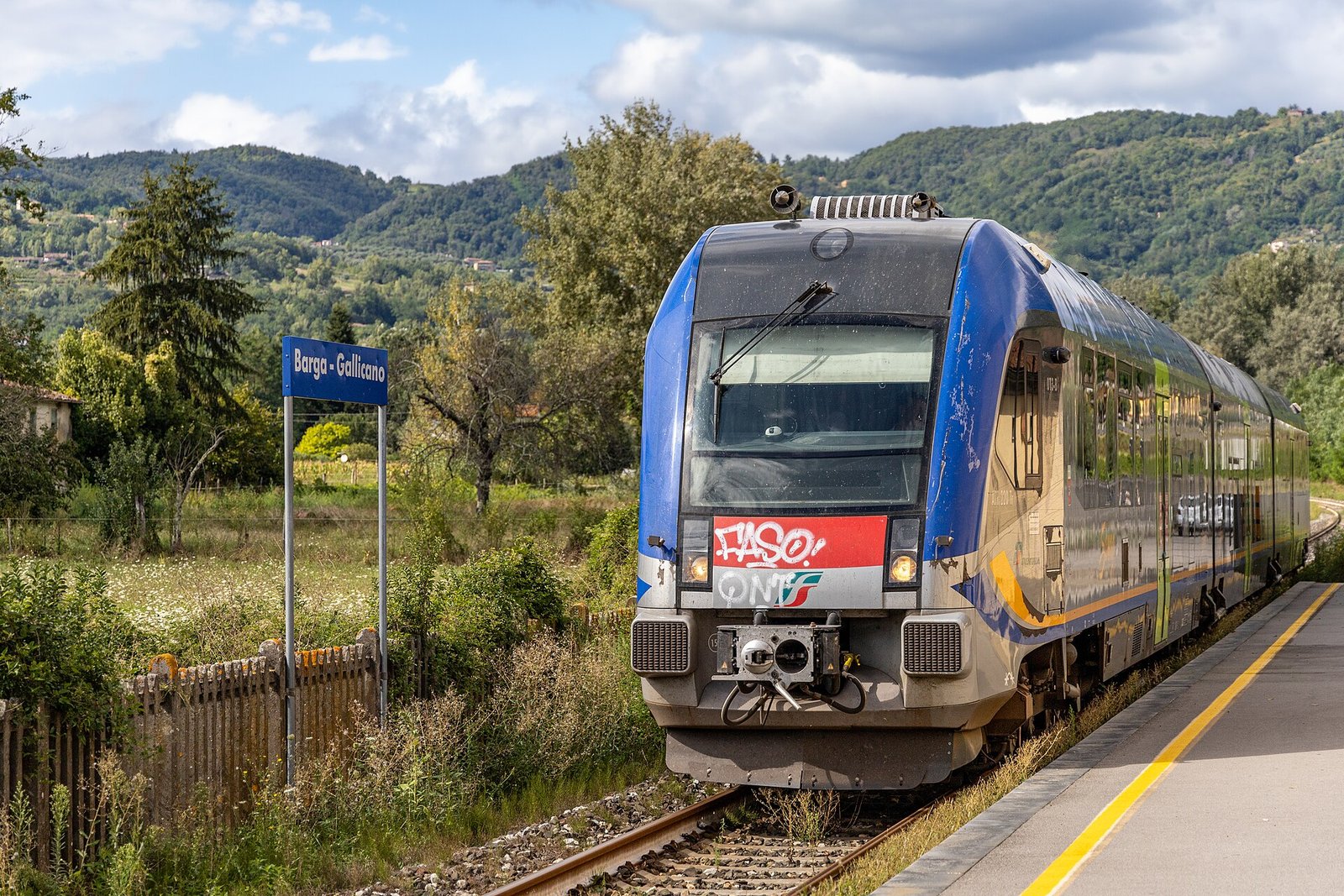
There’s also a railway, the Lucca to Aulla line, which winds up the valley through Barga-Gallicano and Castelnuovo di Garfagnana. It’s slow and very pretty, though you’ll need a car for most of the villages once you’re up there.
Barga
Strictly speaking, Barga sits just below the Garfagnana, in the middle Serchio valley. It’s one of my favourite towns in Tuscany, with its cathedral high on the hill and a surprising Scottish connection. I’ve written a whole post on it: Barga, the most Scottish town in Italy.
Castelnuovo di Garfagnana
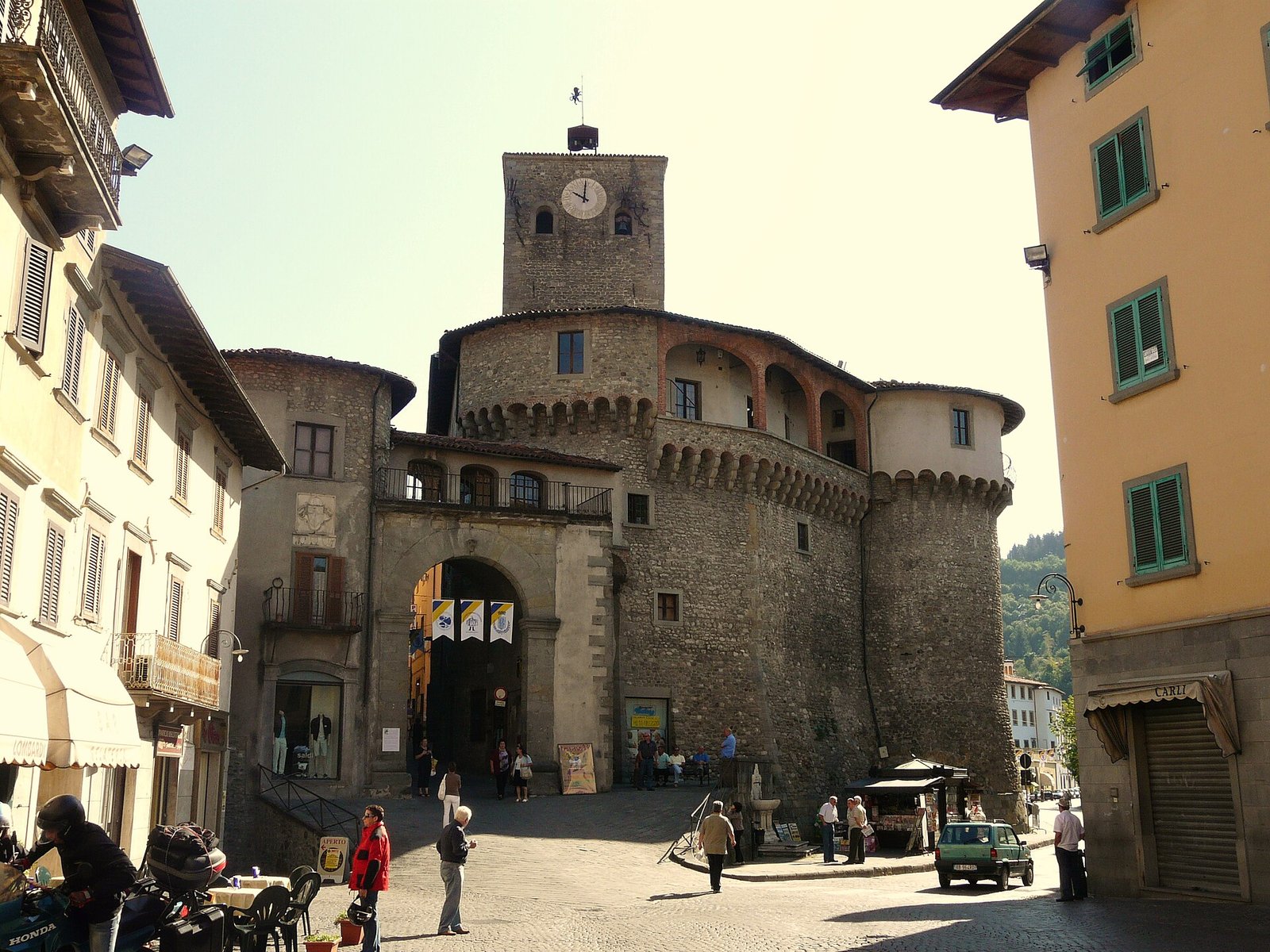
The main town of the valley, where the Serchio meets the Turrite. In the middle is the Rocca Ariostesca, a chunky castle named after the poet Ludovico Ariosto, author of Orlando Furioso. From 1522 to 1525 he was sent here to govern the Garfagnana for the Este dukes of Ferrara. By all accounts he hated it: bandits, feuds and endless complaints. Poets, eh.
Castelnuovo is a good, real town for lunch and a wander, with plenty of shops selling local farro, chestnut flour and cheese.
Fortezza delle Verrucole
Above San Romano in Garfagnana, a big stone fortress sits on a hilltop with views all round. Ariosto himself came here in 1524. Today it’s been restored and opened to visitors, with displays about life in the fortress. Children love a proper castle.
Castiglione di Garfagnana
A village still wrapped in its medieval walls, with towers and gates, on a hill above the valley. Small, quiet and lovely for a stroll.
Lago di Vagli and the drowned village
Up in the Apuan Alps, Lago di Vagli is a reservoir made by a dam in the middle of the last century. Under the water lies the old village of Fabbriche di Careggine, with its church and its stone bridge. When the lake is emptied for maintenance, the ghost village comes back up into the light. The last time it was fully drained was in 1994, and people came from all over Italy to walk its streets.
Even full of water, the lake is beautiful, deep green between the mountains.
Isola Santa
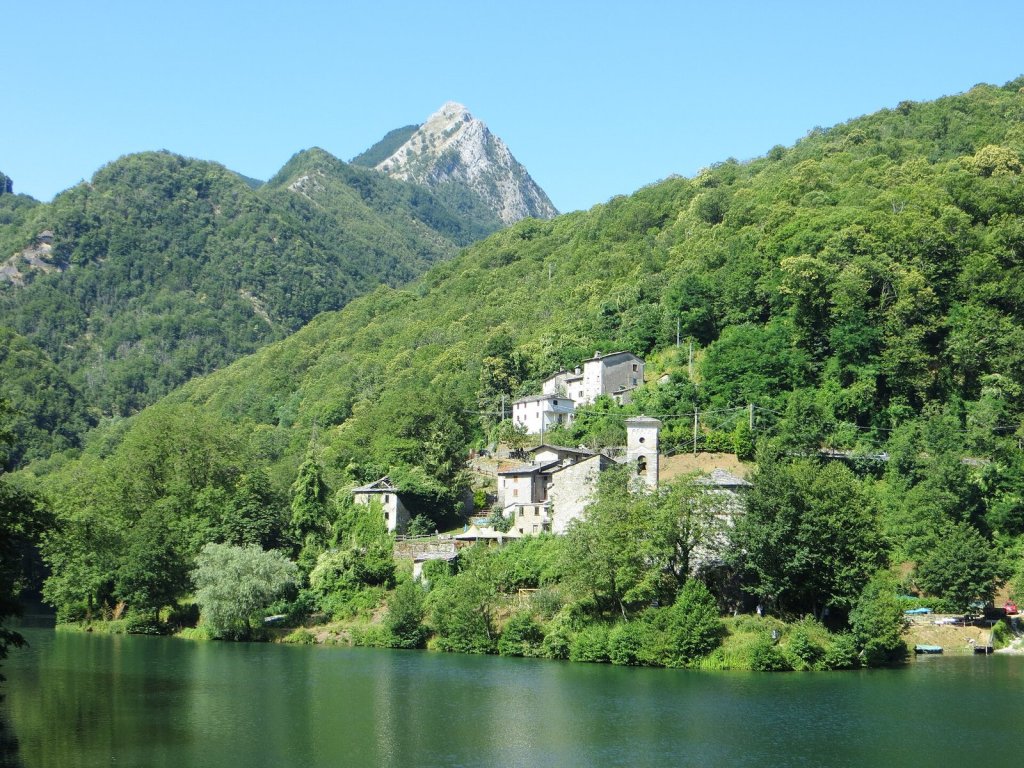
My favourite photo stop. Isola Santa is a tiny hamlet of stone houses on a little lake, on the road from Castelnuovo over to the coast. Once almost abandoned, it’s been lovingly restored. Grey stone, slate roofs, the water and the mountains. That’s the picture at the top.
The Grotta del Vento
Near Fornovolasco, above Gallicano, the Grotta del Vento is one of the best show caves in Italy, with tours from one to three hours. Perfect on a rainy day. My rainy day guide has more.
What to eat
The Garfagnana has some of the best mountain food in Tuscany:
- Farro della Garfagnana, an ancient spelt grain, protected as an IGP. Look for farro soup.
- Chestnut flour. The local farina di neccio is a DOP. It makes necci, thin pancakes rolled round ricotta. See my post on chestnut season and necci.
- Biroldo, a local blood sausage, for the brave.
- Mountain cheeses and honey.
More in my guide to what to eat round Lucca and the hills.
When to go
- Spring and early summer: green, fresh, wildflowers, good walking.
- Summer: cooler than the plains. A relief in August.
- Autumn: chestnut season, mushrooms and festas. My favourite.
- Winter: snow in the high villages. Some places close. Drive carefully, and check the roads.
A tip: the roads are narrow and twisty, with sheer drops in places. Take your time, and don’t trust the sat nav’s estimate. Read my driving guide first.
You might also enjoy:
Susan
Photo credits: Isola Santa and its lake, Garfagnana (photo: Michela Cupisti, CC BY-SA 4.0, via Wikimedia Commons); A train arriving at Barga-Gallicano station (photo: UkPaolo, CC BY-SA 4.0, via Wikimedia Commons); The Rocca, Castelnuovo di Garfagnana (photo: Davide Papalini, CC BY-SA 3.0, via Wikimedia Commons).