Last updated: October 2026
Castagnaccio is the cake that isn’t really a cake. No eggs, no sugar, no butter, no raising agent. Just chestnut flour, water, olive oil, a few pine nuts and raisins, and rosemary on top. It comes out of the oven flat, dark and cracked like a dry riverbed.
I’ll be honest, it’s not love at first bite for everyone. It’s earthy and only gently sweet. But on a cold afternoon with a glass of vin santo, it’s one of the most Tuscan things you can eat. And it’s one of the easiest things on this site to make.
Castagnaccio at a glance
- What: a flat, unsweetened chestnut flour cake with pine nuts, raisins and rosemary.
- Serves: 8 to 10 small squares.
- Time: 15 minutes to make, 30 to 40 minutes in the oven.
- Free from: eggs, dairy, added sugar and wheat. It’s naturally vegan.
- Season: autumn and winter, when the new chestnut flour is in.
Facts and stockists checked 30 October 2026.

Where castagnaccio comes from
Castagnaccio has a long history and a Lucca connection. In 1553 the writer Ortensio Lando published a short guide to Italian food and its makers. In it, he credits a man called Pilade da Lucca as the first to make castagnazzi, and says he got praise for it.
It was a poor family’s food in the chestnut-growing hills of Tuscany, Liguria and Emilia, where chestnut flour was cheap and wheat wasn’t. Every valley has its own version. Some add walnuts, some fennel seeds, some orange zest. Pellegrino Artusi, the father of Italian home cooking, wrote it up in 1891 with pine nuts and a tin “a finger and a half” deep. Keep it thin and you won’t go far wrong.
Around Lucca and up into the Garfagnana, it’s sold by the slice in bakeries from October, usually as a big rectangle in a tray.
Ingredients
For a 30 cm round tin or a 25 × 35 cm tray (8 to 10 pieces):
- 500 g chestnut flour (about 4½ US cups)
- About 700 ml cold water (3 US cups)
- A good pinch of salt
- 3 tbsp extra virgin olive oil, plus extra for the tin
- 60 g raisins (a scant ½ US cup)
- 60 g pine nuts (a scant ½ US cup)
- 30 g walnut pieces (¼ US cup), optional
- Leaves from 2 sprigs of rosemary
Method
- Heat the oven (10 minutes). Set it to 190°C (170°C fan, 375°F, gas 5). Oil your tin well.
- Soak the raisins (10 minutes). Cover them with warm water, then drain and squeeze dry.
- Make the batter (5 minutes). Sieve the chestnut flour and salt into a big bowl. Whisk in the water a little at a time. Flours vary, so you might need a bit more or less. You want a smooth batter that pours slowly, a bit thicker than for pancakes.
- Add the extras (2 minutes). Stir in 2 tablespoons of the oil, most of the raisins and half the pine nuts.
- Fill the tin. Pour the batter in. It should be only about 1.5 cm deep. Scatter over the rest of the raisins, the pine nuts, the walnuts if using, and the rosemary. Drizzle the last of the oil over the top.
- Bake (30 to 40 minutes). It’s done when the surface is dark brown and cracked all over and the edges pull away from the tin. The middle stays soft and slightly damp. That’s how it should be.
- Cool (15 minutes or more). Leave it in the tin before cutting. It’s good warm, and just as good cold the next day.
Tips
- Fresh flour, again. Stale chestnut flour makes a bitter castagnaccio. Buy new-season flour and keep it in the fridge.
- Thin is right. A thick castagnaccio stays gummy in the middle. If in doubt, use a bigger tin.
- Rosemary on top, not in. Scatter it on so it toasts in the oven.
- Don’t expect cake. It’s dense and moist, not light. If you want it sweeter, serve it with a spoonful of ricotta and honey rather than adding sugar.
- Keeps: 2 to 3 days, covered, at room temperature.
What to serve with it
- A small glass of vin santo, or a red wine from the Lucca hills.
- Fresh ricotta, sweetened with a little honey.
- After a bowl of chestnut soup or beans with sage and tomato, for an autumn supper.
Finding chestnut flour in the UK and US
Wheat flour isn’t a substitute, so you’ll need the real thing. Buy it in autumn and winter if you can, when it’s freshest.
- UK: Sous Chef (Mulino Marino organic, 500 g), Culinaris (Cordero, 400 g), Amisa organic at some health food shops, and Italian delis.
- US: Giannetti Artisans (stone-ground in Tuscany), Italian delis and specialty grocers, and a few chestnut farms that grind their own. Ladd Hill Orchards in Oregon has sold it before, but check with them first.
There’s more on choosing chestnut flour in my necci recipe.
Castagnaccio FAQ
Is castagnaccio gluten-free?
The ingredients contain no wheat. If you’re coeliac, check the flour packet for cross-contamination warnings.
Why is my castagnaccio bitter?
Usually old flour. Chestnut flour goes off faster than wheat flour. It should smell sweet, not musty.
Why didn’t mine crack?
It was probably too thick, or it needed longer. Give it another 5 to 10 minutes.
Can I use a square tin?
Yes. Anything works as long as the batter is about 1.5 cm deep.
You might also enjoy:
- All my Tuscan recipes, including the chestnut ones
- Necci with ricotta
- Chestnut season in Tuscany
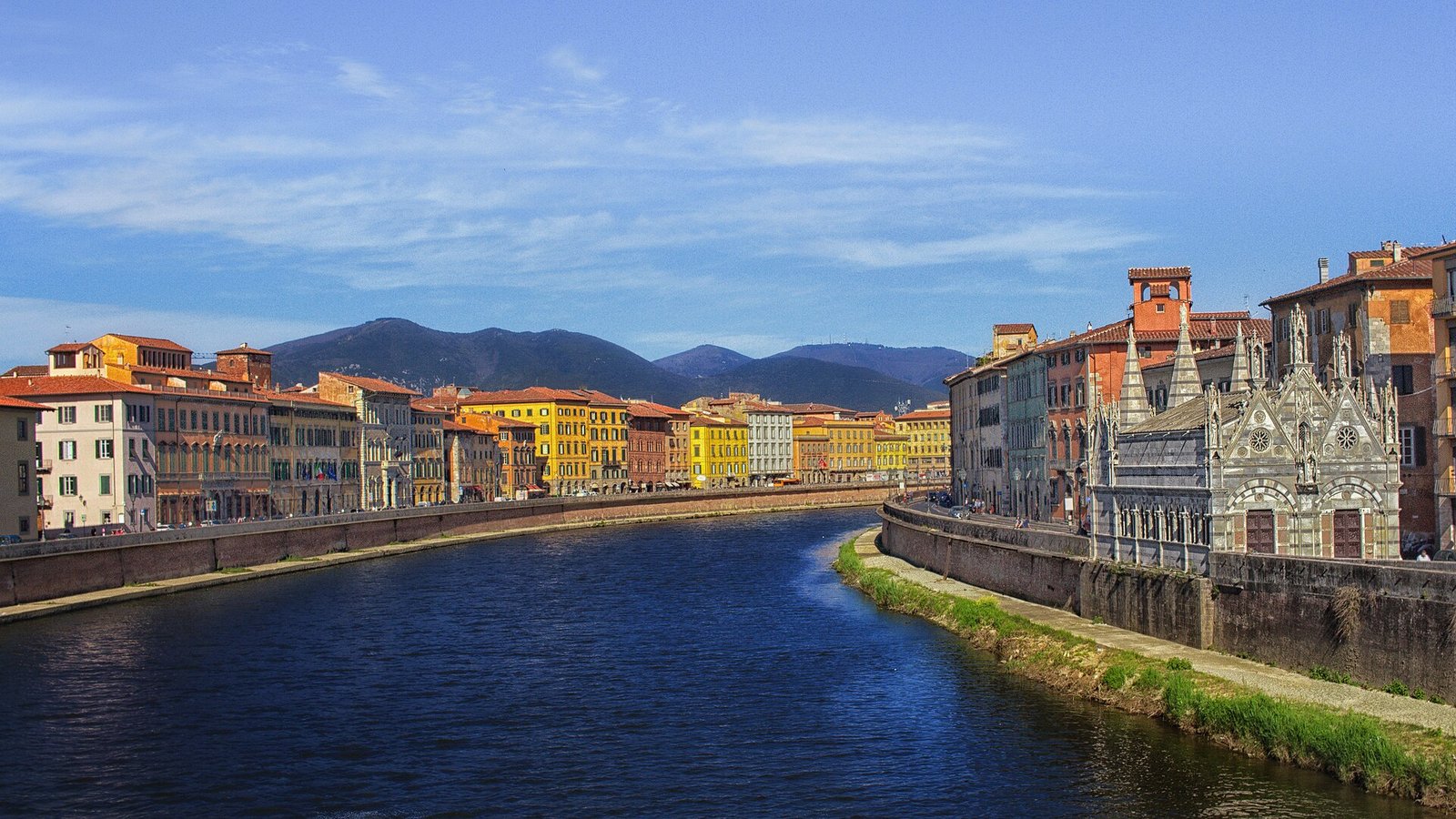
- Lucca, where castagnaccio got its first mention
Susan
Sources: Ortensio Lando, Commentario (1553); Pellegrino Artusi, La scienza in cucina (1891). Photos: my own, at village festas.