Last updated: October 2026
If there’s one thing that tastes of autumn in the hills, it’s a neccio. A thin, smoky pancake of chestnut flour, hot off the irons, rolled round a fat spoonful of fresh ricotta. You eat it standing up at a sagra, with ricotta on your chin and a plastic cup of red in the other hand.
The good news? You don’t need a pair of red-hot irons and a wood fire to make them at home. A decent non-stick pan does the job. The only bit you can’t cheat on is the flour.
Necci at a glance
- What: thin chestnut flour pancakes, rolled round fresh ricotta.
- Makes: 8 to 10 necci in a 20 cm pan. Serves 4 as a pudding or snack.
- Time: 10 minutes to mix, 15 minutes resting, about 25 minutes cooking.
- Just three ingredients in the batter: chestnut flour, water and salt. No eggs, no milk, no wheat.
- The one rule: fresh chestnut flour. Stale flour tastes bitter.
Facts and stockists checked 30 October 2026. Check current details before you buy.
Where necci come from
Necci are mountain food. Visit Tuscany, the region’s tourist board, lists them as typical of the Garfagnana and the Media Valle del Serchio north of Lucca, the Lunigiana and the Montagna Pistoiese. These were places where wheat didn’t grow well and the chestnut tree fed everybody, which is why it was called the bread tree.
A neccio could stand in for chestnut polenta at supper, and woodcutters and charcoal burners took them cold into the woods. Today you’ll find them at every chestnut sagra in October.
The traditional way to cook them is fiddly. In some valleys they use testi, discs of stone heated in the fire. Chestnut leaves, picked in summer and softened in warm water, go between each layer of batter so it doesn’t stick and picks up their flavour. On the Montagna Pistoiese they mostly use ferri, round iron plates with long handles. Either way, it takes a practised hand.
The flour matters too. The Garfagnana’s is so prized it has its own DOP, Farina di Neccio della Garfagnana. The chestnuts are dried slowly over a chestnut-wood fire in the metati, the old drying huts, and ground between millstones. More on that in my chestnut season guide.
Ingredients
For 8 to 10 necci (serves 4):
- 300 g chestnut flour (about 2¾ US cups, but weigh it if you can)
- 400 ml cold water (1⅔ US cups)
- A pinch of salt
- Olive oil, for greasing
- 400 g fresh ricotta (about 1⅔ US cups)
- 1–2 tbsp sugar or honey, optional, stirred into the ricotta
Plus half a raw potato, which is the old trick for greasing the pan.
Method
- Sieve the flour (2 minutes). Chestnut flour is lumpy. Push it through a sieve into a big bowl and add the salt. Don’t skip this.
- Mix the batter (5 minutes). Pour in the water a little at a time, whisking as you go. You want something smooth, a bit thicker than single cream. If it’s like custard, add a splash more water.
- Let it sit (15 minutes). Leave the batter while you get the ricotta ready and heat the pan. If you’re sweetening the ricotta, beat in the sugar or honey now.
- Heat and grease the pan (3 minutes). Use a non-stick frying pan, about 20 cm across, over a medium-high heat. Dip the cut side of your half potato in oil and rub it over the pan. That’s how Visit Tuscany’s recipe does it, and it works a treat.
- Cook the first side (2 to 3 minutes). Pour in a small ladle of batter, about 60 ml, and swirl it to a thin round. Leave it alone until the edges look dry and start to lift.
- Flip (1 to 2 minutes). Turn it with a thin spatula and give the other side a minute or two. Re-grease the pan with the potato between necci.
- Fill and roll (straight away). Spread a good spoonful of ricotta along the hot neccio and roll it up like a cannolo. Eat it while it’s warm. Stack the rest under a clean tea towel as you go.
The first one is always a mess. Eat it yourself. Nobody needs to know.
Tips
- Fresh flour is everything. Chestnut flour doesn’t keep. Buy it in autumn or winter, keep it in the fridge and use it up. If it smells musty or tastes bitter, bin it.
- Thin is good. Necci should be soft and floppy, not thick like an American pancake.
- Don’t swap the flour. Wheat flour won’t give you necci, and there’s no real substitute for chestnut flour.
- Ricotta should be fresh and creamy. If it’s watery, drain it in a sieve for 20 minutes first.
- No ricotta? Plenty of people in the mountains eat necci plain, or with a little sausage. More on that below.
Other ways to eat them
Ricotta is the classic, but the mountain villages have their own versions. A few listed on Italian Wikipedia:
- A biuscio: plain, nothing in them.
- Guercio: with a thin slice of pancetta.
- Incicciato: with sausage meat, typical of the Montagna Pistoiese and especially Pracchia.
- Col miele: with honey. Messy, as it runs out the ends.
I’m not going to judge if you reach for the Nutella. Plenty of Italian teenagers do.
What to serve with them
- A glass of red, or the hot spiced wine they serve at the chestnut festas.
- Roast chestnuts, if you’re going the whole hog. My Tuscany in November post has how to roast them.
- As a pudding after a bowl of beans or soup. Necci are filling, so keep the main course simple.
Finding chestnut flour in the UK and US
This is the tricky bit. It’s a seasonal product, so stock comes and goes. Look for Italian flour, ideally dated from the current season.
In the UK
- Online: Sous Chef sells Mulino Marino organic chestnut flour (500 g), and Culinaris lists Cordero chestnut flour (400 g).
- Health food shops: Amisa makes an organic chestnut flour that some wholefood shops carry.
- Italian delis: worth a phone call in autumn. Ask when their new stock arrives.
In the US
- Online: Giannetti Artisans sells a stone-ground chestnut flour from Tuscany.
- Italian delis and specialty grocers: best in autumn and winter.
- Home-grown: some American chestnut farms grind their own flour. Ladd Hill Orchards in Oregon has sold it in the past, but check with them first.
In Tuscany itself, just buy it at the mill, a sagra or the grocer in any mountain town from November. Ask for farina di neccio or farina di castagne.
Where to eat necci in Tuscany
Go to a chestnut sagra. Every weekend in October there’s one somewhere in the hills, all run by volunteers. In our valley, Vellano holds the Sagra delle Frugiate in October. The Garfagnana is necci heaven too. My Garfagnana guide has the villages, and my sagre month by month has the dates.
Necci FAQ
Are necci gluten-free?
The batter is just chestnut flour, water and salt, so it contains no wheat. If you’re coeliac, check the flour packet, as some mills also grind wheat.
Can I make the batter ahead?
Yes, a few hours ahead is fine. Keep it in the fridge and whisk it again before you start. It may need a splash more water.
Can I make necci without a non-stick pan?
A well-seasoned cast-iron or crêpe pan works if you grease it each time. Stainless steel will stick.
Necci or neccio?
One neccio, two necci. Nobody will mind which you say as long as you eat them.
You might also enjoy:
- All my Tuscan recipes
- Castagnaccio: the chestnut flour cake
- Chestnut season in Tuscany: necci, flour and festas
- Vellano: stone, chestnuts and the old capital of the ten castles
Susan
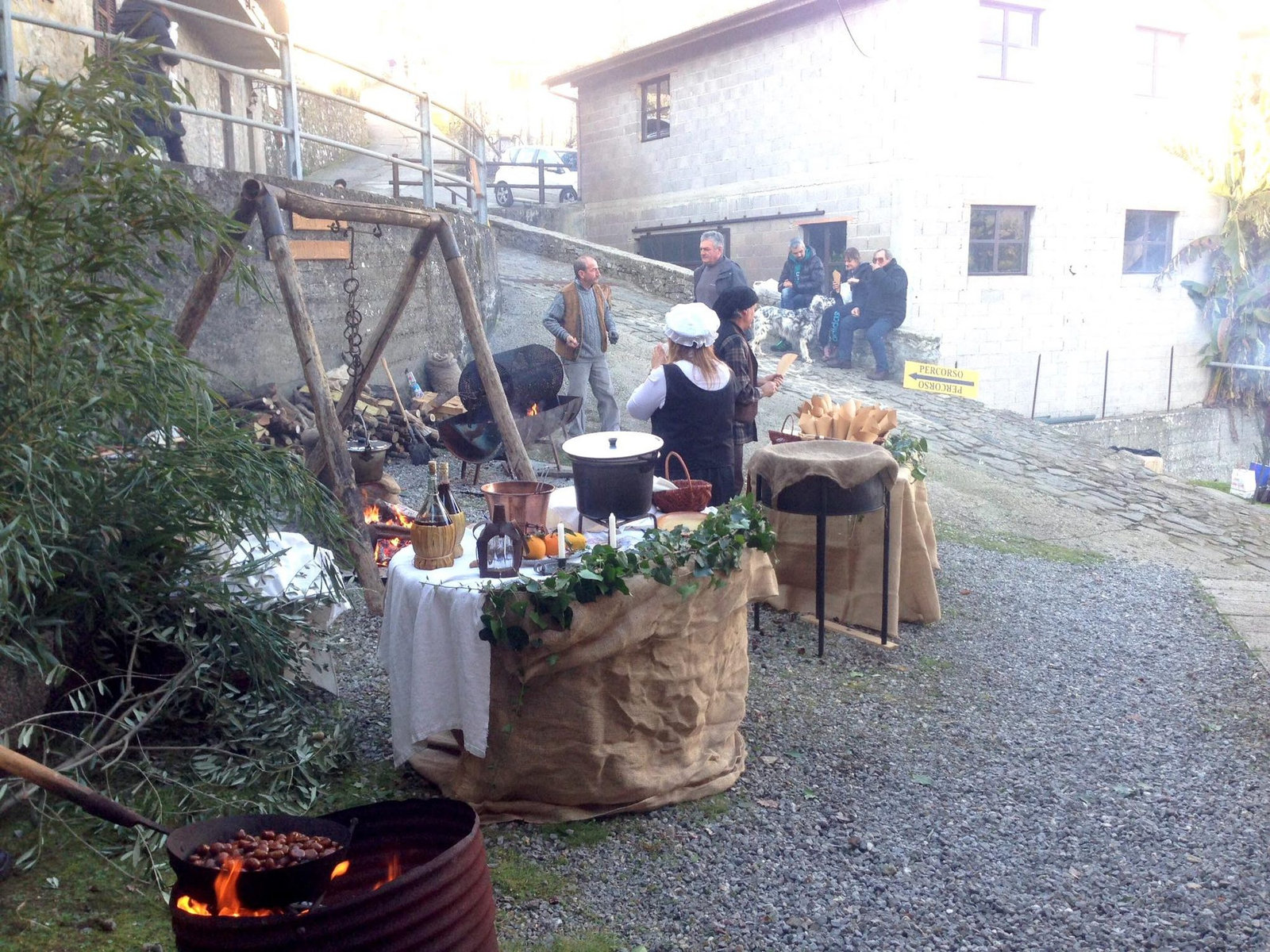
Sources: Visit Tuscany’s necci recipe; Italian Wikipedia’s page on necci. Photo: my own, at the Monte di Villa chestnut festa.