Last updated: October 2026
In a Tuscan city, you can get by in English. In a hill village, you’ll often have to give it a go in Italian.
Don’t worry about getting it perfect. A cheerful buongiorno and a go at the rest gets you a long way. People really do appreciate the effort.
Here are the phrases I’d learn first.
Saying hello (and goodbye)
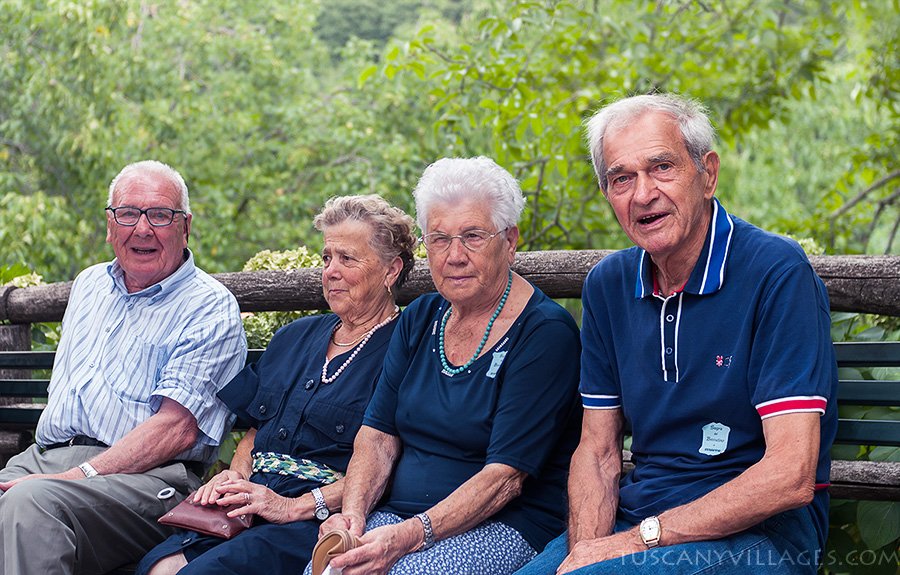
In a village, you greet everyone. The man on the bench, the lady at the window, the people in the bar. Every time.
| Italian | Say it | Means |
|---|---|---|
| Buongiorno | bwon-JOR-no | Good morning, good day |
| Buonasera | bwona-SAIR-a | Good evening (from the afternoon on) |
| Salve | SAL-vay | Hello (polite, any time) |
| Ciao | chow | Hi, bye (friends and family) |
| Arrivederci | a-ree-vay-DAIR-chee | Goodbye |
| A domani | a do-MAH-nee | See you tomorrow |
| Come sta? | KOH-may STA | How are you? (polite) |
| Bene, grazie. E Lei? | BEN-ay GRAHTS-ee-ay, ay LAY | Fine, thanks. And you? |
Use ciao with people you know. With older neighbours and shopkeepers, stick to buongiorno and buonasera.
Being polite
| Italian | Say it | Means |
|---|---|---|
| Per favore | pair fa-VOR-ay | Please |
| Grazie (mille) | GRAHTS-ee-ay (MEE-lay) | Thank you (very much) |
| Prego | PRAY-go | You’re welcome, after you, go ahead |
| Scusi | SKOO-zee | Excuse me, sorry |
| Permesso | pair-MESS-o | Excuse me (coming through, or coming into someone’s house) |
| Non parlo bene l’italiano | non PAR-lo BEN-ay lee-tal-YAH-no | I don’t speak Italian well |
| Parla inglese? | PAR-la een-GLAY-zay | Do you speak English? |
| Piano, per favore | PYAH-no | Slowly, please |
Permesso is a lovely one. Say it as you step into someone’s home, or squeeze past someone in a narrow lane.
At the bar
| Italian | Means |
|---|---|
| Un caffè, per favore | An espresso, please |
| Un cappuccino | A cappuccino (in the morning!) |
| Un bicchiere di vino rosso / bianco | A glass of red / white wine |
| Un’acqua naturale / frizzante | Still / sparkling water |
| Quant’è? | How much is it? |
| Il conto, per favore | The bill, please |
| Posso pagare con la carta? | Can I pay by card? |
A caffè is an espresso. If you want something longer, ask for a caffè americano. More on bar etiquette in my money and tipping guide.
At the market or the alimentari
| Italian | Means |
|---|---|
| Vorrei… | I’d like… |
| Un etto di… | 100 grams of… |
| Due etti di prosciutto | 200 grams of ham |
| Mezzo chilo di pomodori | Half a kilo of tomatoes |
| Un po’ di più / di meno | A bit more / a bit less |
| Basta così, grazie | That’s enough, thanks |
| Quanto costa? | How much does it cost? |
| Sto solo guardando | I’m just looking |
Ham and cheese are sold by the etto (100 grams). Ask for “due etti” and you’ll sound like a local. Then go and find a market from my market days guide.
Neighbours and village chat
| Italian | Means |
|---|---|
| Che bel paese! | What a lovely village! |
| Siamo qui per una settimana | We’re here for a week |
| Abitiamo in Inghilterra | We live in England |
| Che caldo! / Che freddo! | It’s so hot! / It’s so cold! |
| Piove | It’s raining |
| Che bella giornata! | What a lovely day! |
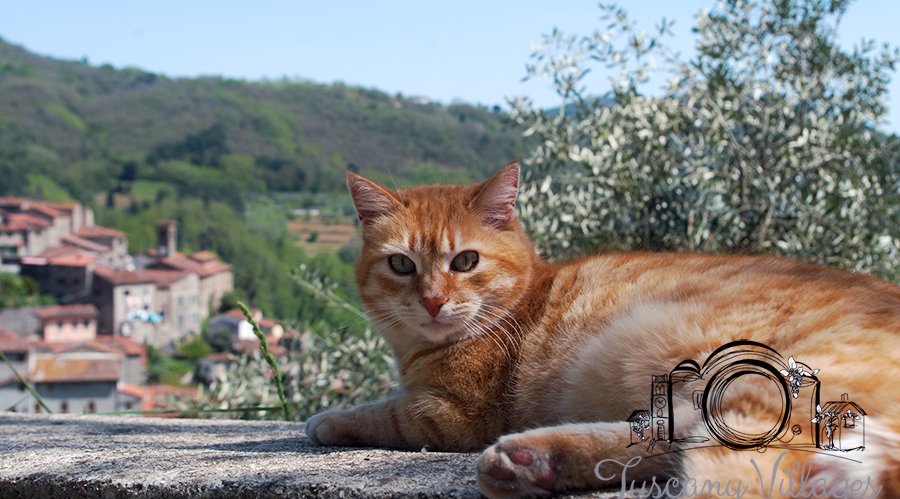
| Il gatto è suo? | Is that your cat? |
Talk about the weather. It works in Tuscany too.
And if a cat adopts you, the village will know before you do. Read about the cats of the Tuscan villages.
Finding things and opening times
| Italian | Means |
|---|---|
| Dov’è…? | Where is…? |
| la piazza / la chiesa / la farmacia | the square / the church / the pharmacy |
| A che ora apre? / chiude? | What time does it open? / close? |
| È aperto? / È chiuso? | Is it open? / Is it closed? |
| Mi sono perso (persa) | I’m lost (said by a man / a woman) |
At the festa
| Italian | Means |
|---|---|
| A che ora inizia la festa? | What time does the festa start? |
| Buon appetito! | Enjoy your meal! |
| Cin cin! / Salute! | Cheers! |
| È buonissimo! | It’s delicious! |
| Un altro, per favore | Another one, please |
You’ll need that last one at a sagra. Trust me. See my sagre month by month for where to go.
Little words you’ll hear all the time
- Allora… Well, so, right then. Italians start half their sentences with it.
- Dai! Come on! Go on!
- Boh. I dunno. Usually with a shrug.
- Magari! If only! I wish!
- Pazienza. Oh well, never mind. A very useful attitude in Italy.
- Piano piano. Slowly slowly, bit by bit. The pace of village life.
In an emergency
| Italian | Means |
|---|---|
| Aiuto! | Help! |
| Chiamate un’ambulanza! | Call an ambulance! |
| Ho bisogno di un medico | I need a doctor |
The emergency number is 112. My useful numbers guide has the rest.
A note on Tuscan
Tuscans have a famous way of speaking. Between vowels, a hard “c” often turns into a soft breathy “h”. So la casa (the house) can sound like “la hasa”, and Coca-Cola becomes something like “Hoha-Hola”. It’s called the gorgia toscana. Don’t try to copy it. Just enjoy it.
And don’t be shy. Have a go, smile, and point if you have to. Buona fortuna! (Good luck!)
You might also enjoy:
- Strangers really do care
- Where to stay in Tuscany: village, town or agriturismo?
- Small villages in Tuscany you’ve never heard of
Susan