Last updated: October 2026
Ask anyone in the hills above Pescia about the food, and you’ll get a long answer. Probably with hand gestures. And possibly an invitation to lunch.
This isn’t the Tuscany of fancy restaurants. It’s mountain food and farm food. Chestnuts, beans, spelt, olive oil, a bit of pork, and a lot of making do. For centuries, chestnut flour kept these villages fed through the winter. Today the same dishes turn up at every sagra, every Sunday lunch, every nonna’s table.
Here’s what to look out for, from Lucca and the Garfagnana across to Pistoia.
From Lucca
Tordelli lucchesi. Lucca’s own pasta: big half-moons stuffed with meat, served with a rich meat ragù. Note the spelling. It’s tordelli with a “d”, not tortelli, and the people of Lucca will tell you so. A Sunday lunch classic.
Garmugia. A spring soup from Lucca, made with the first fresh vegetables of the year (broad beans, peas, artichokes, asparagus) and a little meat. Look for it from April onwards.
Zuppa frantoiana. A thick bean and vegetable soup, named after the olive press, because it’s finished with a generous pour of the new season’s olive oil.
Buccellato. Lucca’s sweet bread, a ring-shaped loaf with raisins. There’s an old local saying that if you go to Lucca and don’t eat buccellato, it’s as if you’d never been. You’ll see it in every bakery.
Torta coi becchi. A sweet pastry tart with a filling of chard (yes, chard), and a crinkled pastry edge with little “beaks” (becchi). Odd-sounding, completely delicious.
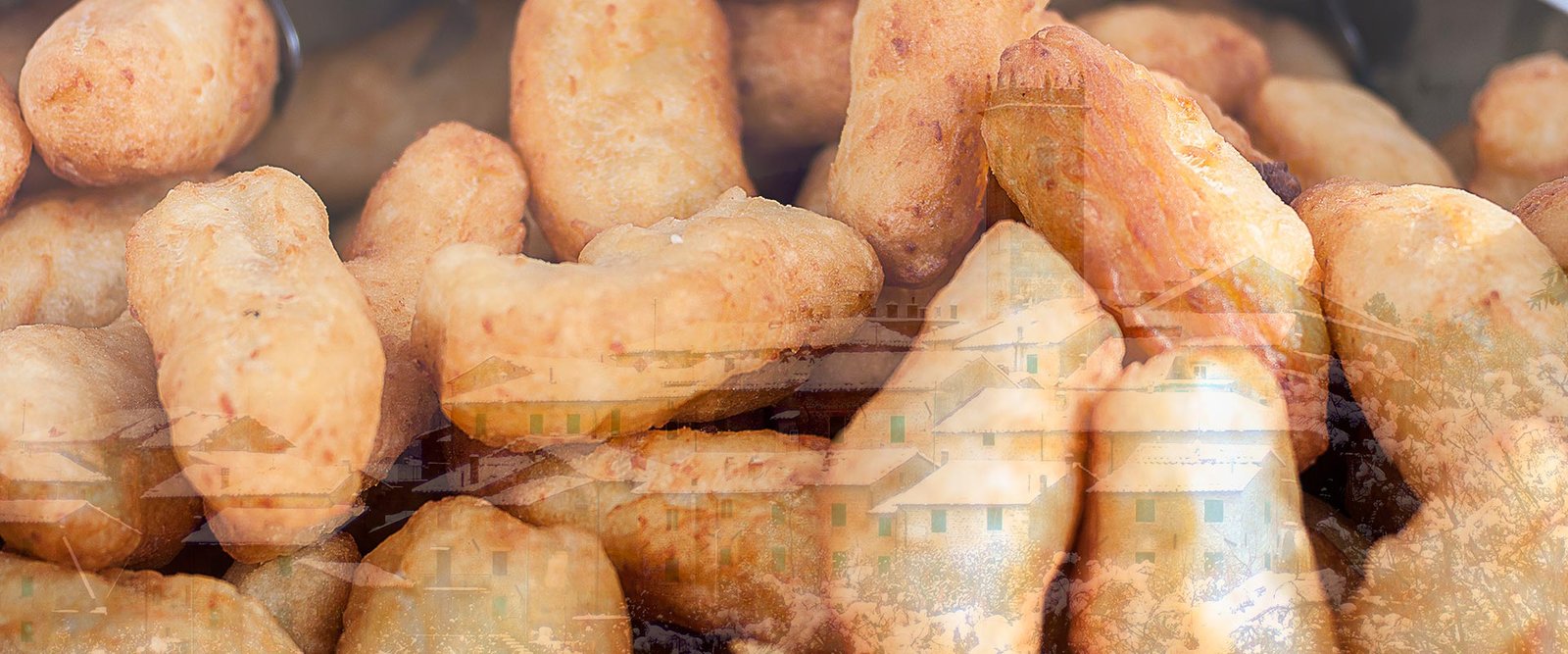
Frati. Fried ring doughnuts rolled in sugar. You find them at September fairs and festas. Hot, sweet, gone in seconds.
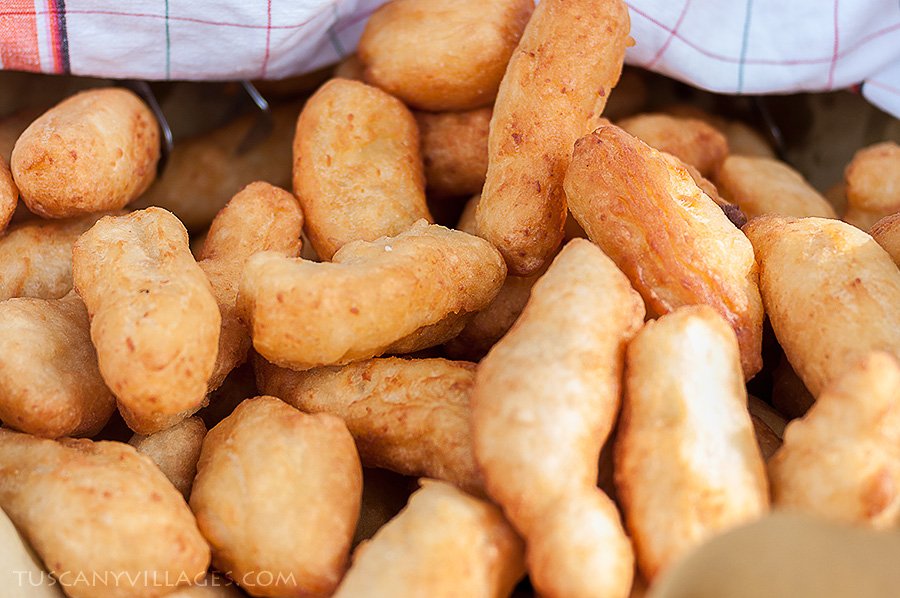
Speaking of fried dough, the villages have their own versions too. In Stiappa it’s the beccutino. I wrote all about it in my post on the Sagra del Beccutino.
From the chestnut woods and the Garfagnana
Necci. Thin pancakes made from chestnut flour, cooked between hot irons and usually rolled round fresh ricotta. They’re sweet, smoky and very filling. The Garfagnana’s chestnut flour is so prized it has its own DOP: Farina di Neccio della Garfagnana.
Castagnaccio. A flat chestnut flour cake with pine nuts, raisins and rosemary. Not very sweet, quite dense, and you’ll either love it or politely leave it.
Farro della Garfagnana. Spelt, grown in the Garfagnana for centuries, with its own IGP. You’ll find it in soups (zuppa di farro) and salads.
Biroldo. The Garfagnana’s spiced blood sausage. One for the brave.
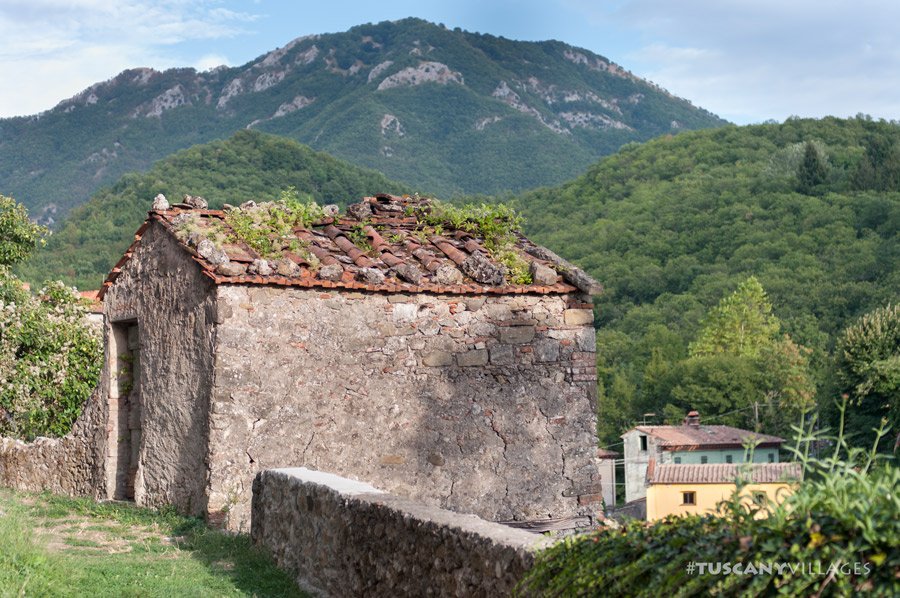
Chestnuts were so important here that the woods were full of little stone huts for drying them over a slow fire. Some are still standing, like the one in the photo at the top, near Casoli.
Autumn is the best time for all of this. My month-by-month sagre guide will tell you where the chestnut festivals are.
From the Pescia valley
Fagiolo di Sorana. The little white bean of Sorana, grown along the river Pescia below the village, and protected as an IGP. Thin-skinned and creamy, it’s served simply, with olive oil. Rossini, of all people, was a fan. I’ve written about them in Sorana beans.
From Pistoia
Maccheroni sull’anatra. Wide pasta ribbons with a duck ragù. It’s the traditional dish for the feast of San Jacopo, Pistoia’s patron saint, on 25 July.
Carcerato. An old Pistoia dish of bread, offal and broth, said to have been cooked for prisoners. Hearty, to put it politely.
Confetti di Pistoia. Pistoia’s sugared almonds, the knobbly kind, made the slow traditional way. A lovely gift to take home.
Brigidini di Lamporecchio. Thin, crisp aniseed wafers from Lamporecchio, near Pistoia. You’ll see them at every fair.
Cialde di Montecatini. Big, thin wafers with almonds from the spa town of Montecatini Terme. Perfect with a coffee.
Wine and olive oil
Montecarlo DOC. The little hill town of Montecarlo, between Lucca and Pescia, has its own wine denomination, with whites, reds and Vin Santo. It’s a pretty place for a tasting.
Lucca DOP olive oil. The hills round Lucca produce their own protected olive oil. The new oil arrives in late autumn, bright green and peppery. Try it on a slice of toasted bread (fettunta). Nothing better.
How to eat like a local
- Lunch is the main event. Some trattorias in the hills open only at lunchtime on weekdays.
- Go to a sagra. It’s the cheapest and most fun way to try local dishes, cooked by the people who grew up on them.
- Eat with the seasons. Garmugia in spring, beans in late summer, chestnuts and new oil in autumn.
- Ask what’s good today. “Cosa c’è di buono oggi?” works wonders.
Buon appetito!
You might also enjoy:
- Sorana beans: the little Tuscan bean Rossini wanted paying in
- Tuscany sagre and festivals, month by month
- Festa of the Ham Sandwich: Castelvecchio’s Sagra del Panino con il Prosciutto
Susan