Last updated: October 2026
Italians love dogs. You’ll see them under café tables, in shops, on trains and trotting through the piazza like they own it. Bringing yours to Tuscany is very doable.
But since Brexit, the paperwork from the UK has got fiddlier. Here’s what you need, plus the local rules and the hazards nobody tells you about.
The paperwork (from Great Britain)
Check the latest rules on GOV.UK before you book. As of October 2026, your dog needs:
- A microchip. Done first, or at the same time as the rabies jab.
- A rabies vaccination, at least 21 days before you travel. (Your dog must be at least 12 weeks old to have it.)
- An Animal Health Certificate (AHC) from your vet, issued no more than 10 days before you arrive in the EU.
Remember:
- You need a new AHC for every trip. It covers you for entry, onward travel within the EU, and coming back to Great Britain, for a limited time.
- Pet passports issued in Great Britain can’t be used for travel into the EU.
- Coming home: dogs need a tapeworm treatment from a vet before they come back into Great Britain, at a set time before arrival. Plan this before you go. It’s easy to forget, and you’ll need to find an Italian vet.
Italian rules for dogs
In towns and public places in Italy:
- Keep your dog on a lead no longer than 1.5 metres.
- Always carry a muzzle, and use it if asked, or if your dog might be a risk to others.
- Clean up after your dog. Carry bags, and in some towns a little bottle of water to rinse the pavement too.
Rules can be stricter in parks, gardens and some historic centres, so look for signs.

Dogs on trains
On Trenitalia regional trains:
- Large dogs must wear a lead and muzzle.
- They need their own ticket, at half the 2nd class fare.
- Carry their registration and health documents.
- They aren’t allowed on some trains, which are marked in the timetable.
Small dogs in a carrier travel on different terms, and fast trains have their own rules. Check Trenitalia’s or Italo’s website before you travel. My train guide covers tickets.
Dog-friendly beaches
Each seaside town sets its own beach rules every year, so always check locally. In Viareggio, for example, the 2026 rules allow dogs on the free beaches, on a lead no longer than 1.5 metres, with a muzzle to hand, water and shade, and you must clean up. Some beach clubs, like Bagno Marechiaro in Viareggio, have a dedicated dog beach.
My Versilia beach guide has the lowdown on the coast.
Hazards to know about
- Processionary caterpillars. Hairy caterpillars that walk nose to tail in long lines, under pine trees. Their hairs are dangerous to dogs, especially if they sniff or lick them. In Tuscany the risk is highest from late February to mid May. If your dog has touched one, go straight to a vet.
- Sandflies and leishmaniasis. A serious disease spread by sandflies in warm parts of Italy. Ask your vet about protection before you go.
- Ticks in woods and long grass. Check your dog after every walk.
- Heat. Summer pavements and sand get very hot. Walk early and late, and carry water.
- Wild boar live in the woods. Keep your dog close on country walks.
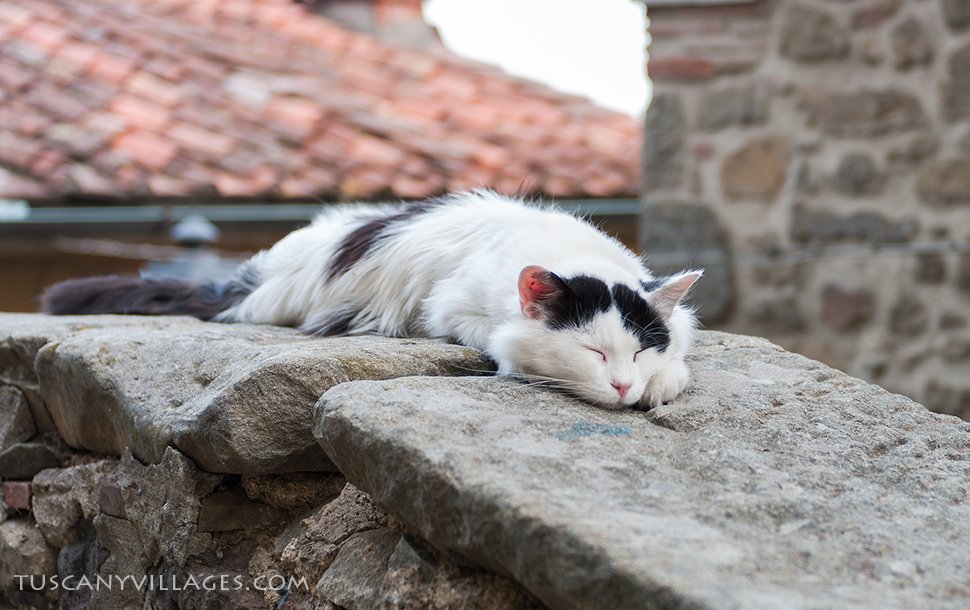
- Village cats. They were here first. The cats of the Tuscan villages do not take kindly to visitors with four legs. Read about them in cats of the Tuscan villages.
Where to stay and eat
- Ask before you book. Many holiday lets and agriturismi take dogs, but not all, and some charge extra. A village house with a garden or a farm with space is ideal. See where to stay in Tuscany.
- Restaurants and bars often welcome dogs, especially outside. Ask first.
- Museums and churches usually don’t allow dogs, except assistance dogs.
Vets and emergencies
Ask your accommodation for the nearest vet (veterinario) when you arrive, and save the number. My useful numbers guide has the other numbers to know.
Long walks in the chestnut woods, a snooze under a café table, and a whole new world of smells. Your dog will love Tuscany.
You might also enjoy:
Susan