Last updated: October 2026
Italian public transport is cheap, mostly reliable and, round Lucca and Pistoia, really very good. It also has a few rules that catch out almost every visitor. Here they are, so you don’t get caught.
This is my practical guide to trains and buses in Tuscany. If you’re still deciding whether you need a car at all, start with getting around Tuscany.
Trenitalia and Italo: who’s who
There are two train companies.
- Trenitalia is the national railway. It runs everything: the fast Frecciarossa trains between big cities, and the slow regional trains that stop everywhere. In Tuscany, nearly every journey you make will be on a Trenitalia regional train.
- Italo is a private high-speed company. It runs fast trains between the big cities and stops at Florence Santa Maria Novella. It doesn’t go to Lucca, Pistoia or Pisa itself, but it sells combined tickets that add a Trenitalia regional train for the last bit, for example to Pistoia, Prato or Pisa.
So: coming from Rome, Milan or Venice? Compare Frecciarossa and Italo to Florence. Then hop on a regional train for the rest.
Regional trains: the ones you’ll actually use
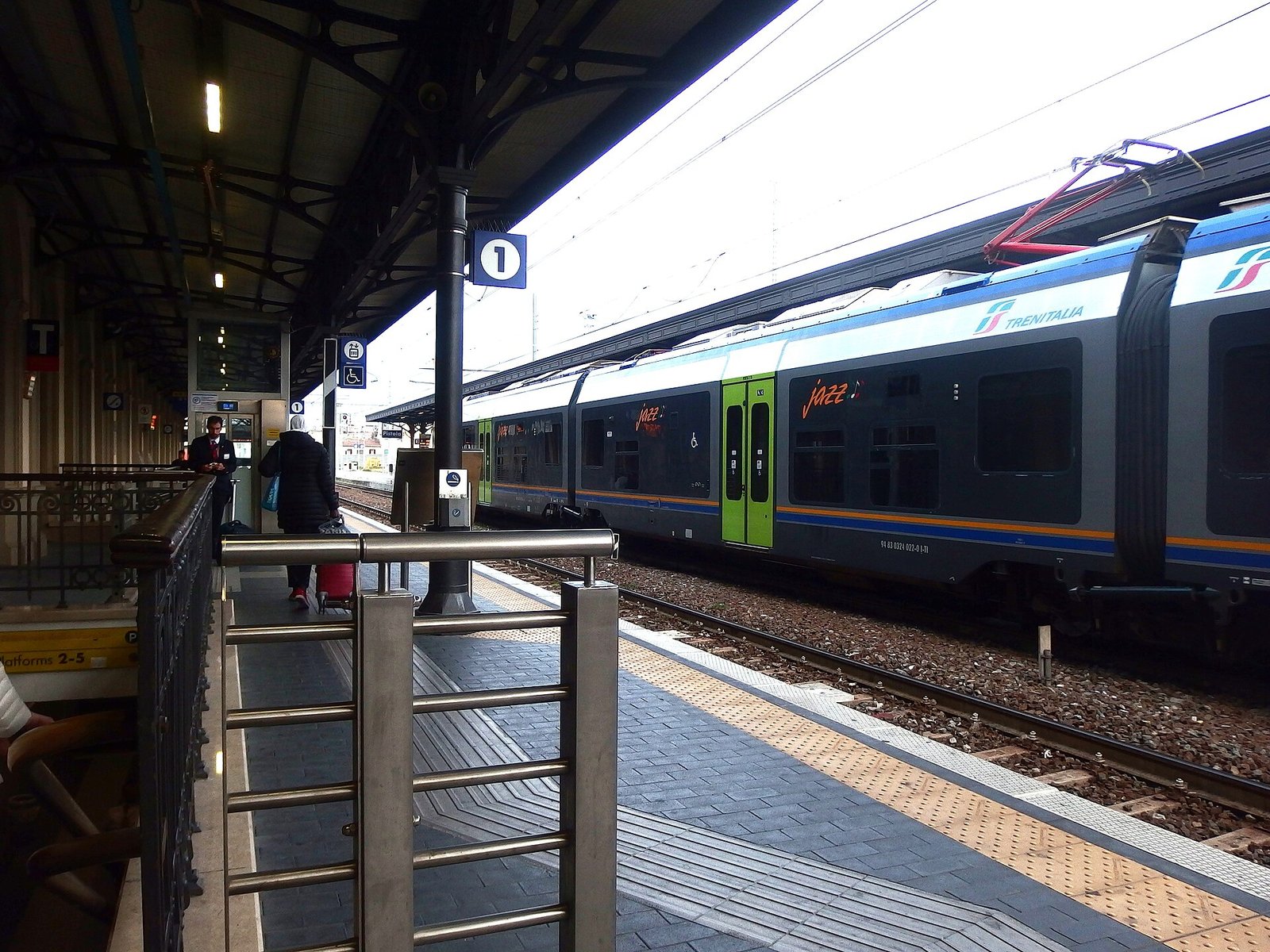
Regional trains link Florence, Prato, Pistoia, Montecatini Terme, Pescia, Lucca, Viareggio and Pisa. There are no seat reservations, and the price is fixed, so there’s no saving by booking early. Turn up, buy a ticket, get on.
You can buy tickets:
- from the green and white machines at the station (they have an English button)
- at the ticket office in bigger stations
- on the Trenitalia app or website
- sometimes from a newsagent or bar near the station
The big one: stamp your paper ticket
If you buy a paper regional ticket, it isn’t valid until you stamp it. Before you get on the train, find the little validating machine on the platform or in the station, push the ticket in and wait for the click. It prints the date and time.
Trenitalia’s rules say you must validate it before departure, at the station where your journey starts. Once stamped, it’s valid for 4 hours. If you get on without stamping it, the guard can fine you on the spot, and “I’m a tourist” doesn’t help. If the machines are broken, find the guard as soon as you board and tell them before they find you.
Tickets for the fast trains (Frecciarossa, Italo) are for a specific train and seat, so there’s nothing to stamp.
Digital tickets on the app
If you buy a regional ticket on the Trenitalia app or website, it’s digital and you don’t stamp anything. Two things to know:
- Read your ticket. Some digital regional tickets are tied to the train you chose. Others are valid for 4 hours from the departure time you picked. It says which on the ticket.
- Some are personal. Trenitalia’s digital regional ticket carries the passenger’s name, so carry ID in case the guard asks.
Strikes (sciopero)
Italy has transport strikes. Not constantly, but often enough that you should know the word sciopero. They’re announced in advance, so check the news or the Trenitalia site the week before you travel.
On strike days, Trenitalia guarantees some regional trains in two bands: on weekdays from 6 to 9 in the morning and 6 to 9 in the evening, and on public holidays from 7 to 10 am and 6 to 9 pm. The exact list of trains varies by region and is published before the strike. Outside those hours, assume nothing.
Buses: Autolinee Toscane
Almost all buses in Tuscany are run by Autolinee Toscane, often written “at” on the buses and at-bus.it online. Town buses in Lucca and Pistoia, and the country buses between towns and up into the hills.
Paper tickets on country routes (extra-urban) are priced by distance. In 2026 they started at €2.00 for up to 10 km, then €3.40 up to 20 km, €4.60 up to 30 km, and so on. A ticket is for one direction only, so you can’t use it for the way back. Stamp it in the machine when you get on. Buy it before boarding, from a tobacconist, newsagent or the “at bus” app. Buying from the driver, where that’s possible, costs more.
Contactless (“tip tap”) is the easy option. You can pay with a contactless bank card, phone or watch on all their buses, with no extra charge. But:
- On country routes, tap when you get on and when you get off. Forget to tap off and you’ll be charged to the end of the line.
- It’s one card per person. Travelling as a family? Use the at bus app to buy several tickets instead.
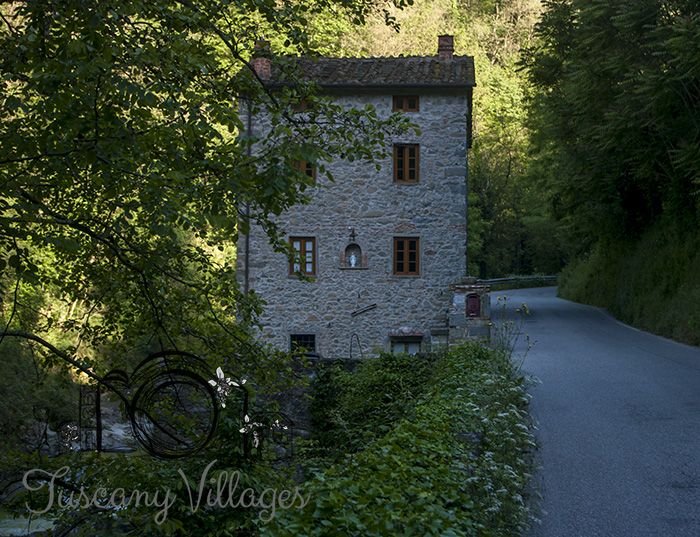
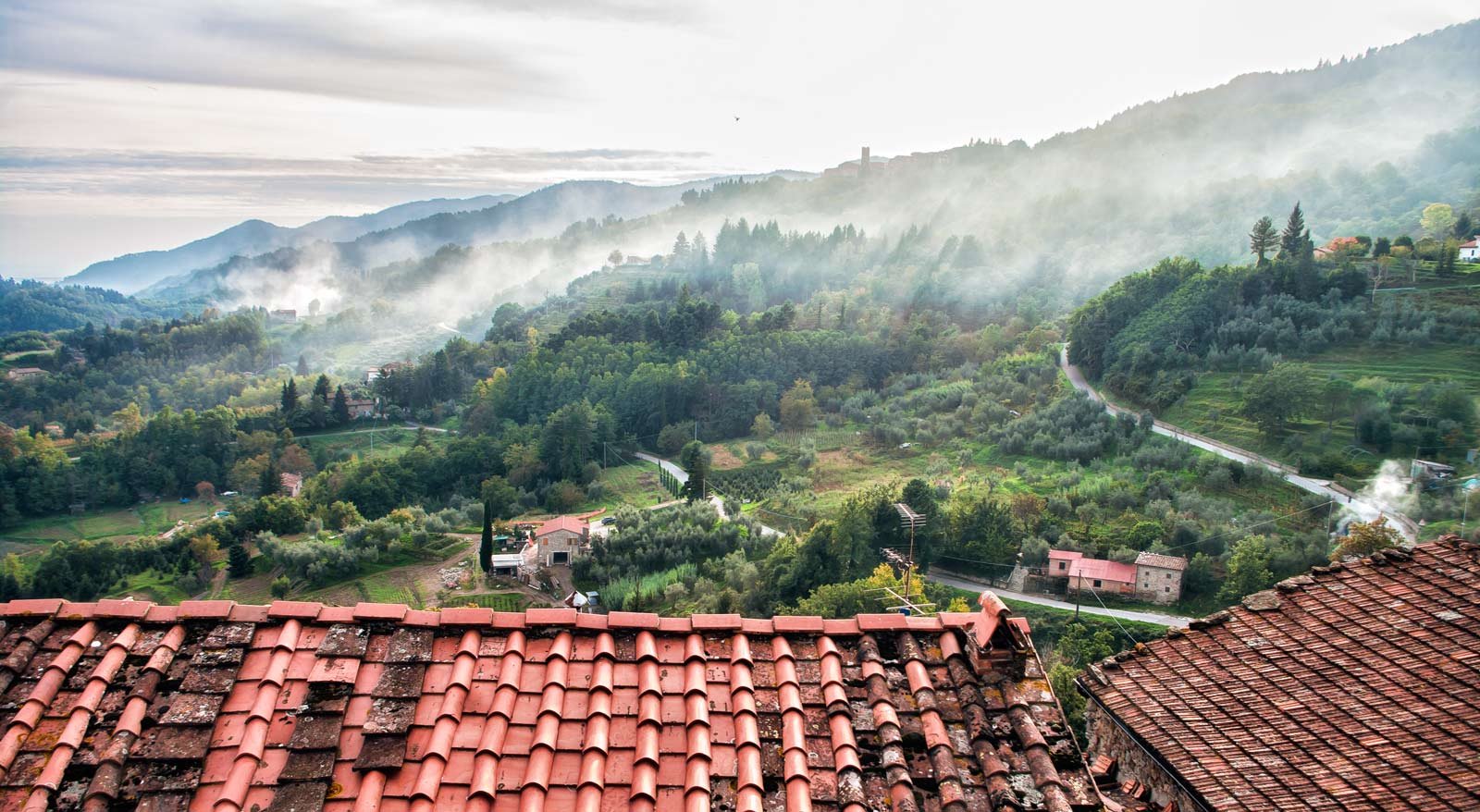
Bus stops in the hills can be just a sign on a pole, or nothing at all. Ask in the bar. Someone will know.
A few more tips from experience
- Sundays and holidays have far fewer trains and buses. Always check the timetable for the actual day.
- Station names: the station for Barga is “Barga-Gallicano”, down in the valley. Pescia station is a 20-minute walk from the centre.
- Platform changes are announced in Italian first. Watch the departure board, not just your ticket.
- Keep your ticket until you leave the station. Inspectors check on buses too.
Transport in Italy: the short version
Trains: Trenitalia for everything local. Italo or Frecciarossa only for long hops to Florence.
Paper train ticket: stamp it before you board. Valid 4 hours.
App ticket: no stamping, but read the rules on it and carry ID.
Buses: contactless works. Tap on and off on country routes.
Strike day: guaranteed trains 6 to 9 am and 6 to 9 pm on weekdays.
For the car-free version of all this in the Pescia valley, with bus lines and taxis, see Visiting Tuscany without a car.
You might also enjoy:
- Visiting Tuscany without a car: the Pescia valley edition
- Best day trips from Lucca: 6 easy escapes I love
- Pisa or Florence airport to Lucca, Pescia and Pistoia
Susan
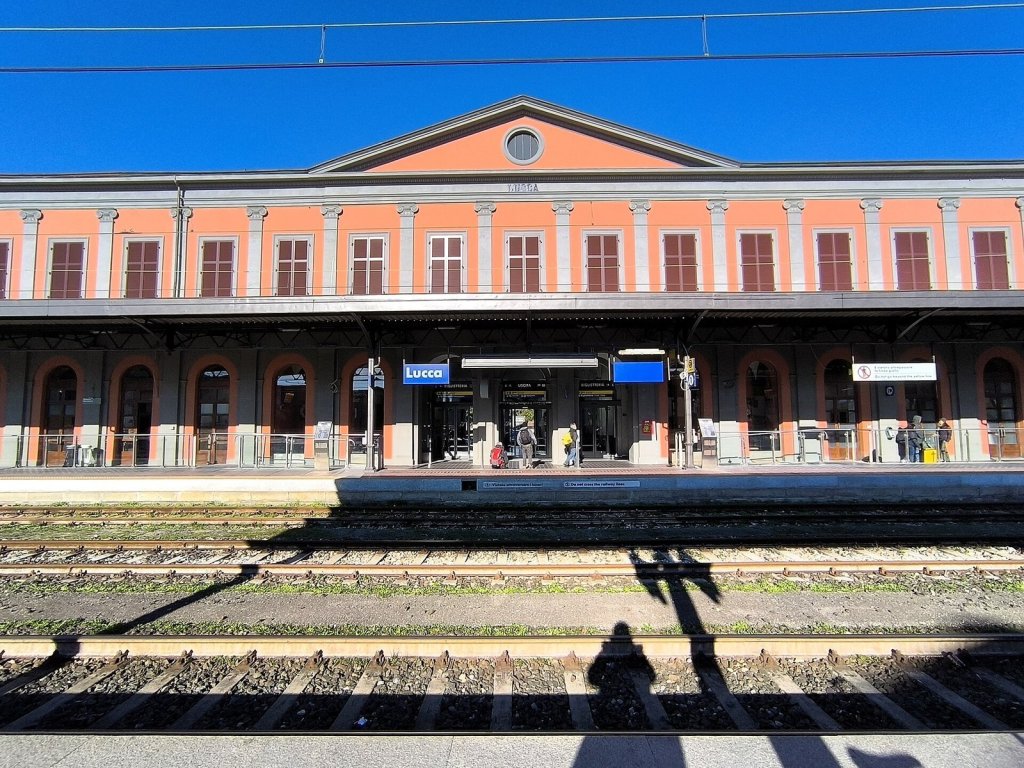
Photo credits: The platforms at Lucca station (photo: Dobroš, CC BY-SA 4.0, via Wikimedia Commons); Pistoia station, on the line between Florence and Lucca (photo: Palickap, CC BY-SA 4.0, via Wikimedia Commons). All other photos are my own.