Last updated: October 2026
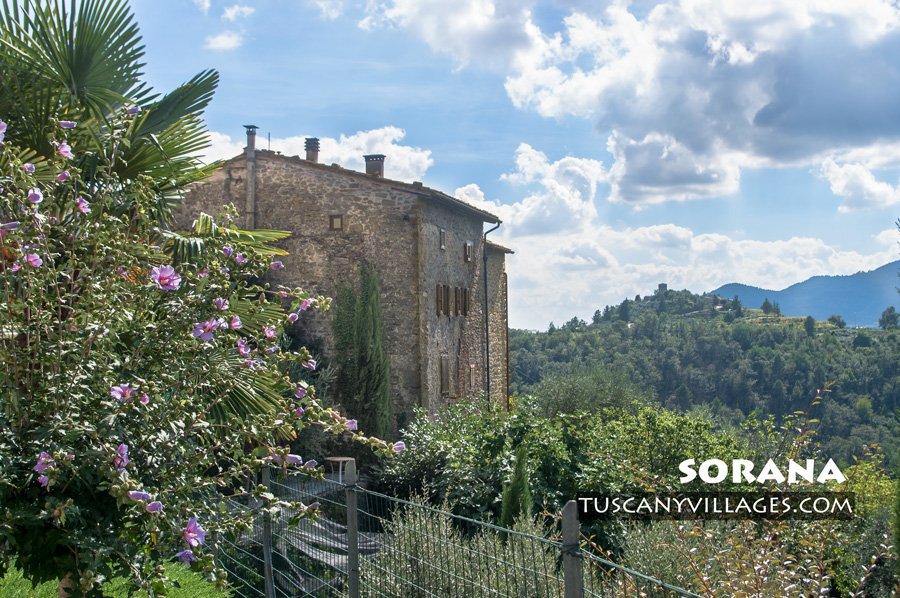
Some villages are famous for a church. Some for a view. Sorana is famous for a bean.
Not just any bean, mind. The fagiolo di Sorana has been fussed over by composers, writers and journalists for the best part of two centuries. When I lived in the valley I couldn’t quite believe it. Then I tasted one.
Who loved Sorana beans?
You can judge how precious this bean is by the people who prized it.
The composer Gioacchino Rossini knew them well. In a letter to his friend Giovanni Pacini, the composer who made his home in Pescia, Rossini asked for Sorana beans as a friendly fee for revising some of his scores. Forget money. Send beans.
Giuseppe Verdi is said to have sung their praises too. The writer Edmondo De Amicis claimed he’d seen them on sale in the market in Constantinople. And the journalist Indro Montanelli praised them in his writing. He spent most of his career at the Corriere della Sera, Italy’s biggest newspaper.
There’s even a story that Amália Rodrigues, the queen of fado, longed to visit the place these beans came from. I’d love that to be true. I haven’t found proof, so take it with a pinch of salt (and a drizzle of oil).
Where the bean comes from
Beans aren’t Italian at all, originally. They came to Europe from the Americas after Columbus, and spread through Tuscany in the 1500s and 1600s.
They found their way up into the Pescia valley, the area better known as the Svizzera Pesciatina, “Pescia’s Switzerland”. The name is put down to Jean Charles Léonard de Sismondi, the historian and economist from Geneva. In the mid-1790s his family fled the upheavals of the French Revolution, bought a small farm near Pescia and worked it themselves. He thought the valley looked like home. His years farming here gave him his first book, Tableau de l’agriculture toscane (A Picture of Tuscan Agriculture), published in 1801.
No wonder neighbouring San Quirico is still popular with the Swiss in summer.
The beans grow on the sandy banks of the Pescia di Pontito, the stream that runs down below Sorana, Castelvecchio and Stiappa. The soil is alluvial, the valley is sheltered, the air is damp and the sun doesn’t linger. The stream water is low in calcium and minerals. It’s a tiny patch, and it can’t be copied anywhere else. That’s the magic.
A bean that nearly vanished
For centuries these beans fed the valley. Then the two world wars emptied the villages. After the war, young people left for factory jobs in the towns along the Arno plain, and the little fields by the river were left to go wild.
By the early 1980s, just one producer was still growing the bean. When farmers started drifting back to the riverbanks, he passed his secrets on.
In 2002 the fagiolo di Sorana won European protection as an IGP (in English, a PGI, or Protected Geographical Indication). Only beans grown in the official area, a strip of about 660 hectares in the comune of Pescia, can carry the name. Today you’ll spot locals tending their treasured plots between the woods and the olive trees. Hard work, with a breathtaking view. A real labour of love.
Moons, days and laurel leaves
We might not live in medieval times, but the old superstitions are alive and well up here.
Folklore says you must sow the beans in the last moon of May, and only on a day without an “r” in its Italian name. That means lunedì, giovedì, sabato or domenica (Monday, Thursday, Saturday or Sunday). Sow on a martedì and they’ll turn black, apparently. I wouldn’t risk it.
The beans are picked by hand in late summer, then dried in the sun for three or four days. Traditionally they’re stored in jars with peppercorns, valerian root or bay leaves. Laurel, they say, also keeps away evil. Belt and braces.
What makes them special?
There are two kinds. The white one is small, flat and milky white with a pearly sheen. Its skin is so thin you hardly notice it, and the inside goes beautifully creamy when cooked. It’s a cannellini-type bean, but daintier. The flavour is delicate and moreish.
The red one is plumper and almost cylindrical, a wine-red with darker stripes. It has a thicker skin and a juicy inside.
The classic way to eat them is fagioli al fiasco: slow-cooked in a glass flask, then served with a slosh of good olive oil, salt and pepper. Simple. Perfect.
The Sorana bean festa
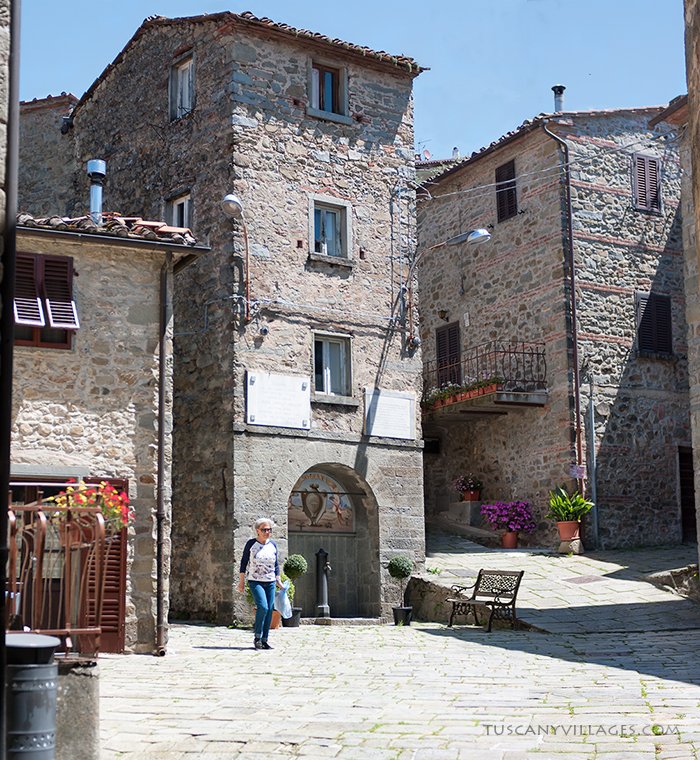
Every year, around harvest time, Sorana throws a party for its bean. The Festa del Fagiolo di Sorana is usually held in the village piazza on the last weekend of August. In 2026 it was Saturday 29 and Sunday 30 August. Check the date each year, as it can move.
On the Saturday evening there’s a bean dinner, which you need to book. On the Sunday afternoon there’s tasting, local produce, a craft market and music. It’s your chance to buy the first beans of the new harvest straight from the growers. Bring a bag.
Where to eat Sorana beans
Down by the river at Ponte di Castelvecchio, Da Carla has been feeding the valley since 1972. It’s a proper family trattoria and pizzeria, with a little fishing lake and a play area for children. Order the fagioli al fiasco, or the baccalà with Sorana beans.
When I wrote about it years ago, the trick was to ask for the pranzo di lavoro, the working man’s lunch, for a tasty meal at a song. Ask if they still do one.
It’s usually closed on Thursdays and open every day in July and August. Check before you go.
Visiting Sorana
Getting there: Sorana is in the hills north of Pescia, one of the ten castella of the Svizzera Pesciatina. From Pescia, take the road north up the valley towards Pietrabuona and follow signs for Sorana. Allow around 25 minutes. From Lucca, Pescia is about 30 km, around half an hour. Park below the village and walk up.
Without a car: trains run to Pescia, but buses up the valley are few. A car makes it easy.
Best time to go: late August for the bean festa and the new harvest. September and October are lovely too, with cooler days and golden woods.
Where to stay: Pescia is a good base, or a farmhouse in the valley if you want peace and quiet.
You might also enjoy:
- Le Dieci Castella: a driving route through the Svizzera Pesciatina
- Sagra del Beccutino: Stiappa’s Ferragosto festa
So, if you’d like to savour this famous little bean just like Rossini, take the winding road up through Sismondi’s Svizzera Pesciatina until you reach its home. Sorana!
Susan
You might also like: Lignana: the lost eleventh castle and Le Dieci Castella: a driving route through the Svizzera Pesciatina