Last updated: October 2026
Everyone round here talks about le Dieci Castella. The ten castles of the Svizzera Pesciatina. Ten little stone villages, each on its own hilltop, poking out of the chestnut woods above Pescia.
But here’s the thing. There used to be eleven.
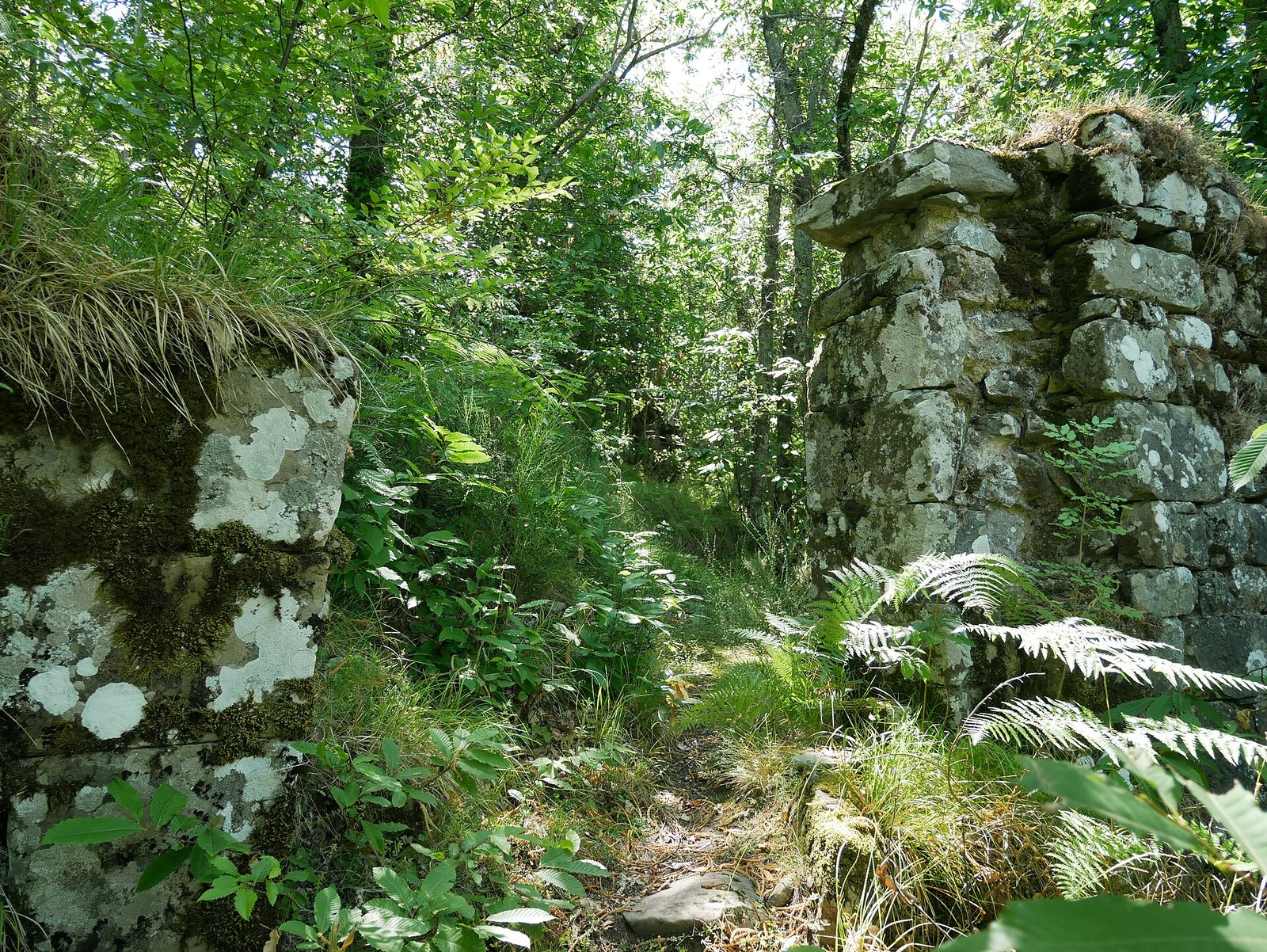
The eleventh was Lignana. And if you go looking for it today, you’ll find a few lumps of wall, an old gateway and a little church in the trees. That’s it. The rest went in the fourteenth century, and its people went with it, mostly down the hill to Sorana.
I first wrote about Lignana back in 2011, and it’s still one of my favourite stories from the valley. So here it is again, properly fact-checked this time.
First, why “Castella” and not “Castelli”?
If you know a bit of Italian you might be scratching your head. The plural of castello is castelli. So why does everyone say le Castella?
It’s old. Castella is the plural of the Latin castellum, a small fortified place, and old Italian kept those Latin plurals ending in a for some words (you still hear le mura for city walls and le braccia for arms). In the Pescia valley the old form simply stuck. So le Dieci Castella isn’t a typo. It’s a name that’s been hanging around since the Middle Ages, and the locals are rather proud of it.
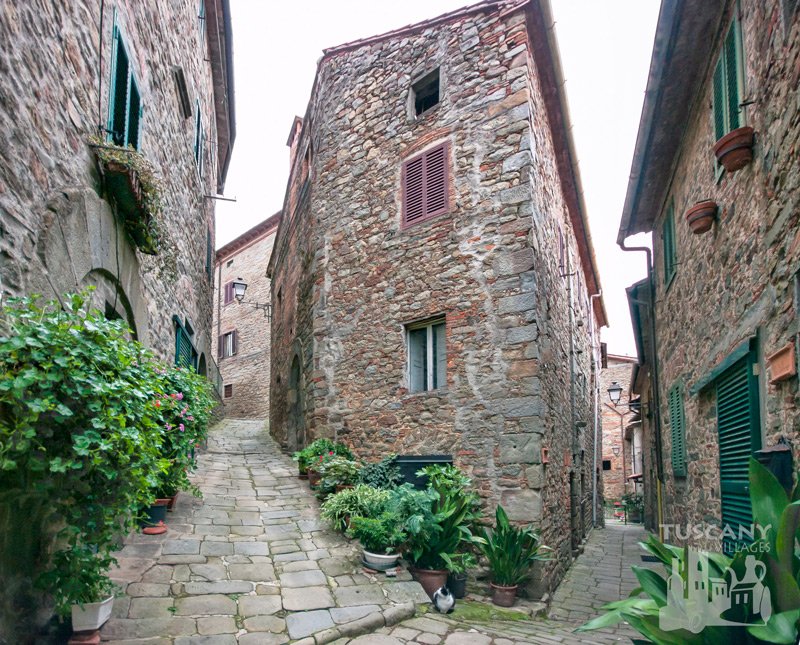
And a castello here doesn’t mean a fairytale castle with turrets. It means a fortified village: houses packed tight inside a ring of walls, a tower, a church, and a gate you could shut when trouble came up the valley.
Where was Lignana?
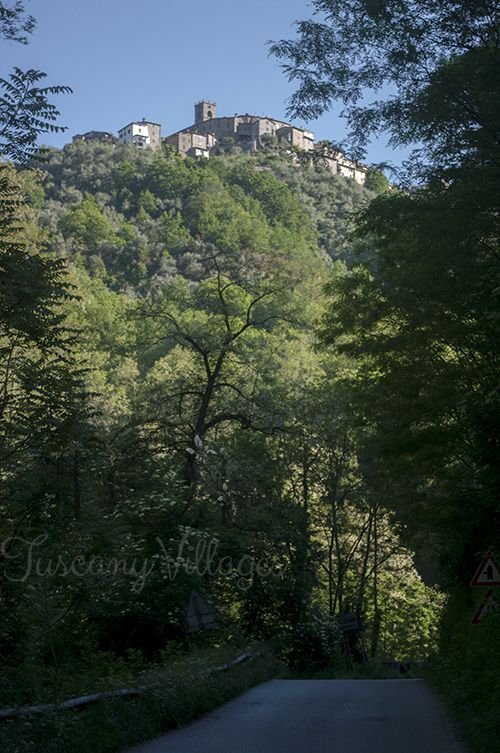
Lignana sat high on a hill above Sorana, at around 800 metres, in the Valleriana (the upper Pescia valley). From up there you could see the whole valley, which is exactly why it mattered. Whoever held Lignana could watch the roads and the other castella below.
It’s first mentioned in documents in 980. The walls ran roughly 150 metres round, with two gates, so it was never a big place. Think one tight huddle of stone houses on a windy top.
So what happened to it?
The fourteenth century was a rough time to live in the Pescia valley. This was border country between Lucca, Pisa and Florence, and the castella got passed around like a parcel.
In 1362 Pisa attacked and took Lignana. Two years later, in 1364, the war between Pisa and Florence ended with the Peace of Pescia, signed on 28 August in the church of San Francesco in Pescia. Florence got Lignana back. And then decided it wasn’t worth the bother.
Rather than rebuild a castle that kept getting knocked about, Florence finished the job and pulled down what was left. Its people, around fifty families, were moved to the neighbouring villages. Most went to Sorana. Some went to Lanciole and some to Castelvecchio.
Sorana’s “Paradiso”
Here’s my favourite bit.
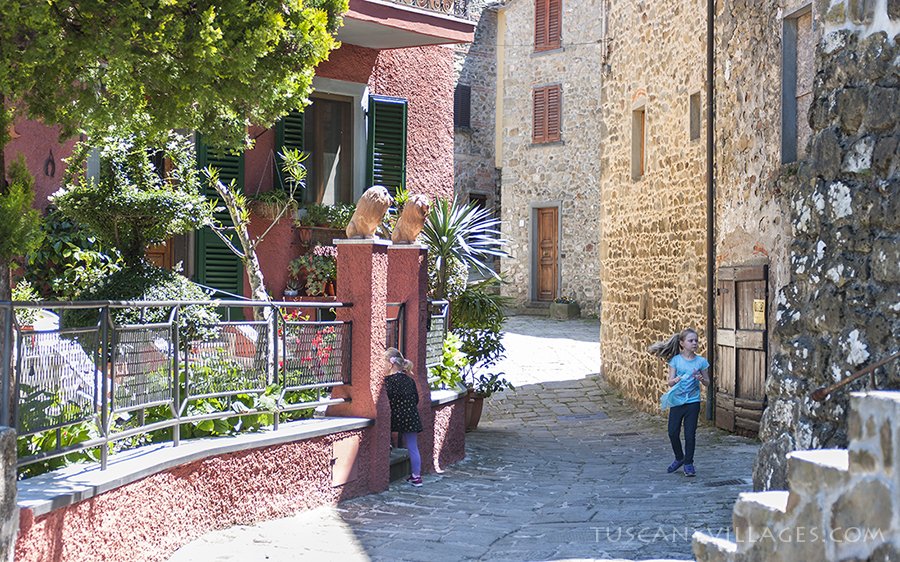
Sorana had to make room for all these newcomers, so a new bit was built on the south side of the village, next to the castle. It’s known as Paradiso. Paradise.
Why? Local legend says it’s because the women who arrived from Lignana were so beautiful. I’ve heard it told with a wink in the bar more than once, and I’m not going to argue with it.
My old notes say the new quarter went up in 1376. I haven’t been able to confirm that date anywhere else, so treat it as village lore.
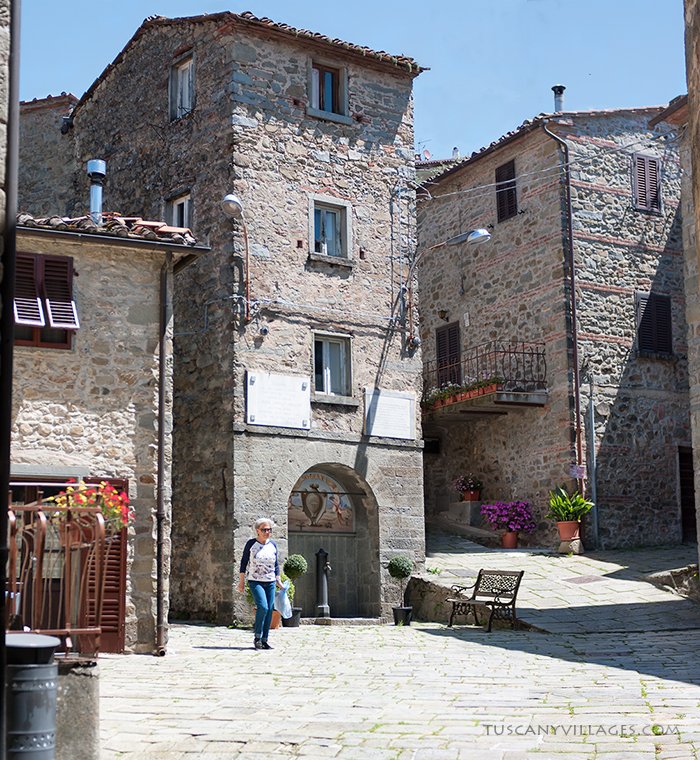
Sorana, by the way, was once called Rocca Sovrana. Today it’s famous for its tiny, thin-skinned beans, the Fagiolo di Sorana.
Lignana’s most famous son
One name links Lignana to big history. Fra Domenico Buonvicini, a Dominican friar from the Lignana family, was one of the two friars burned alongside Girolamo Savonarola in Florence’s Piazza della Signoria in 1498. It’s a grim footnote, but it shows how far a family from one tiny hilltop could travel.
What’s left today
Not much, and that’s the magic of it.
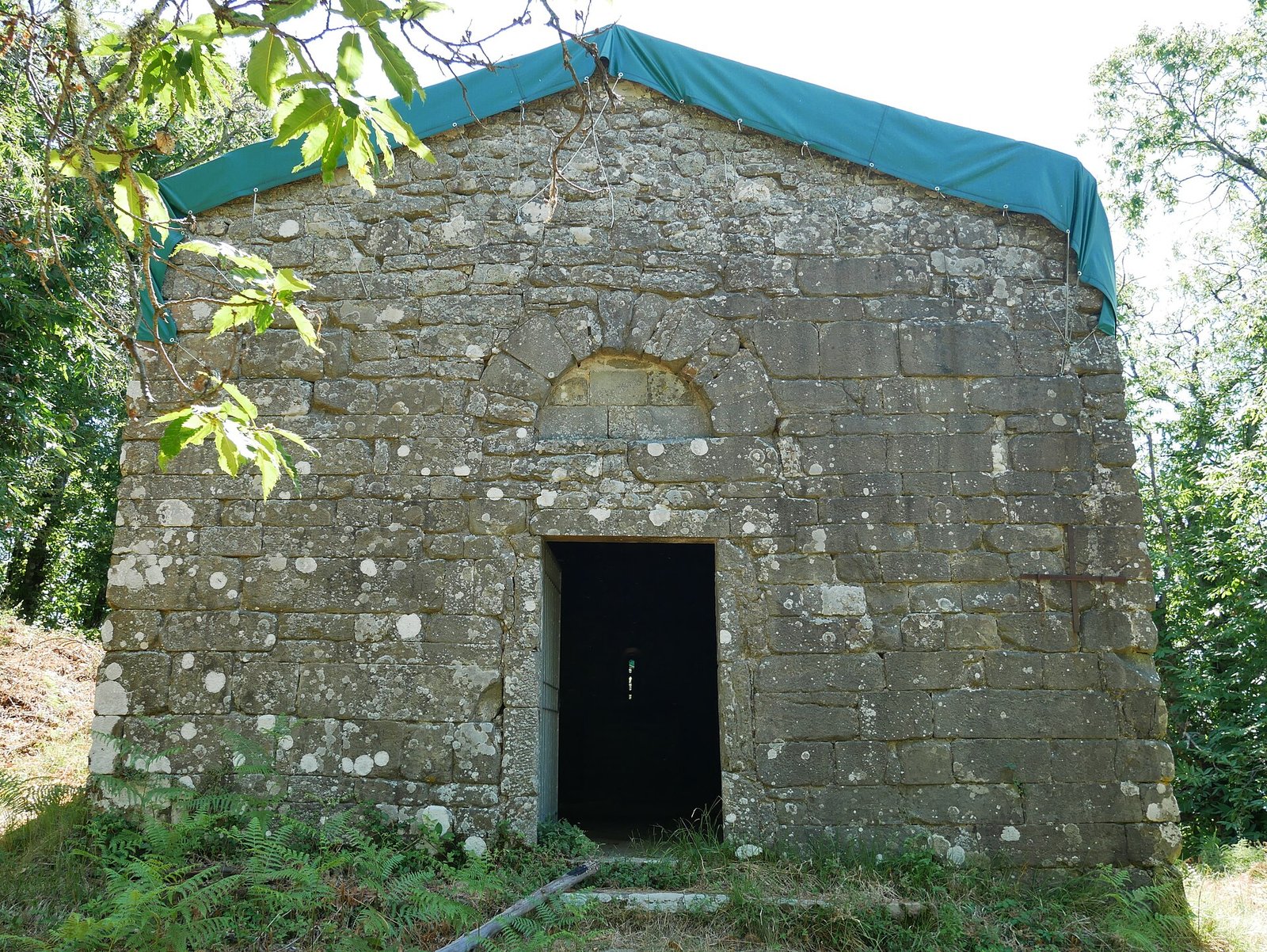
Up in the woods you’ll find stretches of the old walls, the remains of a gate, and the little church of Santi Jacopo e Caterina. The church has been on the FAI “Luoghi del Cuore” list (places people vote to save), and it’s in need of repair. So please be gentle. Don’t climb on anything.
Lignana’s stones are still lying about in the chestnut woods. You’ll walk past some without even knowing.
Walking up to Lignana
The usual way is from Sorana, on the old mule track. It’s about 1.5 km and takes somewhere between 20 and 50 minutes depending on your legs and how often you stop to take photos. It’s uphill, the path can be stony and slippery after rain, and there’s no café at the top. Obviously.
A few tips:
- Wear proper shoes. Flip-flops and chestnut husks don’t mix.
- Take water, especially in summer.
- Ask in Sorana for the start of the path if you can’t find it. People are lovely and will point you the right way.
- Combine it with lunch in Sorana or a wander round the other castella.
Visiting Lignana
Where: above Sorana, in the Valleriana, Pescia (Pistoia province).
Getting there: drive to Sorana, around 25 minutes from Pescia, then walk up the mule track (about 1.5 km).
Cost: free. It’s a wood.
Best time: spring and autumn. Summer is fine early in the morning.
Nearby: Sorana, Aramo, Castelvecchio, Lanciole.
So next time someone tells you there are ten castella in the Pescia valley, you can lean in and say, “Well, actually…”
You might also enjoy:
- Le Dieci Castella: a driving route through the Svizzera Pesciatina
- Sorana beans: the little Tuscan bean Rossini wanted paying in
- Visiting Tuscany without a car: the Pescia valley edition
Susan
Photo credits: The little church of Santi Jacopo e Caterina at Lignana (photo: Naioli, CC BY-SA 4.0, via Wikimedia Commons); What’s left of Lignana’s old gateway (photo: Naioli, CC BY-SA 4.0, via Wikimedia Commons). All other photos are my own.