Last updated: October 2026
Everyone knows San Gimignano. Everyone knows Pienza. And on a summer’s day it can feel like everyone is in them, too.
When I lived in the hills between Pistoia and Lucca, I spent years poking about the little villages nobody seemed to visit. Some have a bar. Some have a church and a cat. Most have more steps than I’d like. All of them were worth the drive.
These are the small villages in Tuscany I still dream about. None of them are famous. That’s rather the point.
Why the hills north of Pescia and Lucca?
This corner of Tuscany sits where the plain meets the Apennines. The villages were built as castles, high up, so they could see trouble coming. Today that means views, cool air in summer and very few crowds.
It also means you’ll want a car. I’ll be honest about that below.
1. Pontito, the village shaped like a fan
Pontito is in the Svizzera Pesciatina, the hilly valley above Pescia. It sits at about 750 metres and spreads down the slope like an upside-down fan. Every street climbs to the church of Santi Andrea e Lucia at the top.
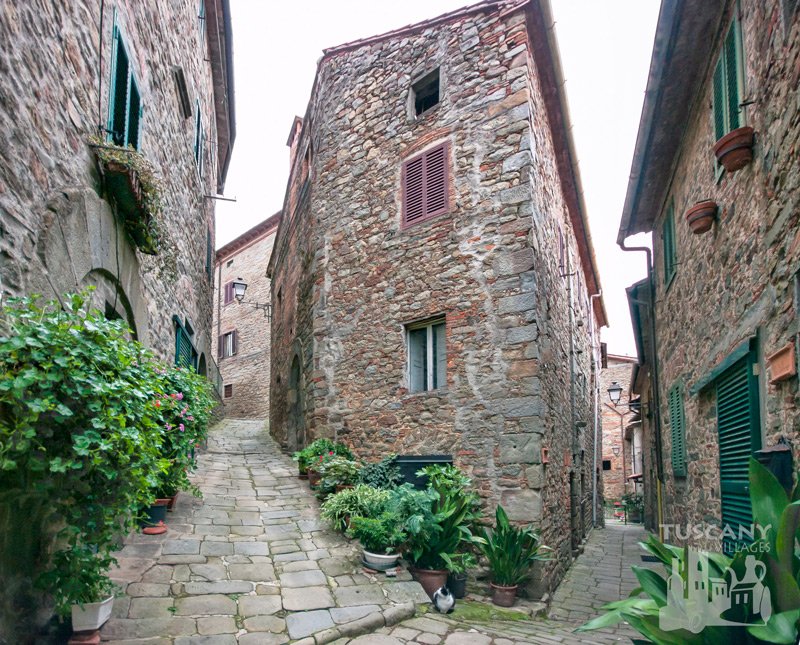
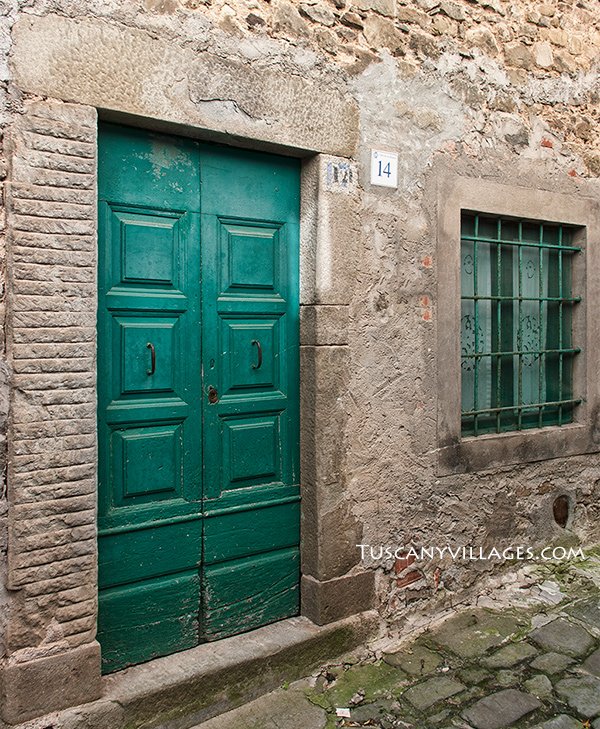
The streets are almost all steps. There’s a seat set under one window that I photographed years ago, and I still wonder who sits there of an evening.
I’ve written a full driving route for Pontito and its nine neighbours in my guide to the Dieci Castella.
Read the full route:
2. Stiappa, the village with a guardian
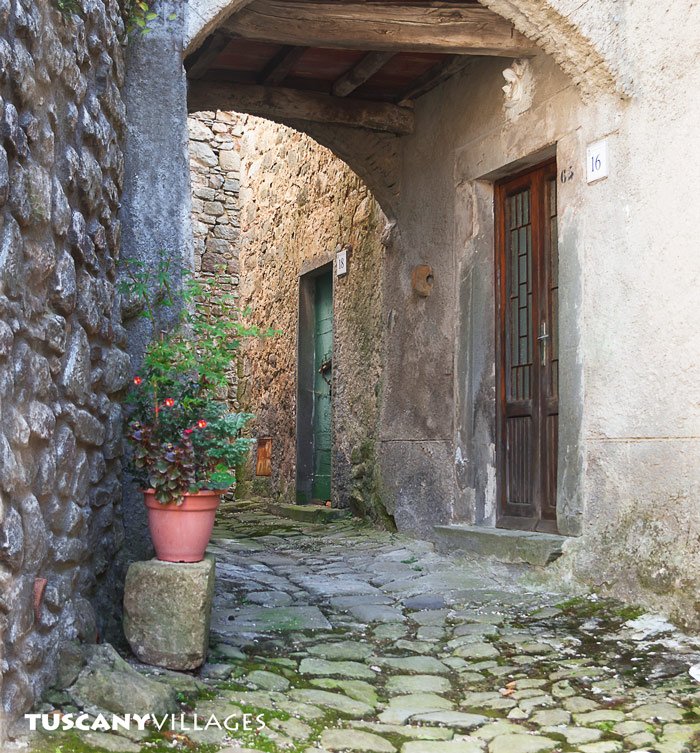
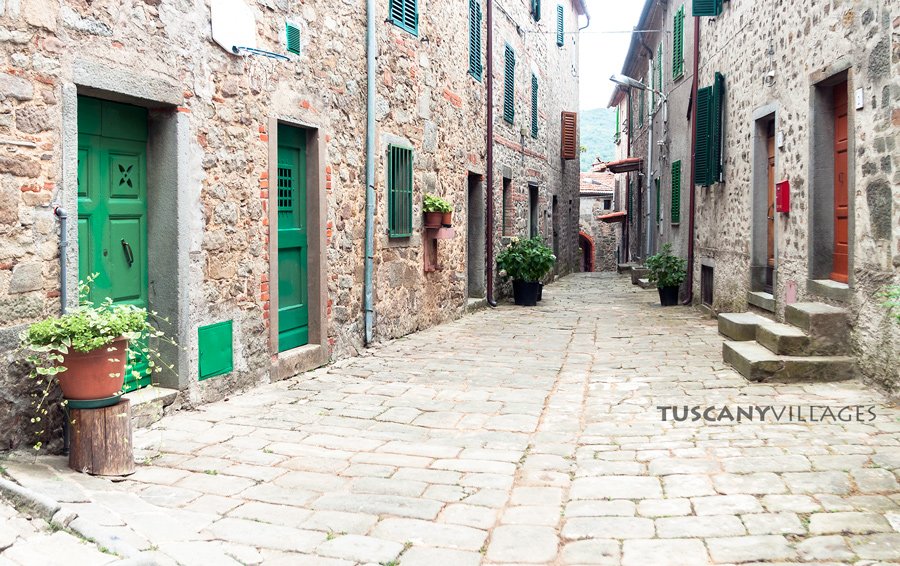
Stiappa is a few kilometres down the valley from Pontito, at about 627 metres. It’s quiet and old, with stone tunnels running under the houses. Imagine how many footsteps it took to wear that paving smooth.
I met a lovely lady there, sweeping outside her house. When I left, she was sweeping the village entrance too. The comune had stopped cleaning it years ago, she said, and if she didn’t, no one would. What a gem.
3. Calamecca, and the cat in the box
Calamecca is a medieval village in the Pistoia mountains, the Montagna Pistoiese, at about 693 metres. It’s now part of the comune of San Marcello Piteglio. Its castle was destroyed by Pistoia in 1182 after a long siege, then rebuilt in 1332.
My favourite memory isn’t historical at all. Outside one house, someone had put a box out for their cat. He was curled up in it, looking very pleased with himself. I took far too many photos.
4. Aramo, on its crag
Aramo is one of the ten castella above Pescia. It sits on a rocky peak above the Val di Torbola, which is why it was fought over and sacked more than once in the 1400s. The church of San Frediano sits at the very top.
It’s small, steep and a bit wild-looking. I love it.
5. Vellano, the old capital of the valley
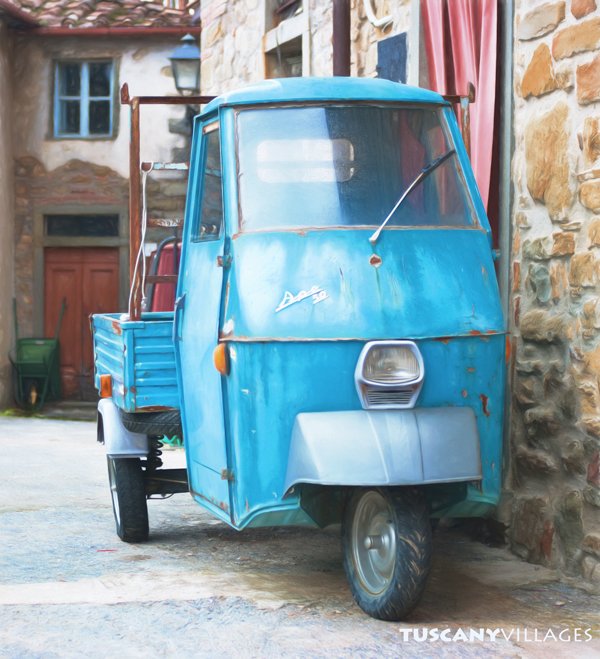
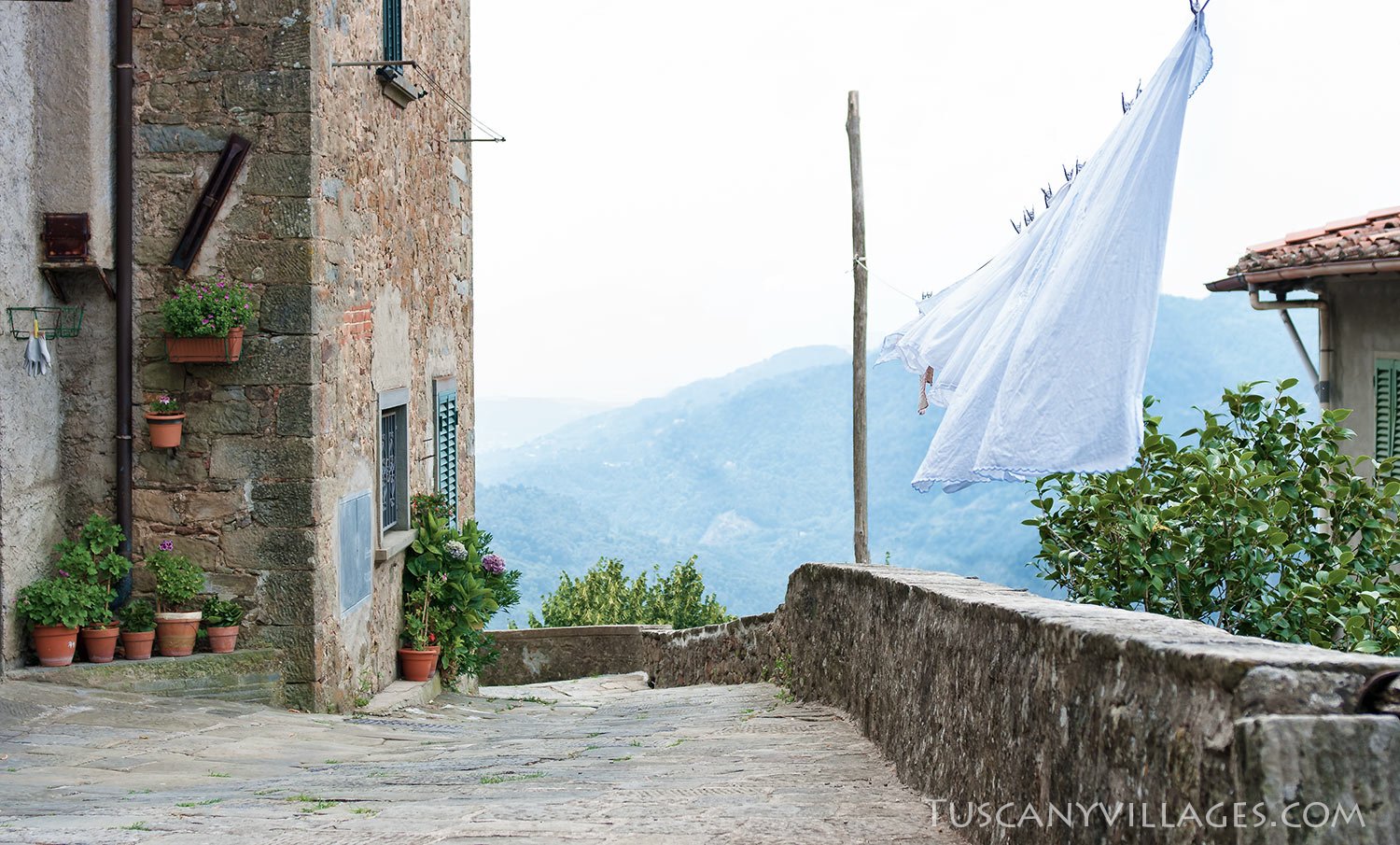
Vellano was historically the main village of the Valleriana. Its stone lanes are full of flowerpots, and around every corner there seems to be another view down the valley. A few of my favourite photos were taken here.
6. Collodi, above the gardens
Most people come to Collodi for the Pinocchio Park. Fair enough. Carlo Collodi, who wrote The Adventures of Pinocchio, took his pen name from this village, his mother’s home town. His real name was Carlo Lorenzini.
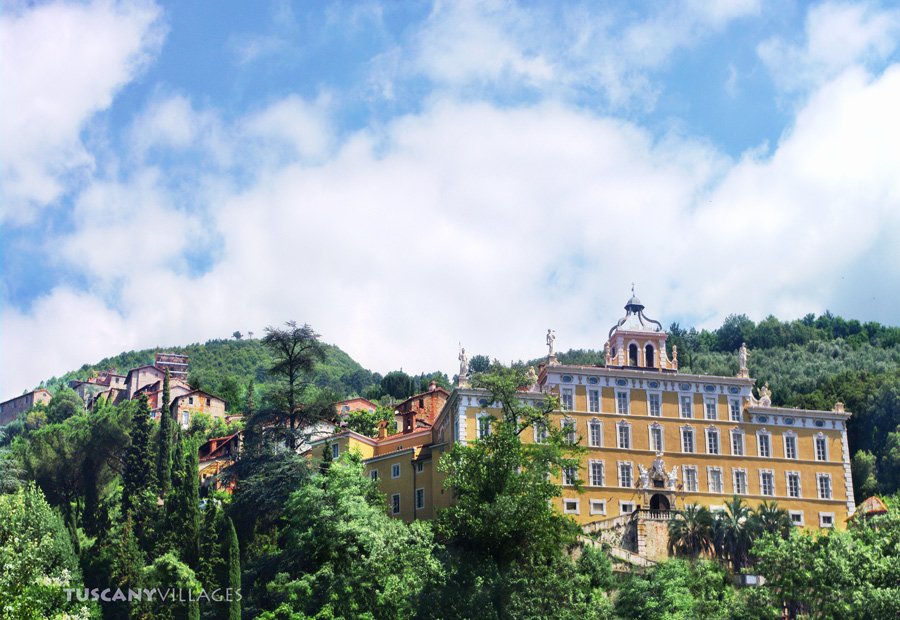
But climb above the Villa Garzoni and you’ll find a steep 12th-century village. Stepped streets wind up to the church of San Bartolomeo at the top. Below, the Garzoni garden tumbles down the hill in dramatic Baroque staircases, with statues, pools and a maze.
Most visitors never go up into the village. Do.
7. Celle dei Puccini, the composer’s family home
Celle is a tiny hill village in the comune of Pescaglia, in the hills north of Lucca. The Puccini family house is now a small museum. When I first went, you had to find a lady called Barbara in the village to open it up. She showed us every room. You got a real feel for how the family lived, and the views from the windows are lovely.
Things are a little more organised now. The museum is open Thursday afternoons, and Friday to Sunday. Check the times on the museum’s website before you go.
8. Lignana, the village that isn’t there
My last one is a cheat. Lignana was once the eleventh castle of the Pescia valley. Pisa destroyed its castle in 1362, and two years later Florence pulled the village down for good. Its people moved to Sorana, Castelvecchio and Lanciole.
Sorana built a new quarter for them, still called Paradiso, because the women from Lignana were said to be so beautiful. Lignana’s stones still lie scattered in the forest. You can’t visit it as such. But I think of it every time I drive up the valley.
A bonus stop: La Macchia Antonini
Not a village, but too lovely to leave out. La Macchia Antonini is a picnic spot in the Pistoia mountains, about 4 km from Calamecca. It sits at about 960 metres in a forest of old oaks, beeches, pines and maples. There’s a restaurant and bar, and plenty of room for a picnic.
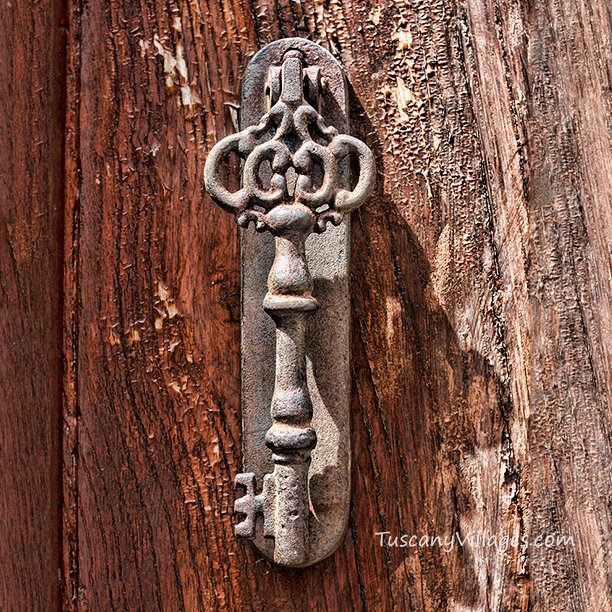
On my first visit I wandered off and found an old farmhouse with door knockers shaped like Egyptian heads. The historian Mary Jane Cryan explained that Napoleon’s Egyptian campaign of 1798 to 1801 set off a fashion for Egyptian designs, so they’re a handy way to date a building. I also had my photo taken next to an enormous tree stump. I looked like a hobbit.
Getting there
You really do need a car for most of these. Trains run to Pescia and Lucca, and buses link Lucca, Collodi and Pescia, but the mountain villages have very few services.
Rough driving distances:
- Pescia to Pontito: about 19 km, around half an hour
- Pescia to Aramo: about 9 km
- Pescia to Collodi: about 5 km
- Pescia to Calamecca: about 20 km, around half an hour
- Lucca to Celle dei Puccini: about 24 km, a bit over half an hour
- Pisa airport to Pescia: about 64 km, roughly an hour
Mountain roads are slow, so add time and enjoy the views.
Parking
Park outside the village and walk in. These streets were built for donkeys, not hire cars. Most villages have a small parking area near the entrance or the church. At La Macchia Antonini there’s a large car park, which may charge on summer weekends.
Where to stay
For the villages above Pescia, stay in or near Pescia. For Celle and Collodi, Lucca works well. If you want proper quiet, rent a village house or farmhouse and live like a local for a week. Just check the steps and the parking first.
A few tips from me
- Go in spring or autumn if you can. Summer is hot, even in the hills.
- Carry cash and water. Village bars keep their own hours.
- Wear shoes with grip. The steps get slippery.
- Say buongiorno to everyone. People live here.
Which small village would you add? Do tell me. I’m always happy to have an excuse for another drive.
You might also enjoy:
- Le Dieci Castella: a driving route through the Svizzera Pesciatina
- Best day trips from Lucca: 6 easy escapes I love
- Sorana beans: the little Tuscan bean Rossini wanted paying in
Susan