Last updated: October 2026
Most people do Pisa like this. Train, Tower, silly photo holding it up, back on the train. Forty minutes, done.
They miss the rest of the city. And the rest of the city is lovely: a real university town on a wide bend of the Arno, full of students, bikes, markets and old palaces the colour of apricots. Here’s what’s worth your time.
First, the Tower (go on, then)
The Piazza dei Miracoli really is a wonder: the cathedral, the Baptistery, the Camposanto and the Tower, white marble on a green lawn. Climb the Tower if you like (book a timed ticket), take the photo, and then walk away from the crowds. Ten minutes in any direction and you’re in a different city.
From Lucca, the train stops at Pisa San Rossore, the closest station to the Tower. Pisa Centrale is at the other end of town, and the walk between them takes you right through the middle. That’s the plan.
Keith Haring’s Tuttomondo
Near Pisa Centrale, on the back wall of the convent of Sant’Antonio Abate, is a huge, joyful mural by the American artist Keith Haring. It’s called Tuttomondo (“all the world”), and he painted it in 1989, not long before he died. Dancing figures, bright colours, a big message of peace and harmony. It’s free, it’s outdoors, and hardly anyone coming for the Tower knows it’s there.
The Lungarni
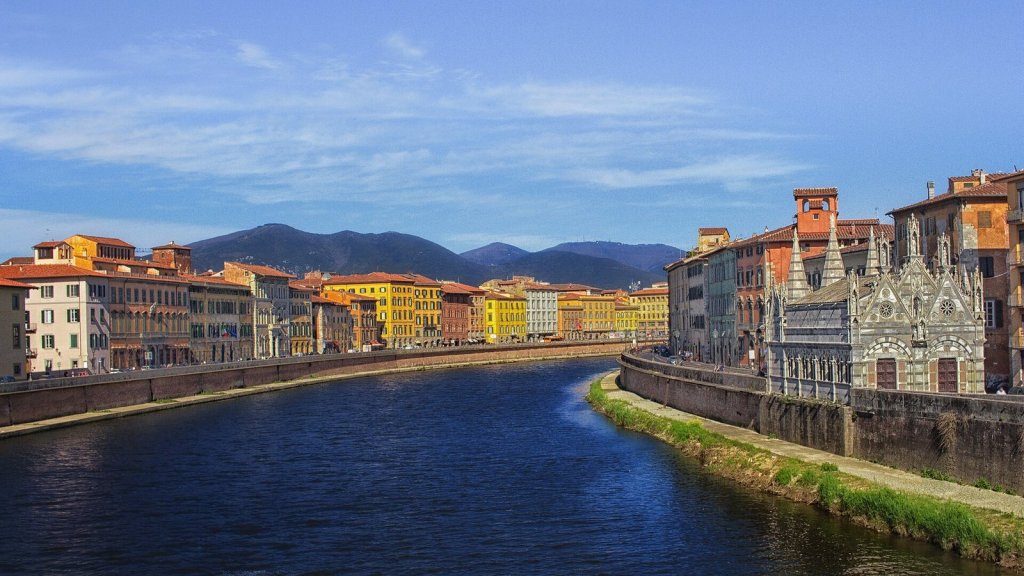
The Lungarni are the riverside streets along the Arno, lined with grand old palaces. Walk along them at sunset and you’ll see a very different Pisa: calm, golden and wide open.
Santa Maria della Spina
Right on the riverbank, on the south side, sits a tiny Gothic church covered in spires and pinnacles, like a little stone jewellery box. It’s Santa Maria della Spina, named after a thorn said to be from Christ’s crown that was once kept here. It’s one of the prettiest buildings in Tuscany, and it’s tiny. Don’t blink.
Piazza dei Cavalieri
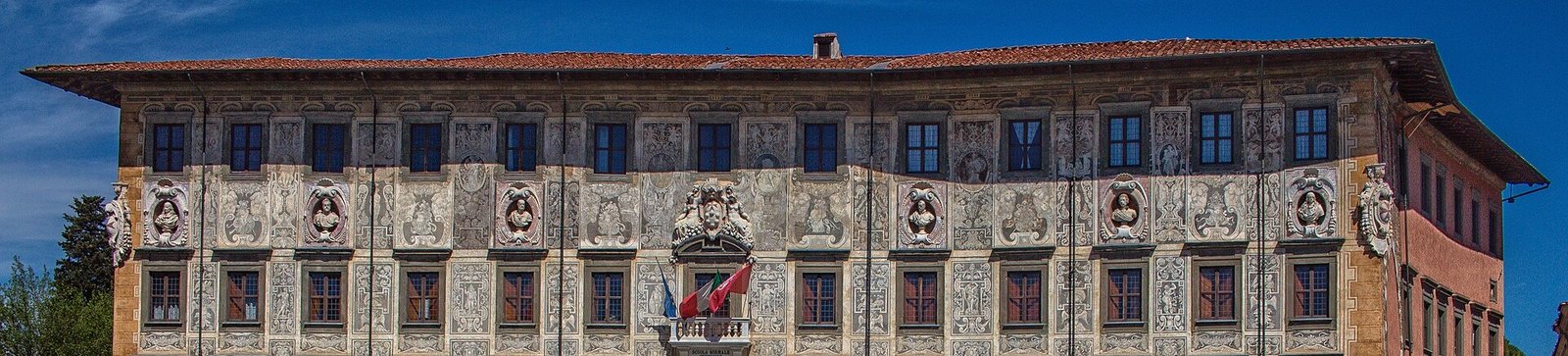
The second great square of Pisa, and once the political heart of the city. The Palazzo della Carovana, its front covered in black and white graffito decoration, was remodelled by Giorgio Vasari for the Knights of Saint Stephen. Today it’s home to the Scuola Normale Superiore, one of Italy’s most famous universities. Students sit on the steps. It feels like a real place, because it is.
The old ships museum
In the late 1990s, workers digging near San Rossore station found the remains of ancient ships buried in the mud of an old harbour. Lots of them. The Museo delle Navi Antiche, in the Arsenali Medicei (the old Medici shipyards on the river), now shows them, with the cargo and everyday things found on board. A great one for a rainy day, or for children.
The botanic garden
The Orto Botanico of Pisa was founded in 1543 by the botanist Luca Ghini. It’s the oldest university botanic garden in the world. Old trees, glasshouses, shady paths and a quiet that’s hard to believe when you know the Tower is just round the corner.
Markets and Borgo Stretto
Borgo Stretto is the elegant old shopping street, with arcades and cafés. Just off it, round Piazza delle Vettovaglie, is the old market square, with fruit and veg stalls in the morning and students with drinks in the evening.
Festival nights
Pisa throws two big parties on the river in June. The Luminara on 16 June, when thousands of candles light up the palaces along the Arno, and the Gioco del Ponte, a historic trial of strength between the two halves of the city on the Ponte di Mezzo. More in my big festivals guide.
Getting there and around
- From Lucca: a short, direct train ride to Pisa San Rossore and Pisa Centrale.
- From Pescia and Pistoia: change at Lucca, or go via Florence.
- From the airport: the PisaMover shuttle runs to Pisa Centrale. See my airport guide.
- On foot: the centre is flat and easy to walk. San Rossore to Centrale, via the river, is a lovely stroll.
Don’t drive into the centre. Pisa has a ZTL. My driving guide explains.
So. Hold up the Tower, take the photo. Then go and find the real Pisa. It’s been waiting.
You might also enjoy:
Susan
Photo credits: Santa Maria della Spina on the Arno, Pisa (photo: Ray in Manila, CC BY 2.0, via Wikimedia Commons); The Palazzo della Carovana, Piazza dei Cavalieri, Pisa (cropped) (photo: Ray in Manila, CC BY 2.0, via Wikimedia Commons).