Last updated: October 2026
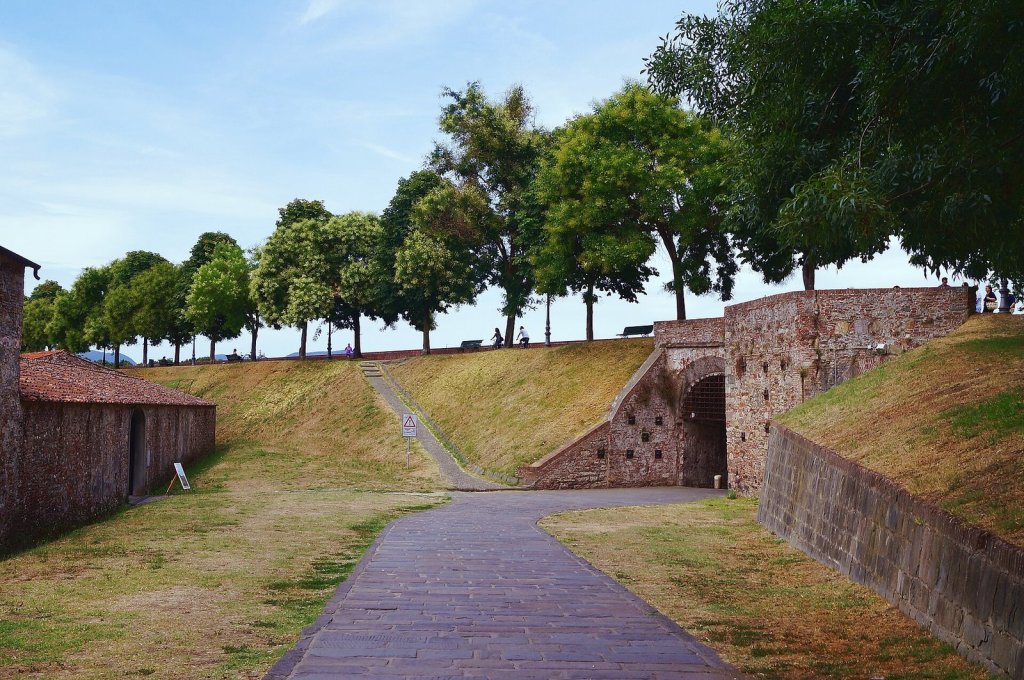
Lucca is the only city I know where the best thing to do is ride round the top of the walls. On a bike. Under the trees. With half the town doing the same.
The walls were built to keep armies out. Now they keep the cars out, and that’s the joy of it.
The walls in a nutshell
- 4.2 km round, a flat loop on top of the old Renaissance walls, wide enough for a road.
- Built from the first half of the 1500s to the middle of the 1600s, with 11 bastions and 12 stretches of wall between them.
- Turned into a public park in the early 1800s, with the big plane and lime trees that shade it today.
- Free, open to walkers, runners and cyclists, all year round.
On foot, a lap takes about 45 minutes at a brisk pace, or an hour if you dawdle. By bike, much less, but you’ll want to stop. Everyone stops.
Hiring a bike
You don’t need to bring one. There are several bike hire shops inside the walls, mostly round Piazza Santa Maria, near the north gate. You’ll find ordinary town bikes, children’s bikes, child seats, tandems and even four-wheeled “rickshaw” bikes for families. Some hotels and B&Bs lend bikes too, so ask.
Take some ID with you, as the shop may ask for it.
Getting on the walls
There are six gates through the walls, and ramps up from most of them:
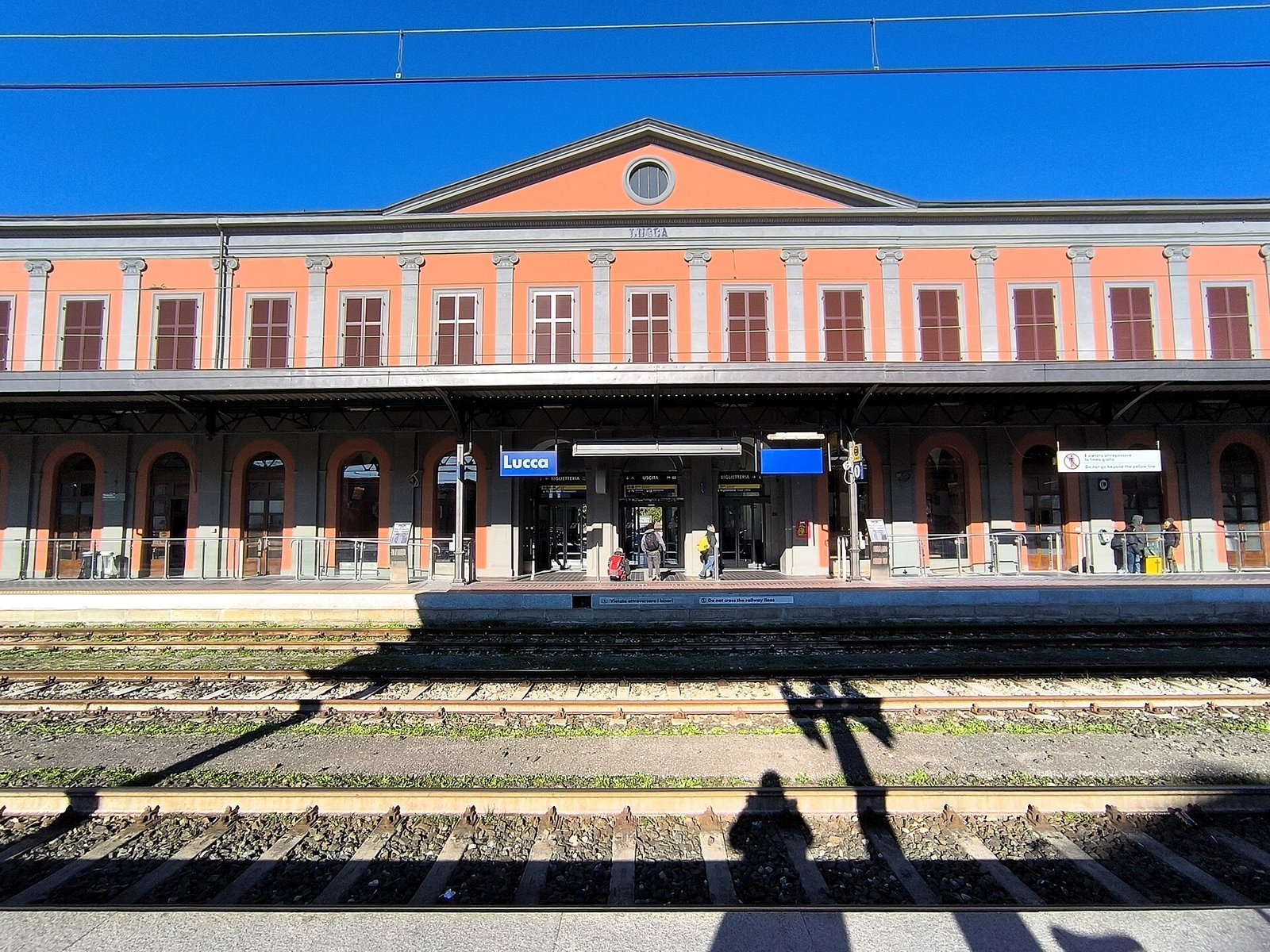
- Porta San Pietro, on the south side, straight across from the railway station.
- Porta Santa Maria, on the north side, by the bike shops.
- Porta San Donato, to the north-west.
- Porta San Jacopo, to the north-east.
- Porta Elisa, on the east side.
- Porta Vittorio Emanuele, also called Porta Sant’Anna, to the west.
Coming by train? You can be on the walls ten minutes after you get off. Walk out of the station, across the road and up through Porta San Pietro. My guide to getting around Tuscany without a car has the train details.
Which way round?
It doesn’t matter. It’s a loop. I’d say start from wherever you hire the bike and just go. Some things to look out for on the way:
- The view down into the town, over terracotta roofs, gardens and church towers. The Guinigi tower, with the oak trees on top, is easy to spot.
- The view out, over the green ring of grass below the walls and on to the hills.
- Palazzo Pfanner’s garden, on the north-west side, which you can look down into from the top of the walls.
- The Orto Botanico, Lucca’s botanic garden, tucked against the walls in the south-east corner, by the San Regolo bastion.
- Benches, cafés and kiosks along the way. Have a coffee. Watch the world pedal past.
Under the walls
The bit most people miss. Inside some of the bastions there are old underground passages, called sortite, that you can walk through. They’re open at the San Martino, San Salvatore, Santa Maria, San Paolino, San Regolo and Santa Croce bastions. The ones at San Regolo are reached through the botanic garden, with its ticket. At Santa Croce there’s a small exhibition about the walls, called “RI-Conoscere le Mura”.
It’s cool and dark down there. Lovely on a hot afternoon.
The rules (and the manners)
- Pedestrians first. The path is shared, and it’s full of walkers, children, dogs and prams. Ride slowly and ring your bell.
- Stay on the path. You’re not allowed on the grassy banks or the parapets.
- Events change things. On big event days you may have to walk your bike, or bikes may be banned from the walls altogether. The Lucca Marathon in October starts up here (4.2 km is a tenth of a marathon, which I find very satisfying).
When to go
Early morning is my favourite. Locals jogging, the light low through the trees, the cafés just opening. Weekday mornings are quieter than Sunday afternoons, when it feels like the whole of Lucca is out for a ride. In summer, go early or late. The trees give shade, but the middle of the day is hot.
Make a day of it
Ride the walls, hand the bike back, then wander. Piazza dell’Anfiteatro, the oval square built on a Roman amphitheatre. San Michele in Foro. The Guinigi tower. Puccini’s birthplace. A plate of tordelli for lunch (see what to eat round Lucca).
If it rains, my rainy day guide has plenty of ideas. And if you’d like to see more of the area, here are my best day trips from Lucca.
You might also enjoy:
- Tuscany with kids
- Where to stay near Lucca
- Tuscany festivals: the Palio, the Giostra and the Luminara
Susan
Photo credits: The tree-lined path along the top of the walls of Lucca (photo: Stefano Sansavini, CC BY-SA 4.0, via Wikimedia Commons); The platforms at Lucca station (photo: Dobroš, CC BY-SA 4.0, via Wikimedia Commons).