Last updated: October 2026
Everyone knows Sorana for its beans. I’ve written a whole post about them, and about the August festa, so I won’t go on about them here. Well, not much.
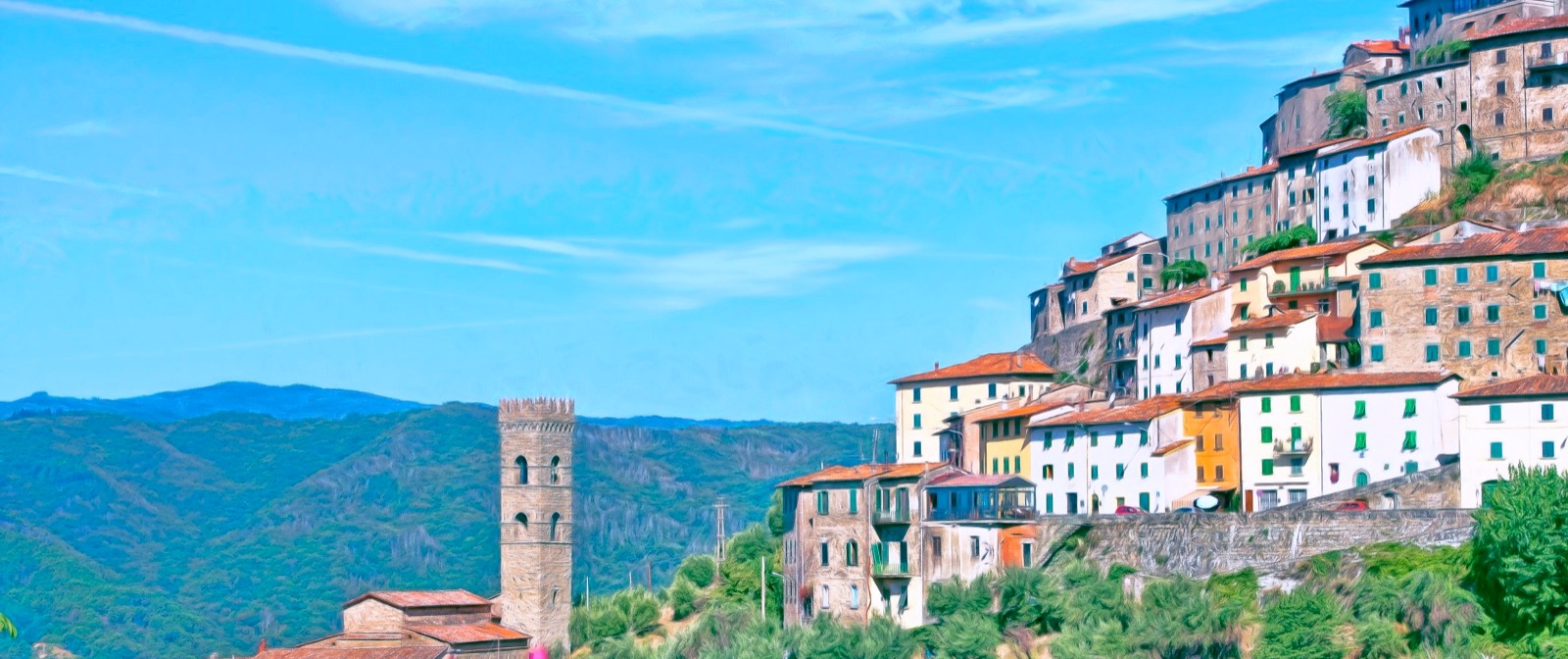
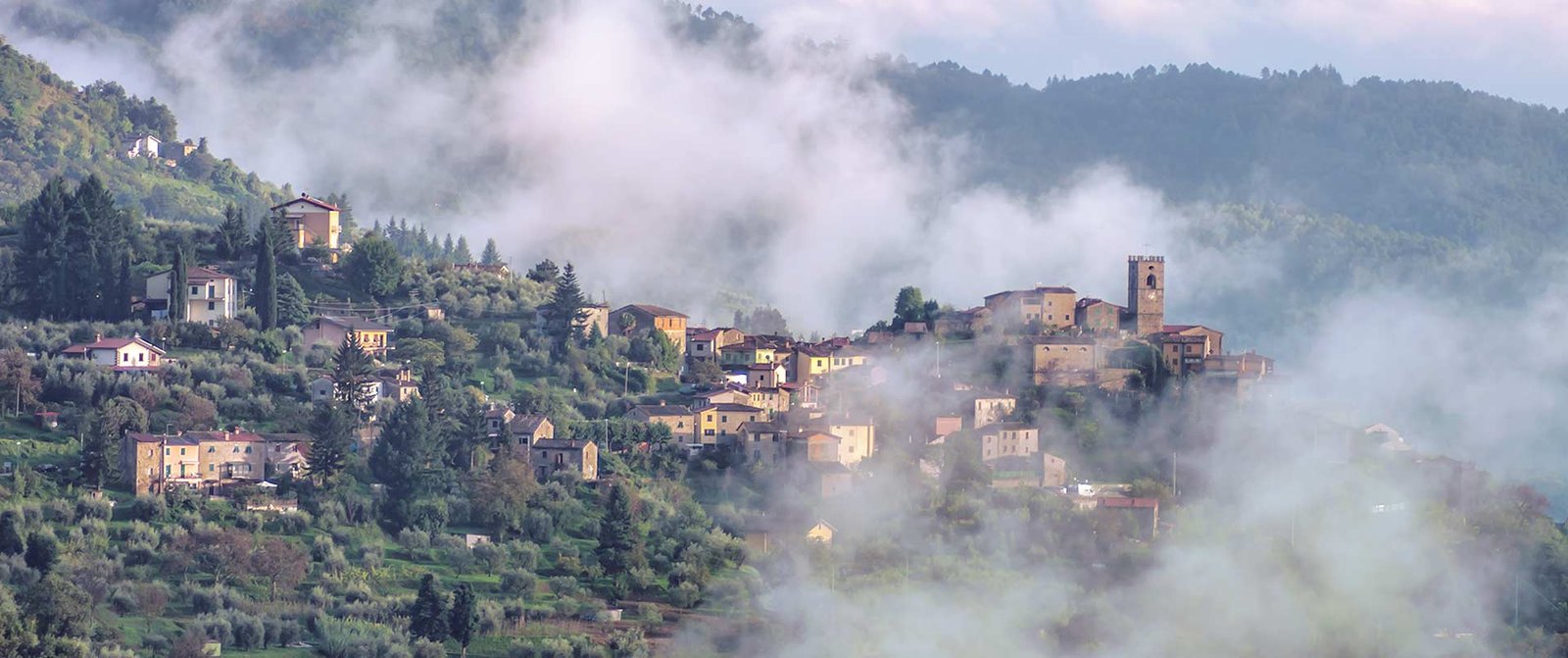
But Sorana is more than a bean. It’s one of the ten castles of the Svizzera Pesciatina, perched high on its hillside, and it has a story or two of its own. I once called the hills above Pescia home, and these are the bits of Sorana I’d want you to see.
Lily, aged two, chatting away in Italian to a local nonna in Sorana (2011)
Sorana: quick facts
- Where: One of the ten castle villages of the Svizzera Pesciatina, in the comune of Pescia (province of Pistoia)
- Altitude: about 415 m
- From Pescia: about 7 km as the crow flies (further by road)
- Nearest station: Pescia, about 9 km as the crow flies
- Map: Sorana on OpenStreetMap
- More nearby: my Pescia guide and the ten castles driving route
Sources: Wikidata and it.wikipedia for altitude and coordinates; distances worked out from those.

Visiting Sorana
Getting there and parking
From Pescia, follow the signs for Abetone up the valley past Pietrabuona, then follow the signs for Sorana. Allow around 25 minutes. Park below the village and walk up.
Good to know
- By car. From Pescia it’s about 11 km. From Lucca it’s about 29 km, so allow 50 minutes. Coming on the A11 Firenze to Mare motorway? Come off at Chiesina Uzzanese and follow the signs for Pescia.
- By train. The nearest station is Pescia, on the Florence to Lucca and Viareggio line. Lucca’s about 20 minutes away by regional train, Florence about an hour. From there, buses up the valley leave from Piazza XX Settembre in town.
- By bus. Autolinee Toscane’s SVP line runs up from Pescia (Piazza XX Settembre). The main line ends at Sorana, about 25 minutes from Pescia by bus. There’s also a bookable bus, the servizio a chiamata for the Val di Forfora (Pietrabuona, Calamari, Vellano, Macchino, Ponte di Sorana and Sorana). Book it the working day before, between 1.30 and 2.30pm, on freephone 800 361213. No buses on Sundays, and times change, so check at-bus.it before you go.
Sources: Autolinee Toscane timetables and on-demand service pages (checked October 2026), RFI for trains, and distances from OpenStreetMap routing, rounded up because these roads are slow.
Best time to go
- Late August to September for the beans. They’re sown by hand in May and June and picked by hand between August and September.
- Late August for the bean dinner and festa. My Sorana beans post has the details.
- 10 June to 10 September if you want the summer opening hours I listed above.
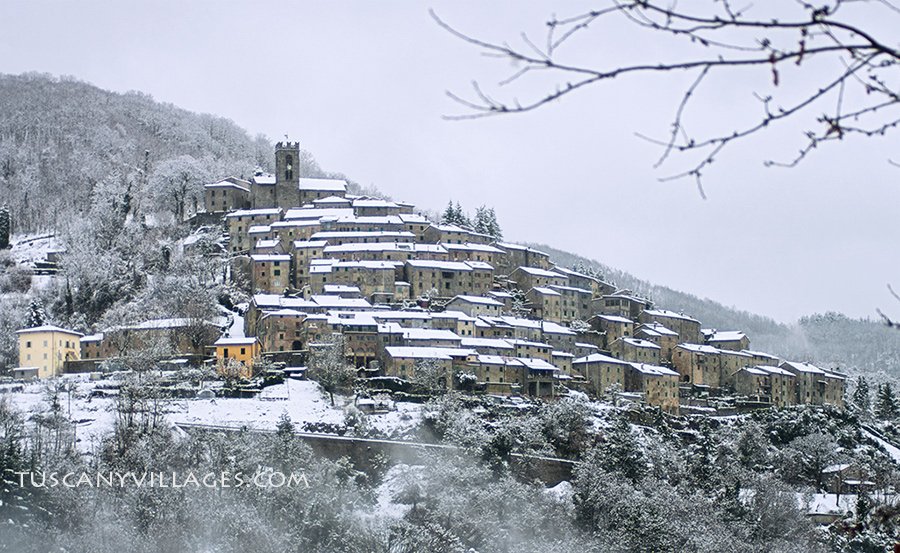
- Winter, if you’re lucky with the snow. Wrap up, and read my winter in the hills post first.

Bean season source: fagiolodisorana.org, the producers’ site.
Eat like a local, not a tourist
Sorana is spoilt. All of these were open when I checked in October 2026. Hours change, so check before you go, and book where it says so.
- Il Circolino. The village circolo, run by a community co-operative, with a terrace over the valley, aperitivi and pizza on Saturday nights. It hosts the bean dinner in late August. In summer (10 June to 10 September) it’s open Monday to Saturday from 2pm and Sunday from 9am. The rest of the year, Friday and Saturday from 2pm and Sunday from 9am.
- Da Carla “il Laghetto”. Down by the river, feeding the valley since 1972. Tables by a little fishing lake, Sorana beans cooked al fiasco, grilled meat and pizza. A popular workers’ lunch. Closed on Thursdays, and lunch only on Wednesdays.
- Trattoria Da Sandrino. At Ponte di Castelvecchio on the valley floor, family run for as long as anyone remembers. Sorana beans, porcini, pappardelle with hare. Dinner on Thursday and Friday, lunch and dinner at weekends. Booking essential. Their bar pizzeria, about 100 metres away, does coffee in the day and thin pizza in the evening, but may be summer only.
- Agriturismo Montaione. Higher up, above Sorana. The Moretti family’s farm, with no menu, just course after course of home cooking. Dinner on Thursday and Friday, lunch and dinner at weekends, closed in November. Always book first. It’s quite a climb but a beautiful drive.
Looking for a base? Try my where to stay near Lucca and the Svizzera Pesciatina guide.
A sovereign castle
Sorana sits on the slopes of Monte Petritulo, above the river. Its name is thought to come from its old rocca, the castle that stood sovrana, sovereign, over the valley. In old records it’s called Rocca Sovrana. Only a few remains of the rocca are left.
It was fought over like all its neighbours. In 1362 the Pisans attacked and destroyed it. But Sorana was rebuilt, and it grew.

Paradiso
Here’s my favourite Sorana story. Up on the mountain above stood Lignana, the eleventh castle. When it was destroyed in the 1360s, its people had to go somewhere, and many came to Sorana.
In 1376 a new quarter was built for them, next to the castle on the south side. It was called Paradiso, paradise, said to be in honour of the beauty of the girls who came to live there. Instead of building another wall, they built the outer houses in one continuous line, so the houses themselves became the defence.
Read the whole sad tale in my post on Lignana, the lost eleventh castle.

The church of Santi Pietro e Paolo
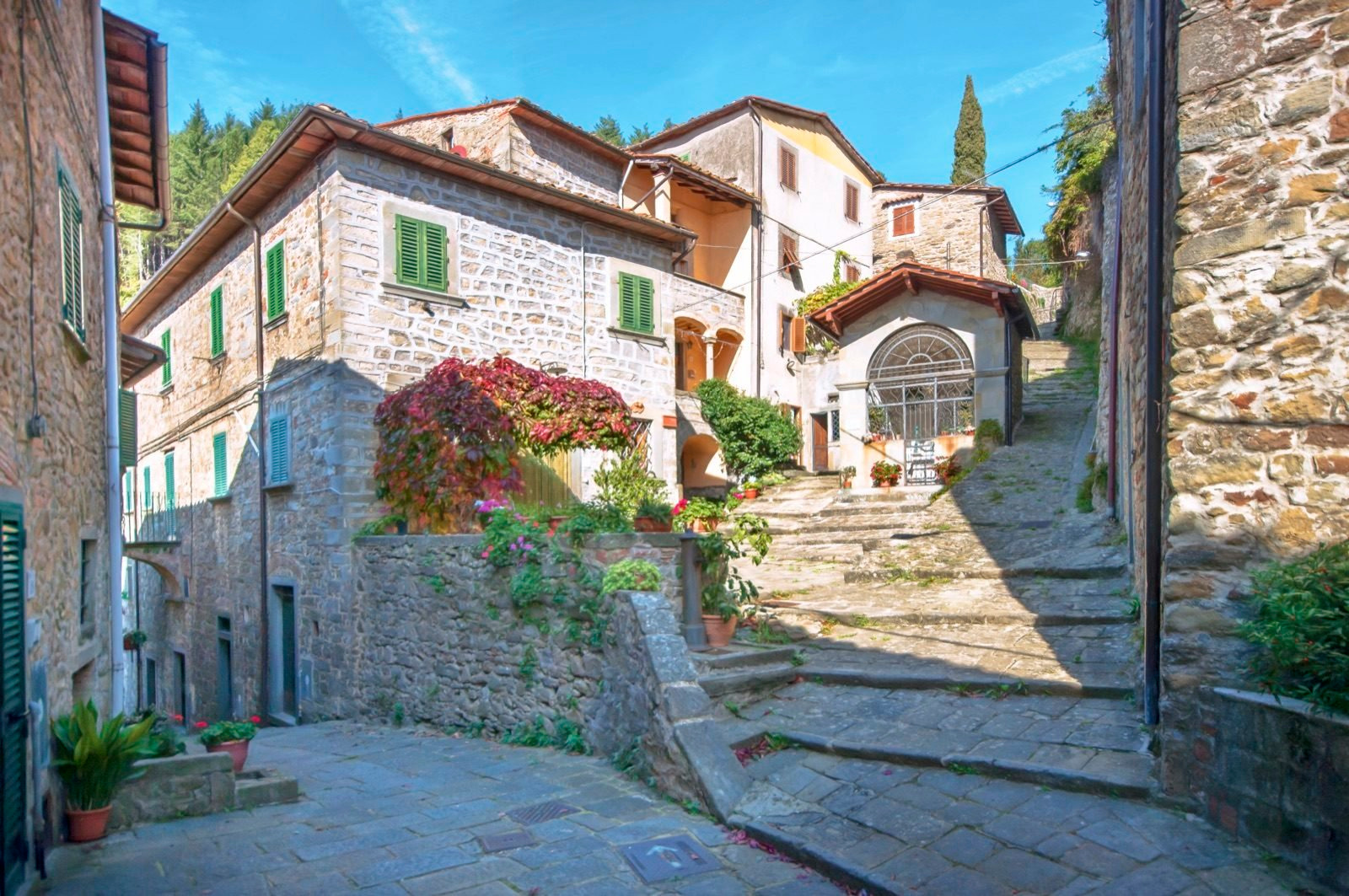
The village is a rough oval, and the lanes climb up to the piazza and the church of Santi Pietro e Paolo, the heart of Sorana. It’s an old church, already on record in 1260, but it’s been changed many times. In 1595, under a rector from Vellano called Domenico Pieri, it was more or less rebuilt in Baroque style.
On the way up you pass the little oratory of San Giuseppe, which faces the parish church.
If you find the church open, step inside. There’s a single nave, altars carved in local pietra serena, and a vault decorated with stucco leaves and flowers from the early 1800s. Behind the high altar is a panel painting from the first half of the 1500s. It shows the Madonna and Child giving a ring to St Catherine, with St Michael, St Peter and St Paul. St Catherine was the patron saint of Lignana, so it’s thought the painting marks the joining of the two villages. I find that rather lovely.

Paper, as well as beans
Down on the main road below Sorana are the old paper mills. This valley made paper for centuries, and the most famous name of all was Magnani. The Magnani mill made fine handmade paper, and even paper for Italian banknotes. If that’s caught your interest, the paper museum at Pietrabuona tells the story.
And the beans? They grow on the sandy banks of the stream below the village. Everything you need to know, including when the festa is, is in my Sorana beans post.


Walking from Sorana
Two CAI paths run from Sorana to Pontito. Path 254 goes down via Ponte di Tito. Path 254A takes the high way past Montaione and the ruins of Lignana. Path 252 beyond Sorana towards Castelvecchio was closed when I checked, so look at caipescia.it first. More in my walking guide.

Across the valley is Aramo. More castle villages: Vellano and Pontito.
Nearby
- Pietrabuona, on the road back down, with the paper museum.
- Lignana, the lost castle whose people moved to Sorana.
- The CAI paths around the valley, if you’ve brought your boots.
- Pescia, for shops, fuel and the station.
You might also enjoy:
- Le Dieci Castella: a driving route through the Svizzera Pesciatina
- Winter in the Tuscan hills
- What to eat in the Lucca and Pistoia hills
Susan
Photo credits: Sorana on its hilltop (photo: Sailko, CC BY-SA 4.0, via Wikimedia Commons); Sorana beans growing up their poles (photo: Sailko, CC BY-SA 4.0, via Wikimedia Commons); Sorana in the snow at first light (photo: Alex80jpeg, CC BY-SA 4.0, via Wikimedia Commons). All other photos are my own.