Last updated: November 2026
Tuscany has been in the pictures for a long time, and half the fun is standing in a square and thinking, oh, that’s where it was. The other half is discovering that the film cheated, slightly, and used a different village from the one in the book.
These are the titles people ask me about, with the real places you can walk around. I’m using my own photographs where I have them, and credited ones otherwise. No film stills, for the obvious copyright reason, and no pretend tours. Just the towns, and how to see them without doing the whole day at a trot.
The short version
- Florence: A Room with a View, and later Hannibal and Tea with Mussolini.
- Arezzo: Life is Beautiful. Piazza Grande is the one you want.
- Cortona: Under the Tuscan Sun.
- Pienza and the Val d’Orcia: the wheat fields in Gladiator, and the monastery in The English Patient.
- Montepulciano, not Volterra: The Twilight Saga: New Moon. The book is set in Volterra. They filmed in Montepulciano.
- San Gimignano: more of Tea with Mussolini.
A Room with a View (1985), Florence

James Ivory’s film of the E. M. Forster novel is still the one that sends people to Florence looking for a room that actually has a view. The Italian half was shot in the city: Piazza della Signoria, Santa Croce, the river. The young Lucy Honeychurch of Helena Bonham Carter walks those streets, and so can you, which is both the joy and the problem, because everyone else is doing it too.
Go early, or late, and don’t try to recreate every shot. The pleasure is a slow morning in the centre, then a bus or a walk up to Fiesole or Piazzale Michelangelo when you want some air. If you’re coming in from Lucca or Pescia for the day, my Florence day trip guide will keep you from overdoing it.
Life is Beautiful (1997), Arezzo

Roberto Benigni’s La vita è bella was filmed in Arezzo and the countryside around it. The square you’ll recognise is Piazza Grande, the sloping piazza with the loggias and the tall houses, which stands in for the town where Guido courts Dora and later tries to protect his son with a game. It’s a film about love and about the Holocaust, and the square is prettier and more ordinary than the story that unfolds.
Arezzo is a proper town, not a film set. You can walk the piazza, look at the Pieve, and still have time for the antiques fair if you land on the right weekend, or for Piero della Francesca if you want a quieter kind of looking. I’ve written about that side of things in my Tuscan art trail. Trains from Florence and from Rome make Arezzo one of the easier film towns without a car.
If you book through this link I may earn a small commission, at no extra cost to you.
Under the Tuscan Sun (2003), Cortona

Frances Mayes’ memoir, and Audrey Wells’ film, put Cortona on a lot of American bucket lists. The real Bramasole, the villa in the book, is in the hills here, but it is a private house, and the film used more than one property anyway. What you can do, quite happily, is walk the town: the long main street, the views over the Valdichiana, a coffee in the piazza, and a sense of why someone might buy a falling-down house and stay.
Cortona is steep. Wear decent shoes, and don’t try to park in the middle. There are signed car parks on the edge, then a walk or a shuttle, depending on the season. It’s a full morning, or a night if you want the evening to yourself after the day-trippers have gone.
Gladiator (2000) and The English Patient (1996), around Pienza

Ridley Scott filmed some of the quiet, golden scenes in Gladiator, the ones that look like a memory of home, in the fields near Pienza. Visit Tuscany is happy to say so. The exact fold of land isn’t marked with a sign, and I wouldn’t chase a particular clod of earth. The Val d’Orcia itself is the thing: the long views, the cypresses, the light in late afternoon. You get that from the walls of Pienza, from the road towards San Quirico, and from a slow drive you didn’t rush.
Anthony Minghella’s The English Patient, from Michael Ondaatje’s novel, used the monastery of Sant’Anna in Camprena, in the countryside near Pienza, for the hospital scenes at the end of the war. Visit Tuscany also mentions Arezzo. The monastery is a real place, sometimes open for visits or as a stay, but not on a casual drop-in schedule, so check before you make a special journey. The film’s desert was shot elsewhere. Tuscany is the green, ruined quiet in between.
Bagno Vignoni, a little way down the valley, with its thermal pool in the square, appears in Andrei Tarkovsky’s Nostalghia. It’s a strange, beautiful film, and the piazza is still a good place to sit, even if you’ve never seen it. You can’t swim in that historic pool; the bathing is in the modern spa nearby.
If you book through this link I may earn a small commission, at no extra cost to you.
The Twilight Saga: New Moon (2009), Montepulciano

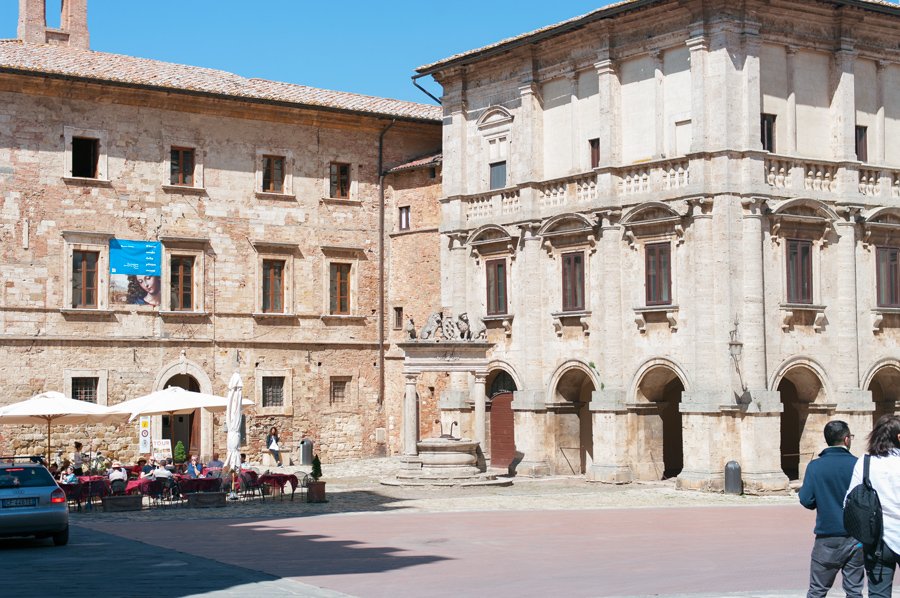
This is the mix-up I still have to unpick. Stephenie Meyer set the Volturi scenes in Volterra. The film used Montepulciano instead, and Piazza Grande is the square you’ll recognise. Volterra is still worth a day, for its own reasons, and I’ve written about it with San Gimignano and Pienza. If you’ve come for the film, it’s Montepulciano you want.
The piazza is at the top of a steep town. Park below, walk or take the bus up, and give yourself time. The square is also just a very fine place to stand, film or no film, with the Palazzo Comunale and the well and a view that drops away at the edges. A glass of the local red on the way down is allowed, even if you came for vampires.
Tea with Mussolini, Hannibal, and a few others

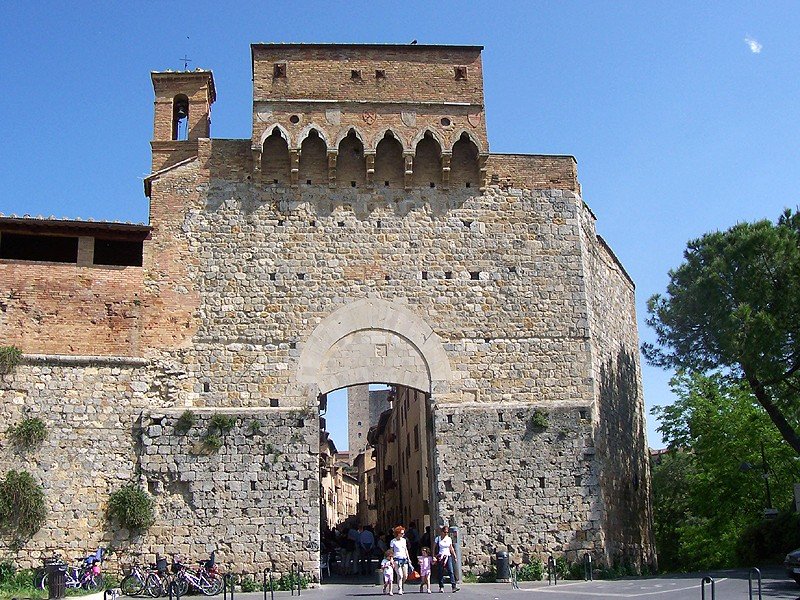
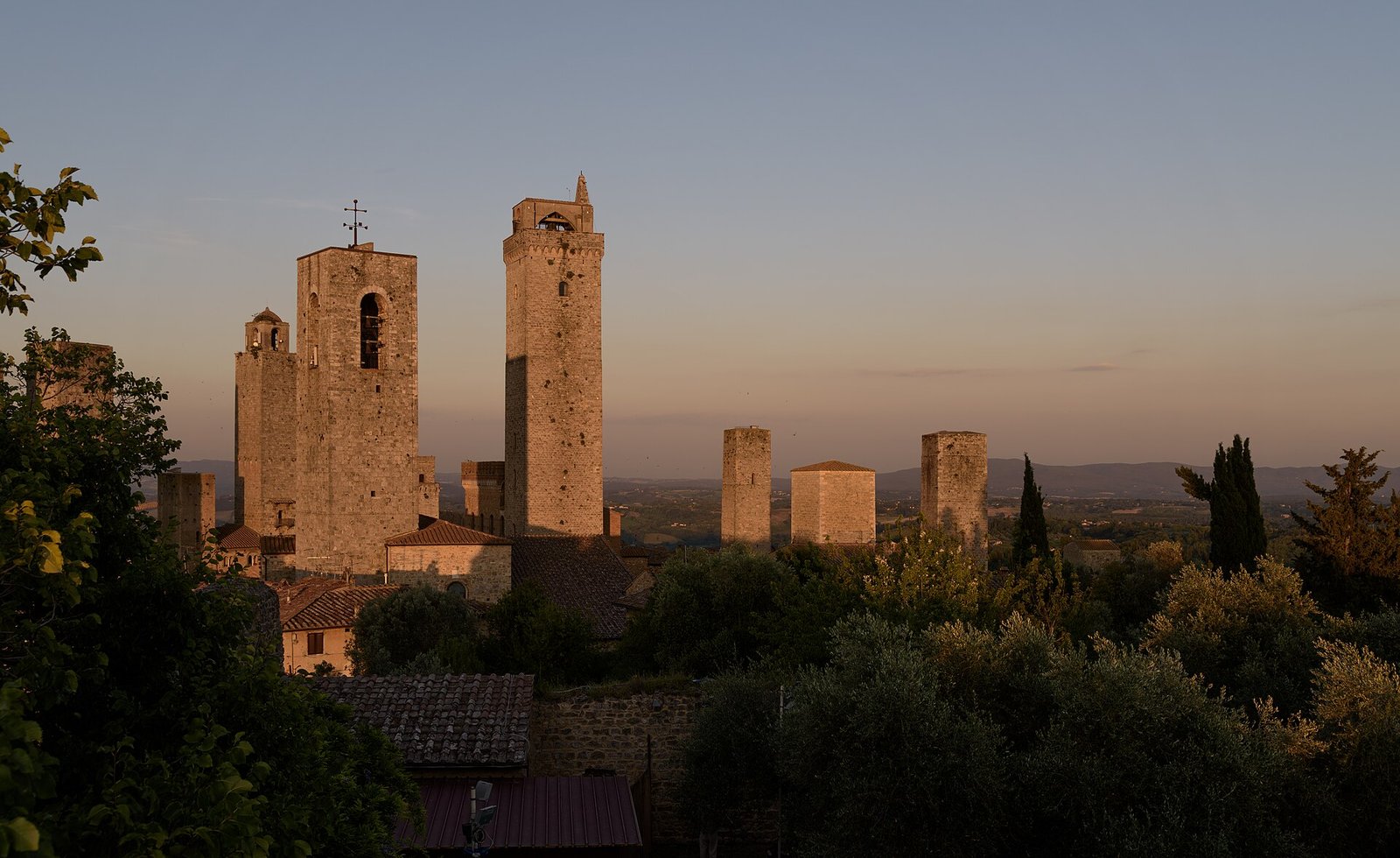
Franco Zeffirelli’s Tea with Mussolini (1999) used Florence and San Gimignano, as well as studios in Rome. San Gimignano is busy in the middle of the day, and much kinder in the evening, when the towers go gold and the tour groups have gone back to their buses.
Ridley Scott came back for Hannibal (2001), mostly in Florence, which is quite enough Florence for one trip if you already did A Room with a View. Bernardo Bertolucci shot Stealing Beauty at a farmhouse in the Siena countryside; the exact house isn’t a public sight, and the film is more about a summer than a landmark. Marco Tullio Giordana used Florence in The Best of Youth for scenes of the 1966 flood, which I’ve written about in my short history of Tuscany.
If you like a chase, Quantum of Solace (2008) ran through the Palio crowds in Siena and into the marble quarries above Carrara. The Palio is a real race on set dates, not a film show, and the quarries are a separate visit, with their own rules. Don’t mix them up into one afternoon.
How to do a loose film trail
- One day from Florence: the city in the morning for Ivory or Scott, then a later train to Arezzo for Piazza Grande.
- A southern loop: Montepulciano, Pienza and the Val d’Orcia, with Cortona if you have another day. This wants a car, or a driver.
- Don’t over-stack it. These towns are worth a proper lunch. The film is the excuse, not the whole visit.
You can find all of these places on the Village Finder. And if you’re choosing a base, where to stay in Tuscany will help you pick a town rather than a car park.
Frequently asked questions
Was Twilight filmed in Volterra?
No. The book is set in Volterra, but The Twilight Saga: New Moon was filmed in Montepulciano, in Piazza Grande and the streets around it.
Where was Gladiator filmed in Tuscany?
Some of the peaceful countryside scenes were shot near Pienza, in the Val d’Orcia. The rest of the film was made in other countries and on sets.
Where was Life is Beautiful filmed?
In Arezzo and the countryside around it. Piazza Grande is the main square you’ll recognise.
Can I visit the villa from Under the Tuscan Sun?
The real Bramasole in Cortona is a private home, and the film used more than one house. Visit Cortona itself, which is the true setting, and don’t knock on villa gates.
More from the hills
- San Gimignano, Volterra and Pienza
- A Florence day trip from Lucca, Pescia or Pistoia
- A Tuscan art trail
- Find the filming towns on the Village Finder
Susan