Last updated: November 2026
The question I get, after the ZTL one, is where to put the car. Hill towns were not designed for a hire Fiat, and a wrong turn through an arch can end in a fine. The short answer is almost always the same. Park outside the walls, then walk in.
This sits beside my driving guide to ZTLs, fines and car hire, not instead of it. The ZTL is the camera zone. Parking is the bit with the coloured lines, the ticket machine, and a slope up to the gate. Rules and prices change, sometimes from one season to the next, so treat what follows as a way to think, and check the comune on the day.
The short version
- Park outside the walls. Follow the blue P signs to a public car park. Do not let the sat nav take you through a gate into the old town.
- Blue lines are paid, yellow are reserved (residents, disabled bays, loading). White lines are often free, but not always: the sign by the bay wins, every time.
- Pay the machine or the official app, and keep the ticket. A photo of the dashboard is not a receipt.
- Leave time for the walk up. The lovely car park at the bottom of a hill town is often a climb, sometimes with a lift, sometimes not.
- Market days and August Sundays fill up. Arrive earlier than you wanted to, or go late in the afternoon.
I checked official parking pages for Lucca, San Gimignano and Siena in November 2026. Tariffs in particular go out of date, so use the comune links below rather than a number you memorise here.
The coloured lines, and the sign that beats them
Italy’s road code, and the local tourism sites, use the same colours. Lucca’s official tourism page puts it simply: blue stripes are paid parking, white are free, yellow are for residents. That is the usual pattern in the towns I know, with one important habit. Always read the sign at the start of the row. Some white bays are free only at certain hours, or not at all on a market morning. Yellow is not a slightly brighter kind of free.
Disabled bays are for badge holders, and the badge needs to be shown. If you have a Blue Badge, bring it and check the local rule, because not every town treats a foreign badge in the same way. When in doubt, use a staffed car park and ask.
Street parking in many centres is paid from the morning until about 8pm, and sometimes on Sundays too. Siena’s official tourism site, for example, says the surface car parks are paid from 8am to 8pm, including Sundays and holidays. A Sunday in a village can be kinder, but a Sunday in a famous town is not a free-for-all.
Lucca

Lucca is one of the easier hill-or-walled towns to park at, because the Renaissance walls are a clear edge. The historic centre inside the walls is a ZTL. Don’t drive in unless your hotel has told you, in writing, that you have a permit and exactly which gate to use. For a day visit, park in a signed public car park on the ring outside the walls and walk through a gate. The station side, including the long-stay areas towards Carducci, is the usual choice if you arrive by hire car from Pisa. There are other official parks around the circle.
Current prices and a map live on the city’s mobility pages and on turismo.lucca.it/parcheggi. I won’t quote an hourly rate here, because it changes. Pay, display or take the ticket with you, and give yourself a few minutes to reach a gate. Once you’re in, you can walk or cycle the walls, which is the nicest welcome Lucca has.
San Gimignano

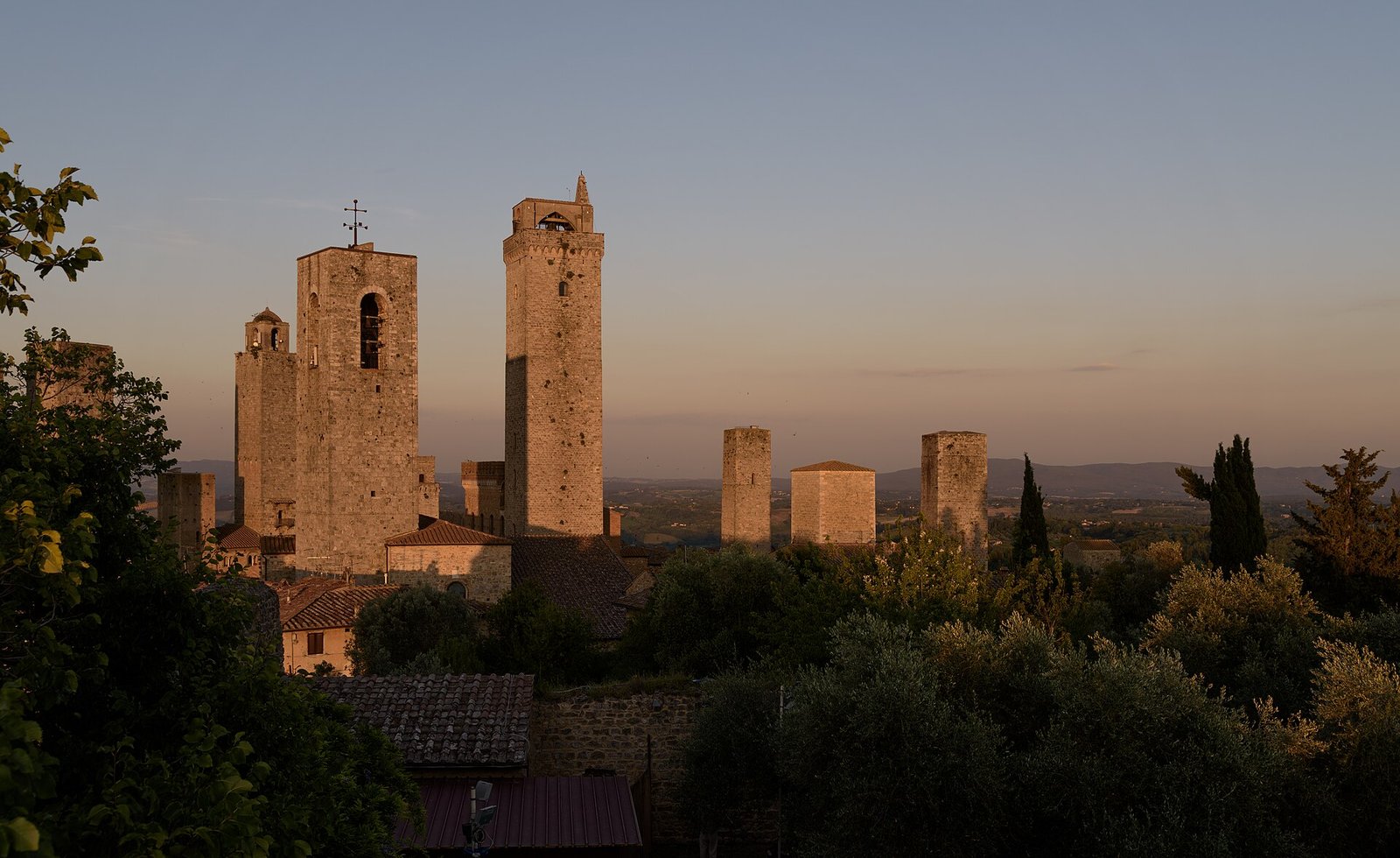
The comune is unusually clear, which I appreciate. There are official car parks just outside the old town, including P2 Montemaggio, close to the centre, and P3 and P4 at Bagnaia, a short way to the north, with a lift up towards the walls. The comune also runs a live page of free spaces. In high season, look at that before you join a queue.
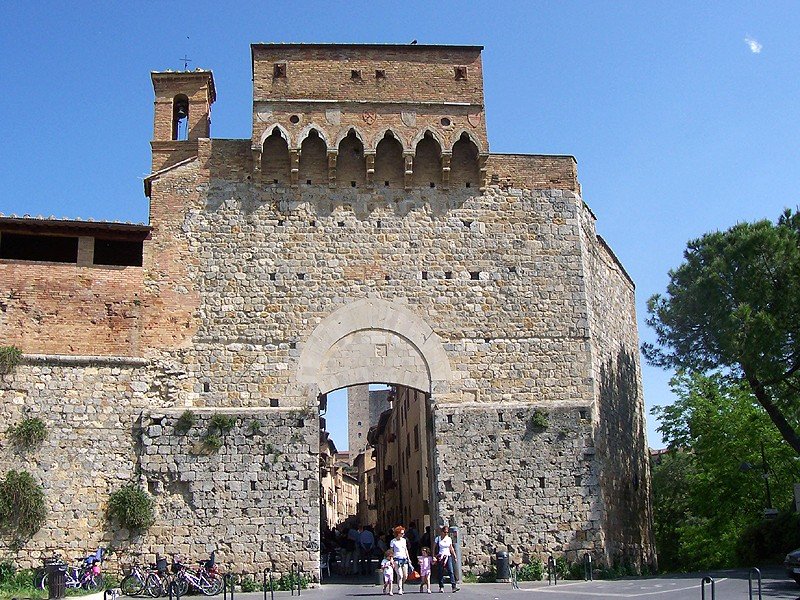
The historic centre is a ZTL, and you need authorisation to drive in. The official portal is ztl.comune.sangimignano.si.it. If you’re staying inside, ask the hotel to register the car. If you’re visiting for the day, don’t try it. Park, and walk. From Bagnaia, in the April to October period, the comune has also run a little city bus up to the centre. Check whether it’s running when you come, and don’t count on it on a quiet winter weekday.
Tariffs are set by the comune and do change. When I last looked at the official park pages, they still referred to a November 2024 council resolution, with daytime hourly rates and a night rate, and a daily cap. Use the comune pages for P2, P3 and P4 on the day, not a number from a guidebook.
Siena
Siena is bigger, busier, and very firm about its ZTL. Visit Siena, the official tourism site, lists the main structured car parks. San Francesco (via Baldassarre Peruzzi), Santa Caterina (via Esterna di Fontebranda) and the station car park in piazzale Fratelli Rosselli all have mechanical lifts up towards the centre, which is a real help if stairs are a problem. Santa Caterina is the one people remember, because you come up near Fontebranda rather than circling the fortress.
Closer in are Stadio-Fortezza, by the Medici fortress, Il Campo inside Porta Tufi, Il Duomo near Porta San Marco, and Le Fonti di Pescaia, not far from Porta Camollia, which is also where the Via Francigena comes in. Visit Siena says there are more than 4,000 spaces in these structures, and recommends the SiPark app for live availability. Surface parking near the ZTL edge is the unguarded alternative, paid from 8am to 8pm, including Sundays, at the official published rate. Again, check the current figure before you assume last year’s price.
If you only remember one thing in Siena, remember this. Do not follow the sat nav to Piazza del Campo.
Volterra, Pienza, Montepulciano and the smaller towns

The same pattern holds in Volterra, Pienza, Montepulciano and Cortona. You will see official car parks on the approach roads, usually just before or just below the gate, often signed P1, P2 and so on. Some have a lift or a shuttle in high season. Some are simply a walk up a cobbled ramp. If a space looks tight, or sits on a slope with no sign, it may be for residents. Keep going to the proper park.
I haven’t listed every bay in these towns, because the comuni update names and prices, and I would rather send you to the official site than invent a map. Search for the comune plus parcheggi, or follow the blue P as you come in, and stop before the ZTL signs and the cameras. My hill towns guide will help with the day itself, once the car is still.
Small villages, and the mistakes that cost money
In a village like the ones I know around Pescia, there often isn’t a multi-storey anything. You park at the entrance, in a marked bay or a little gravel patch, and you walk. Don’t block a doorway, a bin lorry’s corner, or a farm track. Don’t leave the car on a narrow bend ‘just for a minute’. And don’t use someone’s drive because it looks empty. It isn’t.
- Cameras don’t care that you were lost. If you pass a ZTL sign, you may get a letter months later, at the hire-car rate. That is all in the driving guide.
- A ticket on the dash for the wrong zone is still a wrong ticket. Pay in the car park you’re actually in.
- Overnight in a day car park can be fine, or not. Some parks have a night rate, some close a barrier, some are unlit and unofficial. If you’re staying, ask the host where guests are expected to park, and whether they will register your number for the ZTL.
- Coaches and caravans often have separate, lower parks. A long hire car is already quite enough on a Tuscan ramp.
If you book through this link I may earn a small commission, at no extra cost to you.
Frequently asked questions
Where should I park in a Tuscan hill town?
In a signed public car park outside the walls, then walk in. Don’t follow the sat nav through a gate. Blue lines are paid, yellow are reserved, and the sign by the bay always wins.
Is parking free on Sundays?
Sometimes, on the street, in smaller places. Not reliably in the well-known towns, and often not in a structured car park. Siena’s official site, for example, says surface parking is paid from 8am to 8pm including Sundays. Check the machine.
Can I drive into San Gimignano or Siena if I have a hotel booking?
Only if the hotel registers your number plate and tells you which gate and which hours. The ZTL is camera-controlled. If they haven’t done it, park outside.
What about a disabled badge?
Bring the badge and display it, and use a marked bay or a staffed car park. Rules for foreign badges can vary, so if you’re unsure, ask at the car park or the local police office rather than guessing.
More from the hills
- Driving in Tuscany: ZTL zones, fines and car hire
- Getting around Tuscany: trains, buses or driving?
- San Gimignano, Volterra and Pienza
- Accessible Tuscany
- Find a town on the Village Finder
Susan x