Last updated: October 2026
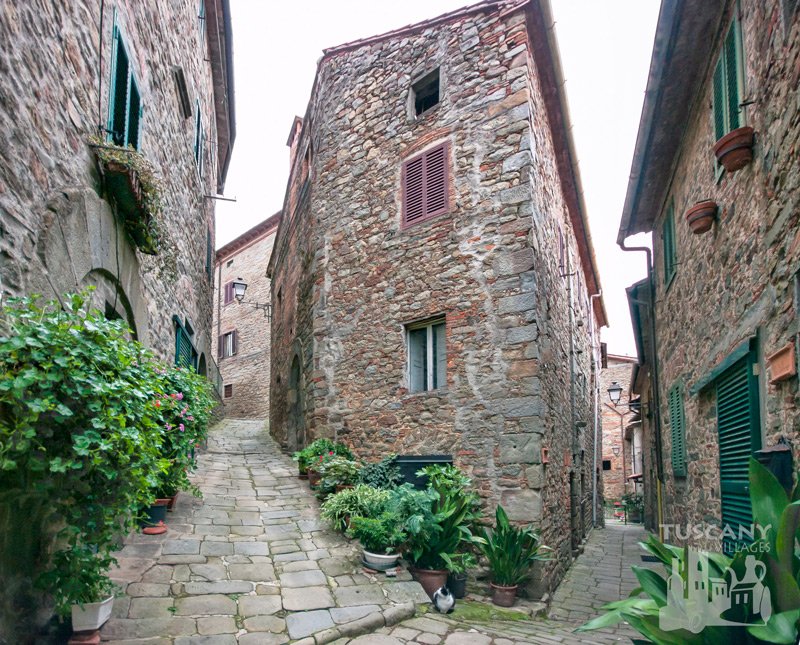
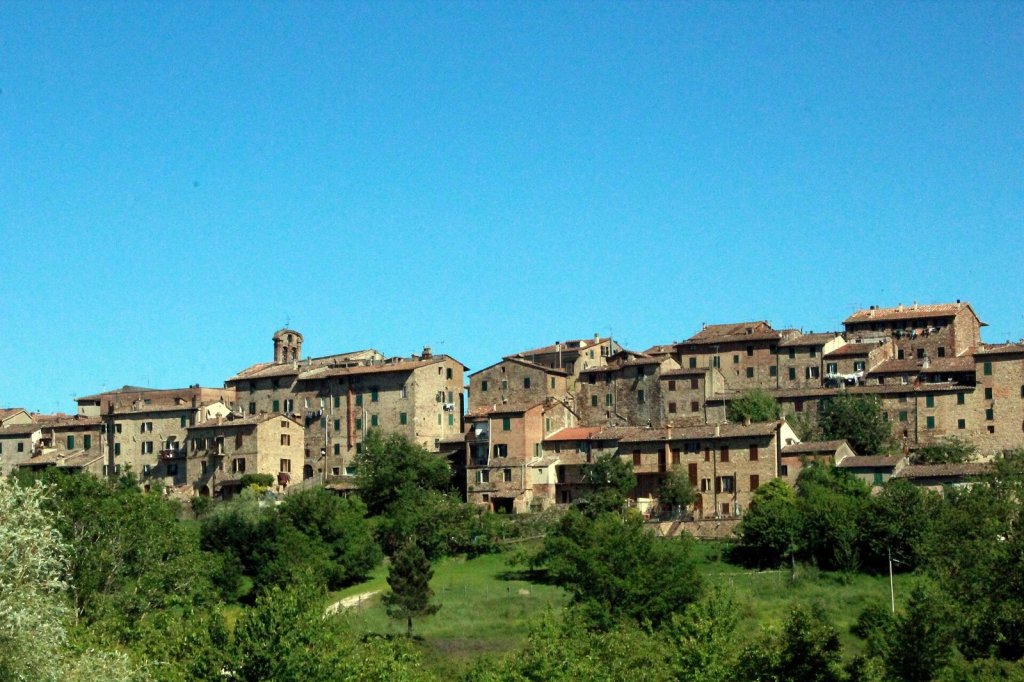
I’ve loved Monticiano for years. I first wrote about it back in 2012. It’s not a show-off village. Nobody’s selling fridge magnets. It’s just a lovely, lived-in little place in the woods south of Siena, with a couple of very good churches and, a short drive down the road, hot water bubbling out of the ground for free.
Yes, free. Bring a towel.
Where is Monticiano?
Monticiano sits at about 375 metres on a hill in the Val di Merse, in the province of Siena, roughly 35 km south-west of the city. It’s between two rivers, the Merse and the Farma, and it’s surrounded by forest: oak, chestnut and pine, and a couple of nature reserves (the Alto Merse and the Farma).
It’s a different Tuscany from the Pescia valley where I lived for years. Quieter, rounder, more wooded. If you’ve done Siena and the Chianti and you want a breather, this is it.
A little history
Monticiano starts appearing in records as a castle in the twelfth century, when it belonged to the bishops of Volterra. Siena took control in the thirteenth century and it stayed Sienese until 1554, when the Medici arrived during the war with Siena. Later it was handed out as a fief to the Pannocchieschi d’Elci counts.
You can still see bits of the old walls as you wander. The village is small, so you won’t get lost. Well, not for long.
The two churches
This is what I always tell friends to make time for.
Sant’Agostino. At the bottom of the village, on a round piazza, is the old Augustinian church and convent, built from the end of the 1200s into the 1300s. Gothic on the outside, Baroque inside. The real treat is the old chapter room of the convent, with frescoes by the Sienese painters Bartolo di Fredi, Giovanni di Paolo and Guidoccio Cozzarelli. Opening hours vary, so ask locally before you go. Small-village opening hours can be a bit, well, Italian.
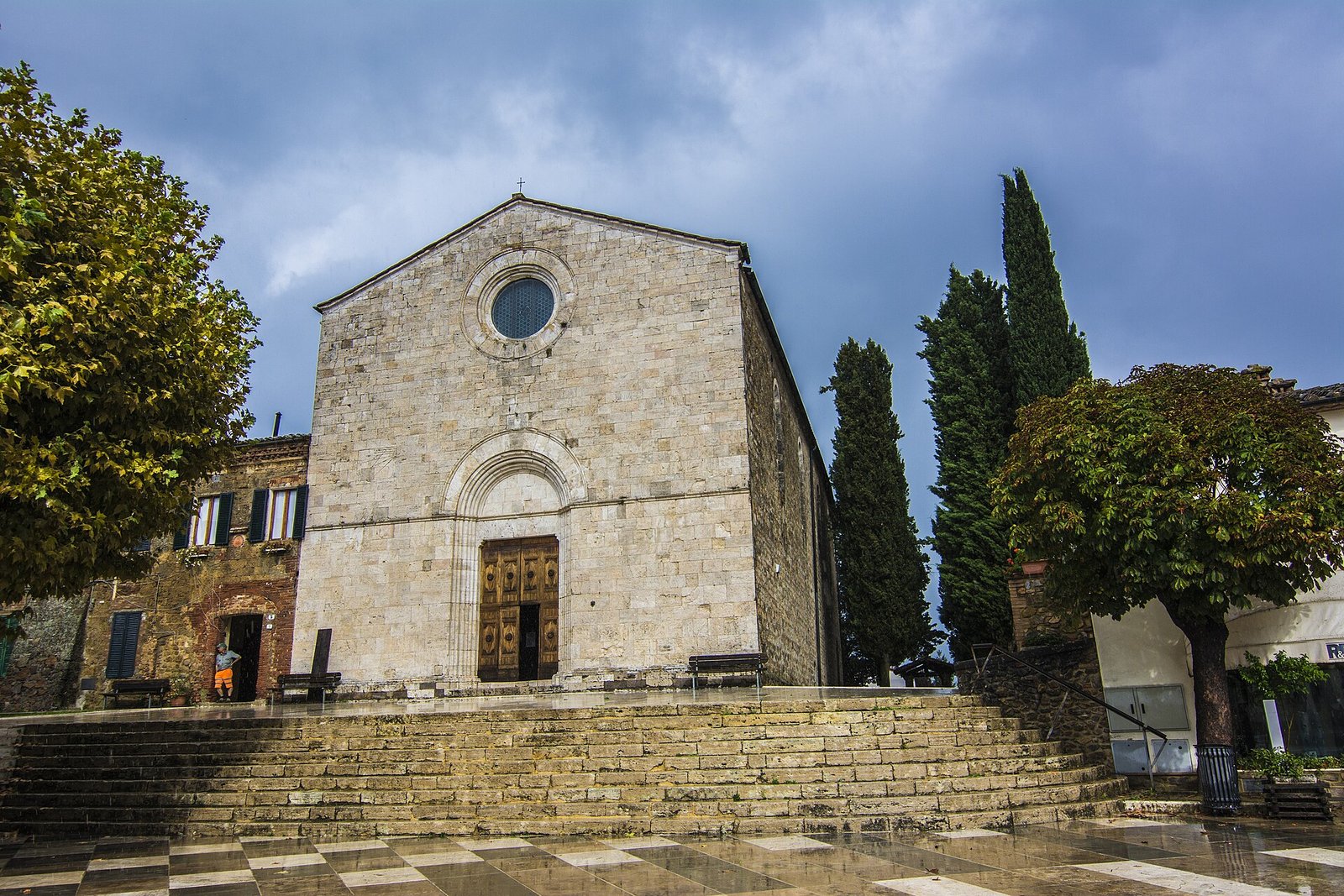
Santi Giusto e Clemente. Up in the oldest part of the village is the Romanesque parish church. Look at the doorway, with its rounded arch of carved lilies. Inside there are fifteenth-century frescoes that were only rediscovered during restoration work in 1999, including a giant San Cristoforo and a San Bernardino painted in 1453.
The Petriolo hot springs
Right. The good bit.
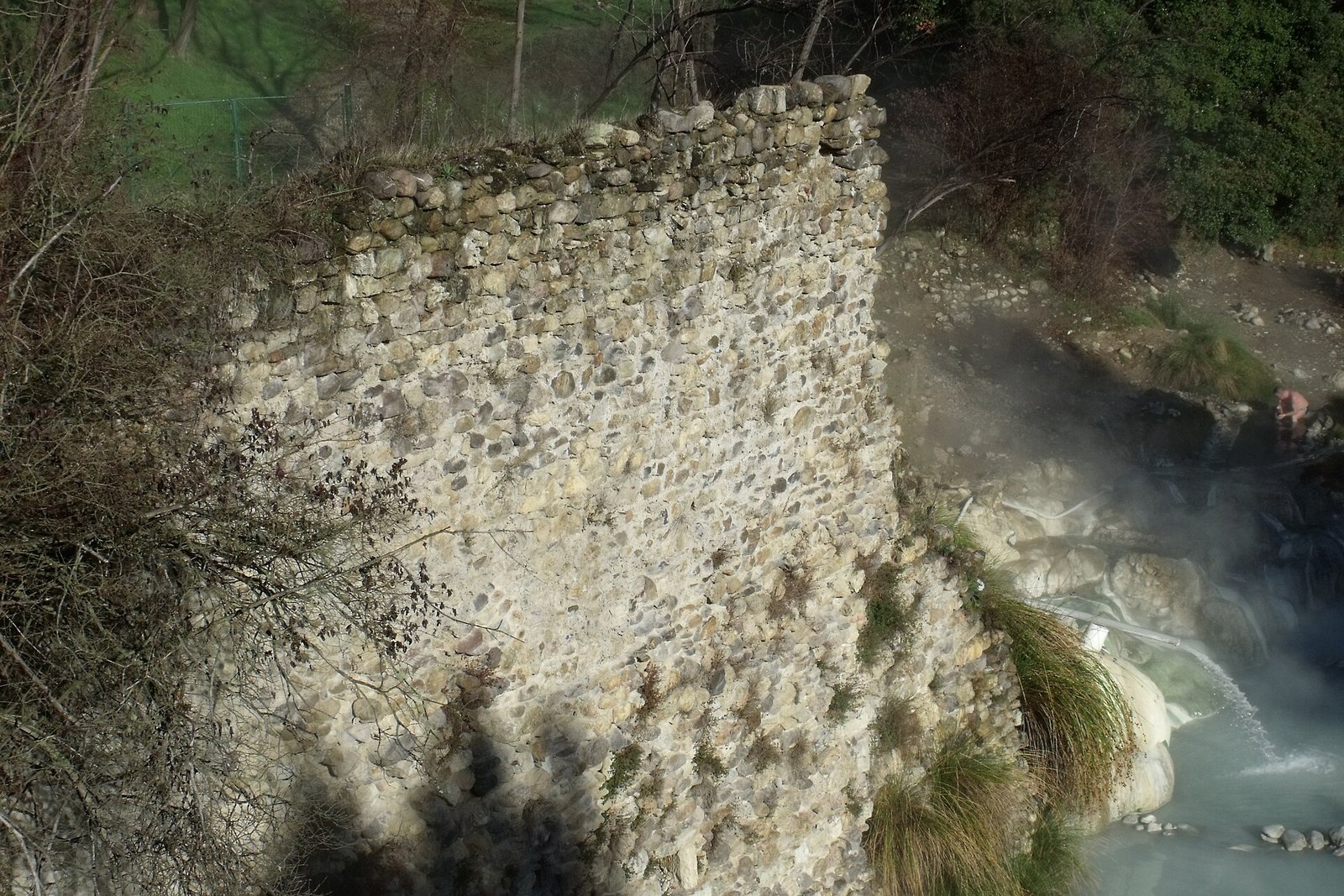
A short drive from Monticiano, down on the river Farma at the border with Civitella Paganico, are the Bagni di Petriolo. Hot sulphur water comes out of the hillside at around 43°C and tumbles down into a string of natural pools on the riverbank.
What I love is the contrast. On one side, steaming pools you can sit in up to your neck. On the other, the cold, clear Farma. Hot, cold, hot, cold. It’s like a spa without the fluffy dressing gowns or the bill.
Locals scoop up clay from the riverbank and plaster themselves in it, then sit in the sun looking like garden statues. I’ve done it. Your skin feels amazing afterwards. Your swimming costume, less so.
A bit of Petriolo history
People have been bathing here for centuries. In 1404 the Republic of Siena built walls, towers and a gate round the baths to protect them (and keep an eye on who was coming and going), so you get the slightly surreal sight of a little fortified spa. Pope Pius II, Enea Silvio Piccolomini, stayed here more than once in the 1460s.
What to know before you go
- Cost: the riverside pools are free and open all year.
- Facilities: none. No changing rooms, no loos, no café at the pools. Change discreetly and take your rubbish home.
- Shoes: bring water shoes or old trainers. The rocks are slippery.
- Smell: it’s sulphur. You’ll smell of eggs. Embrace it.
- Silver jewellery: take it off. Sulphur tarnishes it.
- Crowds: quiet on weekday mornings. Busy on weekends, and Saturday nights can be very lively.
- Parking: free roadside parking, then a short path down to the river.
- Getting there: it’s just off the SS223 Siena to Grosseto road, roughly 30 to 40 minutes’ drive from Siena. There’s no useful public transport, so you’ll need a car.
If you’d rather have a proper changing room and a sunbed, there’s a separate paid spa hotel right next door, the Terme di Petriolo, with its own pools and day passes. Check its website for prices and opening hours.
San Galgano and the sword in the stone
You can’t come to Monticiano and skip San Galgano. The great roofless Cistercian abbey is a short drive away, and on the hill above it is the little round chapel of Montesiepi, where there’s a real sword stuck in a real rock. Tradition says the knight Galgano Guidotti thrust it into the stone in 1180 when he gave up fighting for a hermit’s life.
It’s one of those places that makes the hairs on your arms stand up. Go early or late, when the coach parties have gone.
A perfect Monticiano day
- Morning: San Galgano and Montesiepi before the crowds.
- Lunch in Monticiano, then a slow wander up to Santi Giusto e Clemente.
- Late afternoon: Petriolo. Hot pool, cold river, repeat.
- Drive home smelling faintly of eggs and very, very relaxed.
Visiting Monticiano and Petriolo
Where: Val di Merse, province of Siena. Monticiano is about 35 km south-west of Siena.
Petriolo pools: free, open all year, no facilities. Water about 43°C.
Getting there: by car. The springs are just off the SS223 Siena to Grosseto road.
Nearby: San Galgano abbey and the sword in the stone at Montesiepi.
From the Pescia valley: a long day. It’s at least two hours each way by car, so think about staying a night.
Monticiano isn’t on most people’s list. That’s exactly why I love it.
You might also enjoy:
- Best day trips from Lucca: 6 easy escapes I love
- Celle dei Puccini: the Puccini family home above Lucca
Susan
Photo credits: Monticiano in the Val di Merse (photo: LigaDue, CC BY-SA 4.0, via Wikimedia Commons); The old convent of Sant’Agostino, Monticiano (photo: Valeri Rossano, CC BY-SA 4.0, via Wikimedia Commons); Hot water by the old walls at Petriolo, beside the Farma (photo: LigaDue, CC BY 3.0, via Wikimedia Commons).