Last updated: October 2026
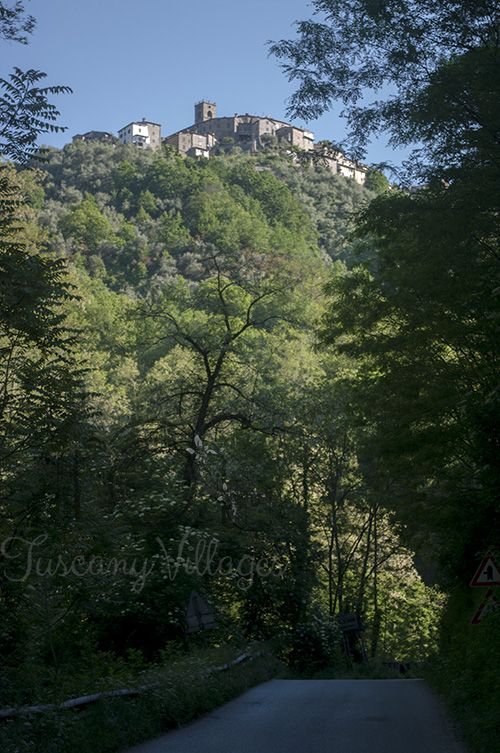
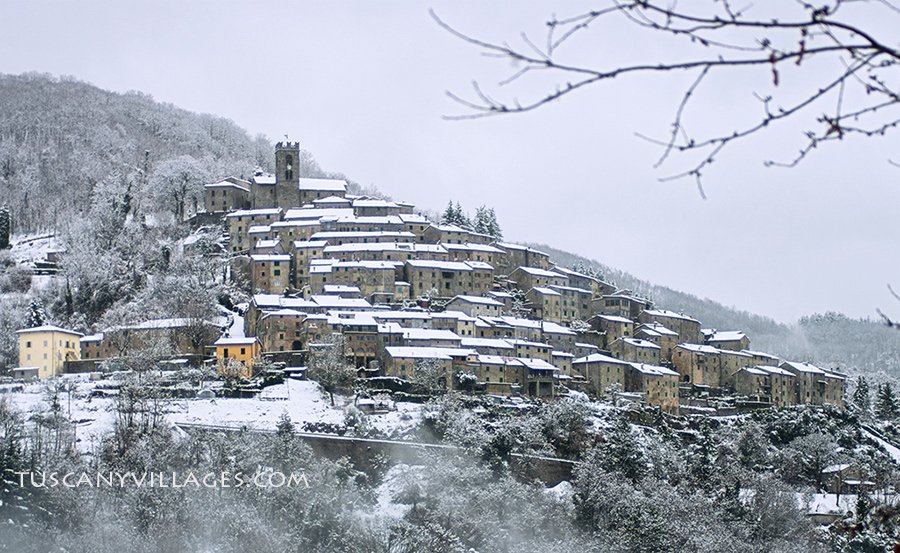
If you only remember one of the ten castles, it’ll probably be Pontito. It’s the one people send each other photos of. The whole village spreads down its hillside like an upside-down fan, every lane climbing to the church at the top.
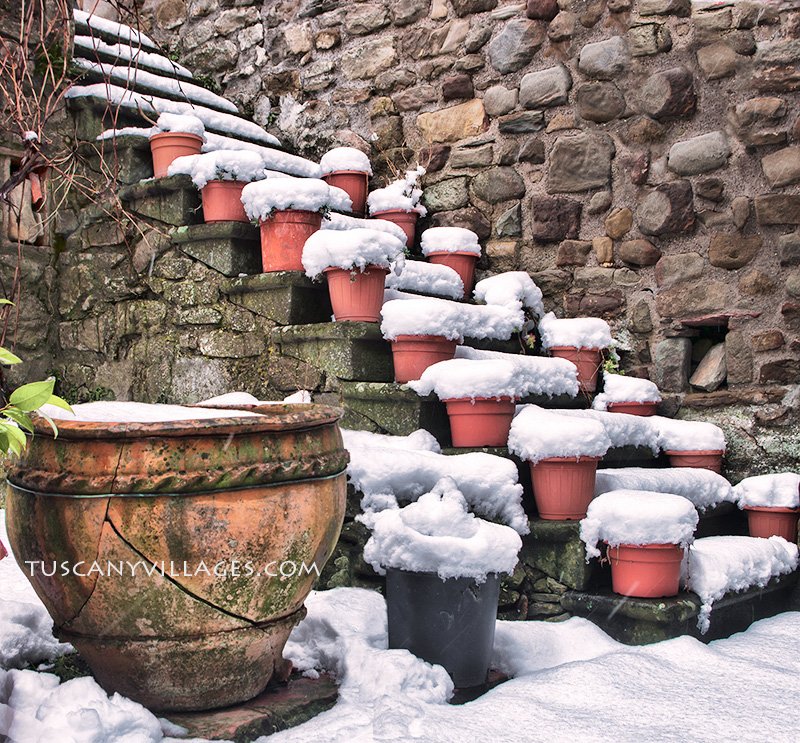
I once called the hills above Pescia home, and Pontito never stopped surprising me. In summer, in autumn, and especially under snow, when it looks like a Christmas card.
Right at the top of the valley
Pontito is the highest of the castles, at about 750 metres, up near the source of the river Pescia. It’s been known since the 9th century, when it belonged to the Bishops of Lucca.
What’s remarkable is how little it’s changed. The old fortified layout is still all there. Houses stacked one above the other, lanes running up like the ribs of a fan, and at the top, the sturdy Romanesque church of Santi Andrea e Lucia.
The steps
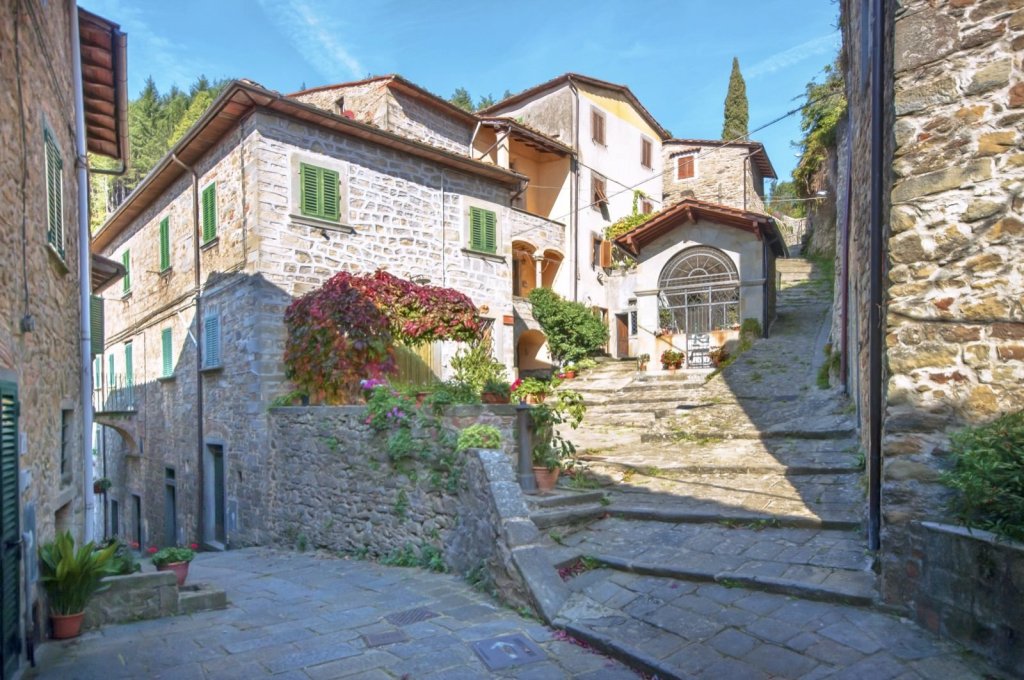
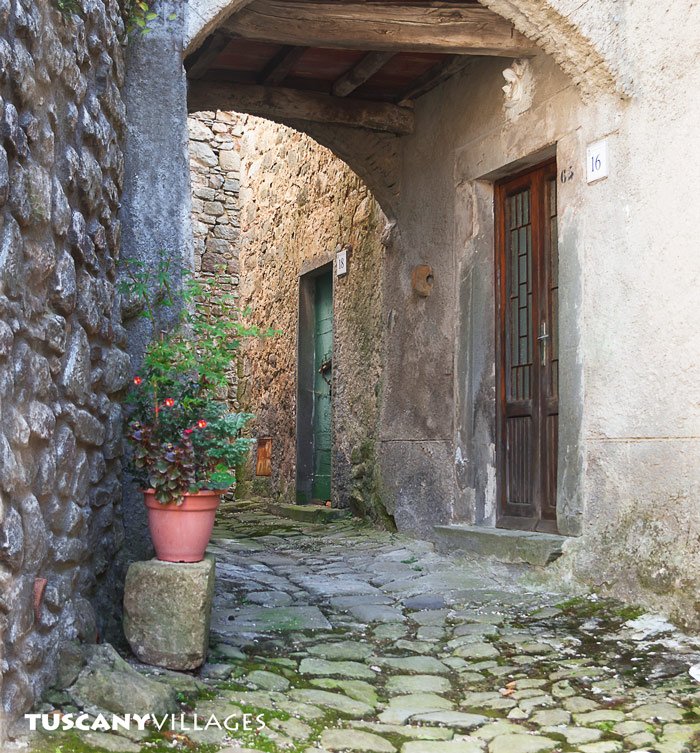
A word of warning. Pontito’s streets are almost all steps. Steep ones. When I used to tell friends how to do the ten castles, I’d say expect to walk up and down steep steps, especially in Pontito. My knees still remember.
Wear proper shoes, take your time and stop often. That’s what the views are for.
Two Pontito stories
Pontito may be small, but it’s produced two remarkable men.
Lazzaro Papi, born here in 1763, was the first person to translate Milton’s Paradise Lost into Italian.
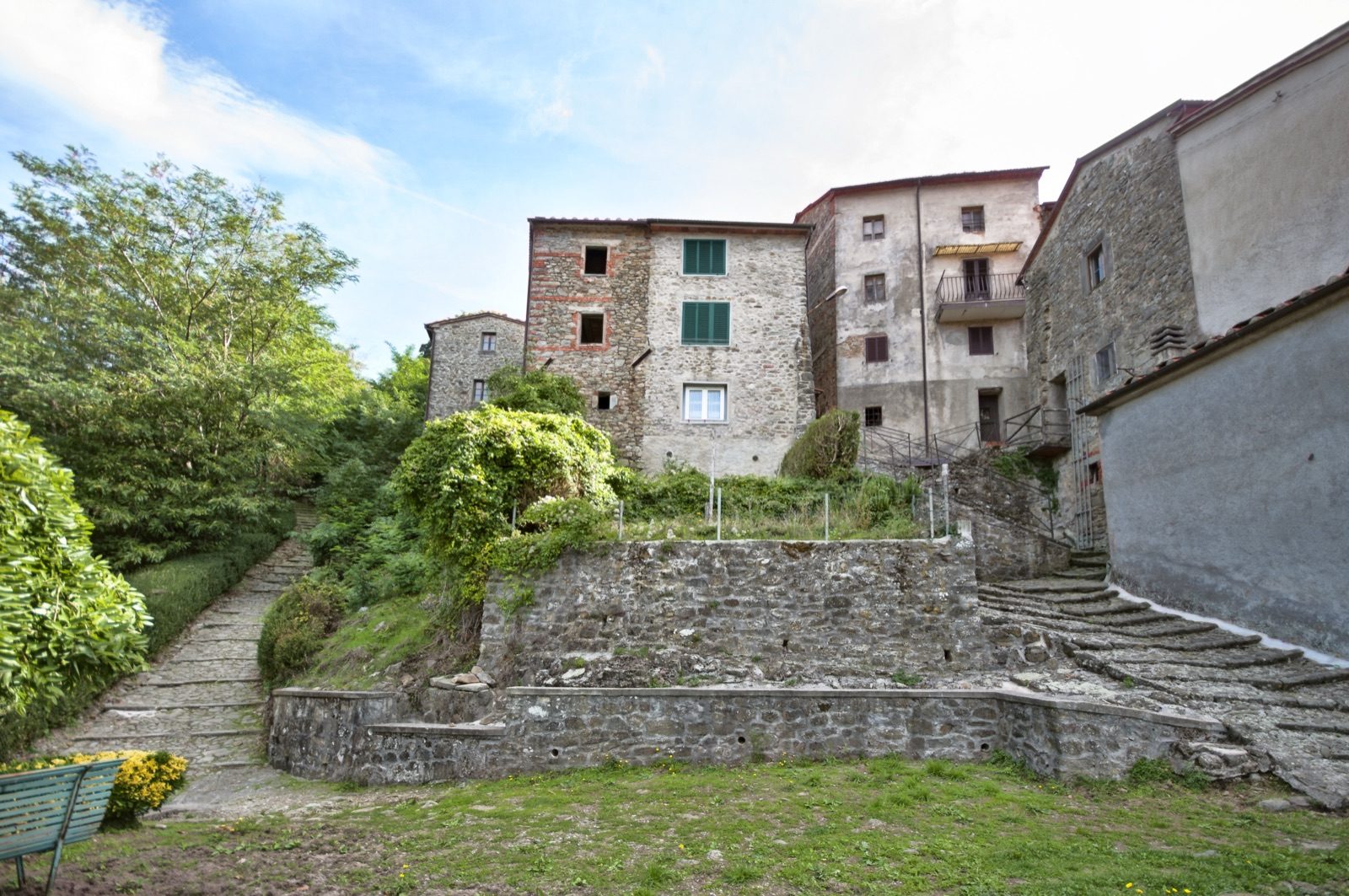
And Franco Magnani, who left Pontito in 1958 and settled in California, painted his home village over a hundred times, entirely from memory. His paintings were shown at the Exploratorium in San Francisco next to photographs of the very same views. Stand in one of these lanes and you’ll understand how a place can stay in your head like that.
Doors, flowers and snow
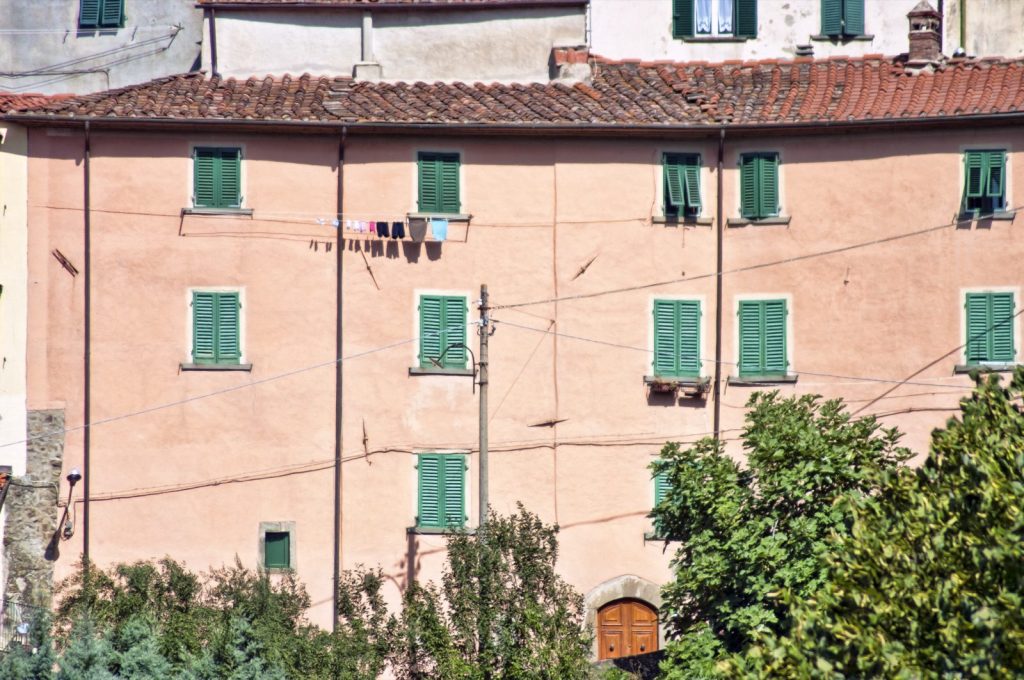
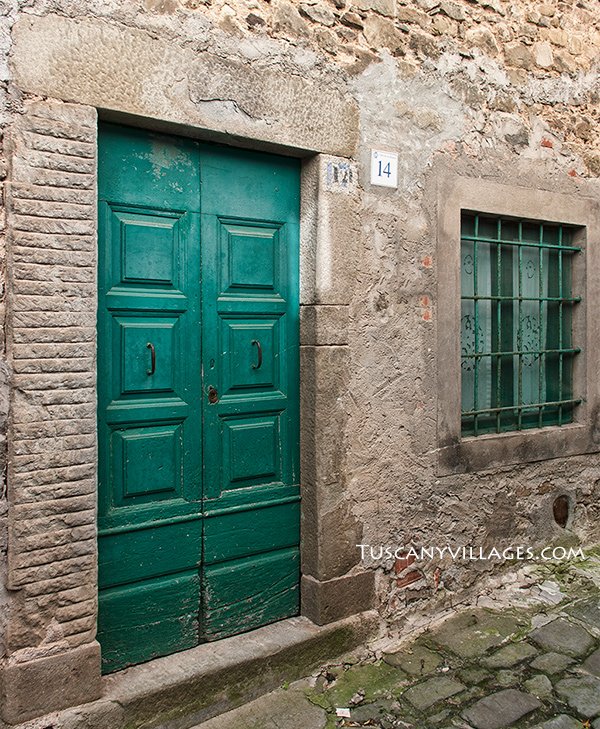
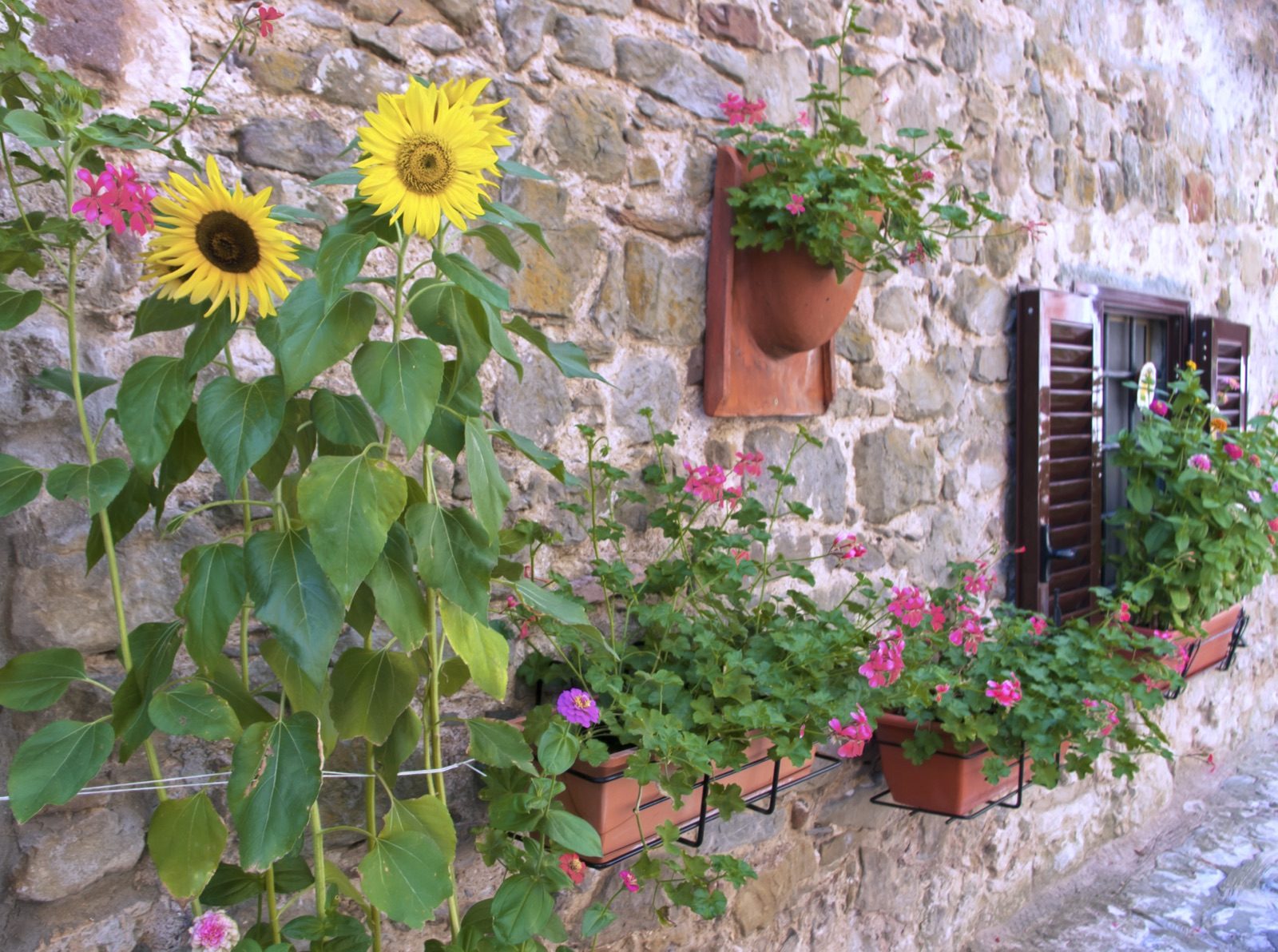
Like all the castle villages, Pontito is full of little touches. A green door. Sunflowers against old stone. Pots on every step, and in winter, the same pots under a cap of snow. I wrote about winters up here in my winter in the Tuscan hills post.
Eat like a local, not a tourist
Here’s the honest bit. I couldn’t find a bar or restaurant open in Pontito itself. Bring water and a picnic, and eat it with a view. Then, for a proper meal, go back down the valley:
- Circolo ARCI “La Scuola”, Stiappa. About 6 km away. A volunteer-run village bar in the old school, for breakfast, cards, an aperitivo and very good pizza. Open daily in the holiday season, shorter hours otherwise. Phone first.
- Ristorante Pizzeria La Pieve. Just below Castelvecchio. Wood-fired pizza, tortelli with mushroom sauce, porcini, and a terrace looking across to the lights of Sorana. Closed on Mondays and Tuesdays.
Both were open when I checked in October 2026. Stiappa is worth a stop anyway, and in mid August it holds its own festa, the Sagra del Beccutino.
Walking to Pontito
Two CAI paths run from Sorana to Pontito. Path 254 goes via Ponte di Tito. Path 254A goes the high way, past the ruins of Lignana, the lost eleventh castle. Path 252B, from Castelvecchio along the old mills, was closed when I checked because of an unsafe bridge. Check caipescia.it before you set off. More in my walking guide.
Getting there and parking
From Pescia, follow the signs for Abetone up the valley past Pietrabuona, then follow the signs for Castelvecchio, Stiappa and Pontito. It’s about 19 km, around half an hour, longer behind a tractor. Fill up with fuel in Pescia, as there’s little up the valley.
Park outside the village and walk in. Pontito’s lanes are steps, not roads, and please don’t block anyone’s gate.
You might also enjoy:
- Le Dieci Castella: a driving route through the Svizzera Pesciatina
- Lignana: the lost eleventh castle
- Sorana
- Eight small villages in Tuscany you’ve never heard of
Susan