Last updated: October 2026
Everyone pictures Tuscany in summer. Sunflowers, long lunches, sundresses. Lovely.
But I lived up there through plenty of winters, and they’re a different animal altogether. Up in the hill villages above Pescia, winter means firewood, wind, the odd power cut and, now and then, a proper fall of snow.
Here’s what it’s really like.
Wood you like to heat your home this way?
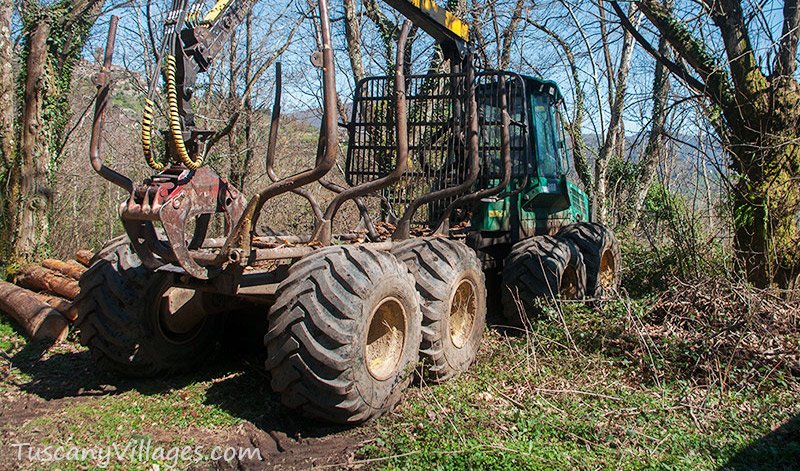
Every year, from late summer into autumn, the villages are full of tractors of every size, delivering wood for the winter.
Up here wood is by far the cheapest way to keep warm. Diesel boilers cost a fortune to run, and mains gas is rare in the hill villages (and not cheap either). So most of us have a stufa, a traditional wood-burning stove, and rely on it completely.
One winter we took three loads. The first delivery went something like this.
9am. I hear Alessandro arrive with our wood neatly packed on his time-served, rusty tractor. The air fills with the smell and taste of diesel, and the engine’s thunderous heartbeat echoes round and round the courtyard.
A neighbour passing by stops and, without being asked, helps Alessandro reverse his tractor and trailer into the courtyard. A hairy, brave move you wouldn’t catch me trying, but it’s a daily norm up here. Bravo!
Alessandro wears ear protectors. The rest of us stand there with our brains rattling, waiting for the engine to stop.
Then the tipping starts, and our wood slides out into a great pile on the pavement outside our home, ready to be stacked indoors by the willing and able.
Now for the “labour of love” we country folk are always going on about.
For the first hour, it doesn’t matter how many times you go back with the wheelbarrow, that mountain of timber stays exactly the same size. Eventually, with aching arms, you see a chink of light at the end of the tunnel.
After a Twix, a Mars bar, several cups of tea, a handful of splinters and a mouthful of curses, the pavement is clear and the wood is stacked.
That’s how you heat a house in the Tuscan hills.
The night the wind came
On 5 March 2015, a ferocious storm hit Tuscany. The winds were fierce, with gusts well over 100 km/h, and they did damage everywhere: roofs, greenhouses, power lines. In places the landscape itself changed. Trees that had made up the familiar face of our hills for decades were snapped in half or ripped out by their roots.
Here in the Valleriana, the electricity was off for almost four days. Some people went to stay elsewhere. The rest of us lived by candlelight and the stufa. (Thank goodness for that wood pile.)
A few weeks later I went up to Aramo to have a look.
The little cemetery had taken a battering. The fallen trees had already been logged and left in piles opposite the cemetery, a sight you saw all over the Valleriana that spring.
From outside the cemetery there’s a wonderful view across to Sorana. Along the road out of Aramo there was more devastation, and when I followed a little path into the woods I found a lovely old tumbledown building among the slanted trees.
Another day, another adventure.
And sometimes, snow
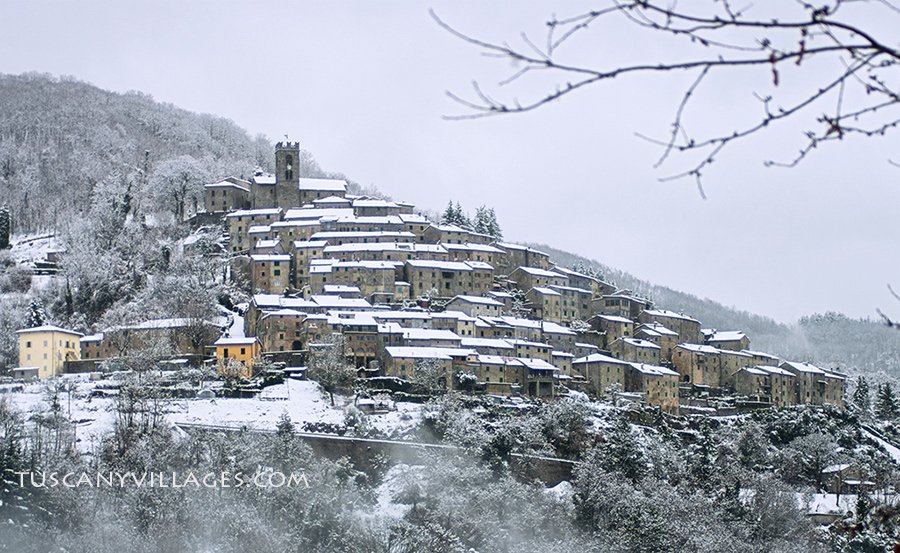
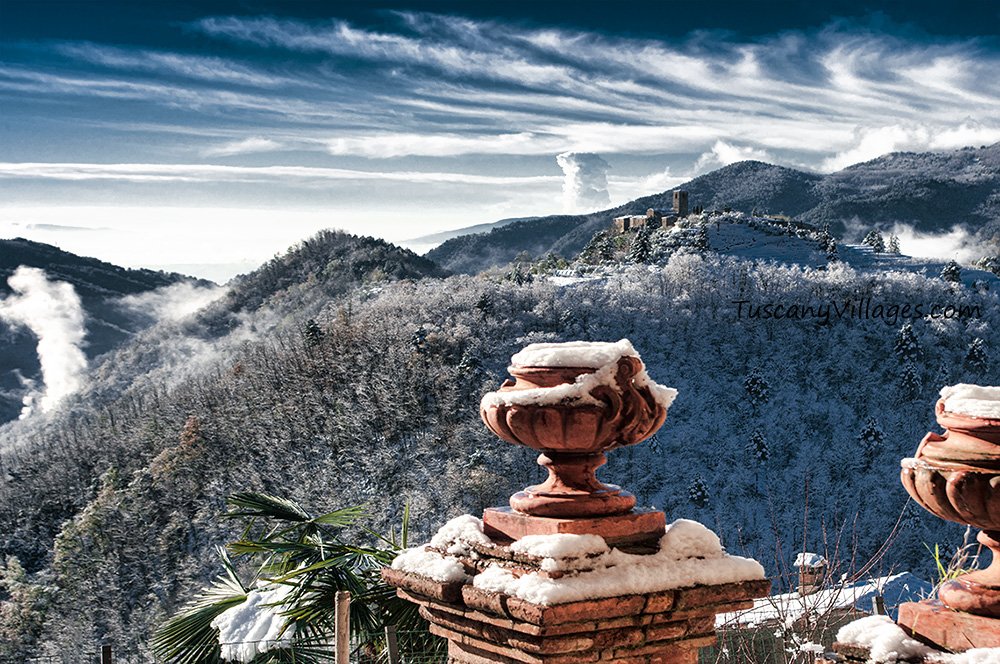
Not every winter brings snow to the Dieci Castella, but when it comes it’s magic. The villages go silent. Pontito, stacked up its hillside, looks like a Christmas card. Kids appear with anything that slides.
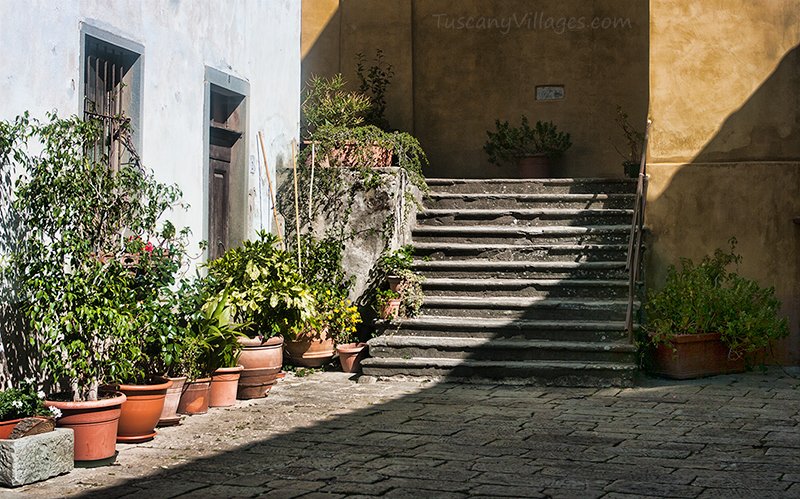
It’s also hard work. The lanes are steep, the steps are stone, and someone has to clear them. Often that’s an older person on their own. I’ve got a little story about that.
If you’re visiting in winter
Winter is quiet, cheap and beautiful, but you do need to plan a bit.
- Book somewhere warm. Ask if your holiday home has a stufa or proper heating, and whether wood is included. Stone houses are freezing without it.
- Pack layers, a warm coat and shoes with grip. Stone steps get icy.
- Expect closures. Many village bars and restaurants shut for a few weeks, or open only at weekends. Pescia and Lucca carry on as normal.
- Check the roads. The hill roads are narrow and twisty. In snow, ask locally before driving up, and carry chains or winter tyres if your hire car allows.
- Have a torch. Power cuts happen.
- Enjoy the quiet. Misty mornings, wood smoke and an empty piazza. No queues anywhere.
Then spring
And then one day in March or April, you open the shutters and the crocuses are out on the bank, and the log piles by the road start to shrink. Spring has sprung.
You’ve earned it.
You might also enjoy:
- The snow and the old lady in the café
- Strangers really do care
- Where to stay near Lucca and the Svizzera Pesciatina
Susan