Last updated: October 2026
Our side of Tuscany, round Lucca and Pescia, makes some lovely wine. But the famous names are further south, in the hills between Florence and Siena and below Siena. Chianti. Brunello. Vino Nobile. Here’s a friendly guide to the villages behind the labels, and how to visit without needing a lie down.
Chianti Classico
The hills between Florence and Siena. Vineyards, olive groves, woods, castles and stone farmhouses. The old road through the middle, the Chiantigiana (SR 222), is one of the prettiest drives in Italy.
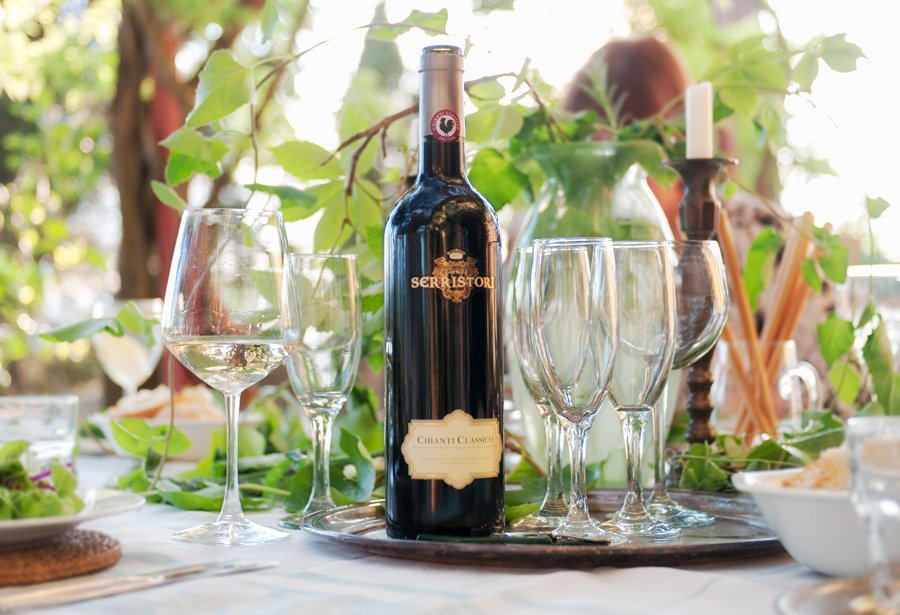
The wine. Chianti Classico DOCG is made from 80 to 100% Sangiovese. Look for the black rooster (Gallo Nero) on the neck of the bottle. Plain “Chianti” is a different, much larger area, with its own rules.
The villages. Four are wholly inside the Chianti Classico zone:
- Greve in Chianti. The market town, built round an unusual, roughly triangular piazza lined with arcades. Wine shops, butchers, cafés.
- Radda in Chianti. A small walled village up on a ridge.
- Castellina in Chianti. A hilltop village with a fortress and an old covered walkway round the walls.
- Gaiole in Chianti. Quieter, in a green valley, surrounded by castles and wineries.
Montalcino and Brunello
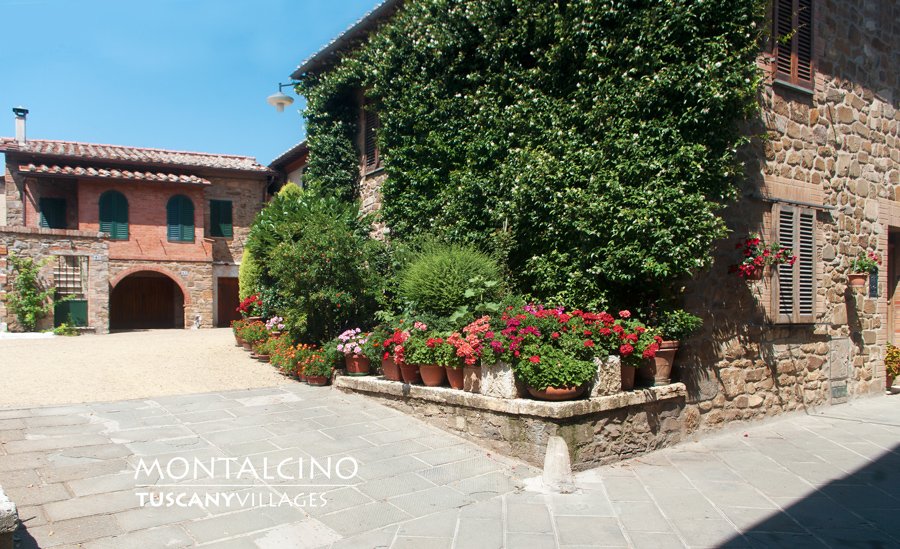
South of Siena, Montalcino sits on a high hill above the Val d’Orcia, with its 14th-century fortress at the top of the town. Steep streets, flower pots, wine shops at every corner.
The wine. Brunello di Montalcino DOCG is made from 100% Sangiovese. It’s aged at least two years in wood and four months in bottle, and can’t be sold until 1 January of the fifth year after the harvest (the sixth for the Riserva). Big, serious, long-lived wine. Its younger brother, Rosso di Montalcino, is lighter and kinder on the wallet.
Montepulciano and Vino Nobile
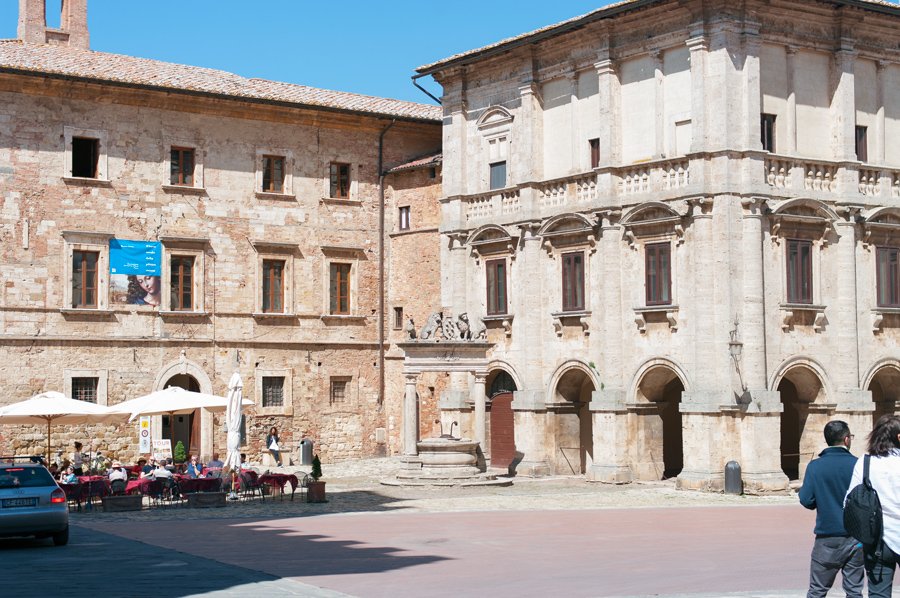
Further east, Montepulciano is a long, steep Renaissance town on a ridge, with a grand Piazza Grande at the top (the photo at the top of this post). The town is riddled with old cellars dug into the hill, and many wine shops will take you down into them.
Film fans might recognise the piazza: the “Volterra” scenes in New Moon, the second Twilight film, were shot here.
The wine. Vino Nobile di Montepulciano DOCG is made from at least 70% Sangiovese (called Prugnolo Gentile here) and aged at least two years. There’s also a Rosso di Montepulciano.
One confusing thing: Montepulciano d’Abruzzo is a completely different wine, from a grape called Montepulciano, in a different region. Nothing to do with this town.
Combine them
Montalcino and Montepulciano are about an hour apart by car, with Pienza in between. That’s a gorgeous day, or better, two. See my post on San Gimignano, Volterra and Pienza.
How to taste wine (and stay safe)
- Book winery visits ahead. Most estates need a booking for a tour and tasting, especially the well-known ones.
- Use the enoteche. Every wine village has enoteche (wine shops and wine bars) where you can taste by the glass. No booking needed.
- Spit, or share. It’s allowed, and nobody minds.
- Don’t drink and drive. Italy’s limit is 0.5 g/l, and zero for drivers who’ve had their licence less than three years and for under-21s. The police do check. Book a driver or a tour, take turns, or stay overnight.
- Shipping. Many wineries will ship cases abroad. Ask about the rules for your country before you buy.
- Eat. A plate of pecorino and salami makes everything better.
When to go
- Spring: green vines, wildflowers, fewer people.
- September and October: the vendemmia (grape harvest). Busy and beautiful.
- November: quiet, misty and moody, with new oil and truffles.
- Summer: hot, and the most crowded.
From our side of Tuscany
These wine villages are a long drive from Lucca or Pescia, so they’re best done as a night or two away, rather than a day trip. My guide to where to stay in Tuscany can help, and the driving guide is worth a read before you set off.
And if you stay closer to home, ask for a local wine: Montecarlo wine, from the hills between Lucca and Pescia, is a treat. More in what to eat round Lucca.
Salute!
You might also enjoy:
Susan