Last updated: October 2026
From late October, the hills round Lucca and Pescia start to rustle. Nets go down under the trees, ladders go up, and whole families appear on the terraces with rakes and crates. It’s olive time.
I had an olive grove of my own up in the hills, so this one is close to my heart. Here is my guide to the harvest, the mill and the best bit: the new oil.
When is the harvest?
Roughly from late October to December, depending on the weather, the height of the grove and the variety. Many growers here like to pick early, while some olives are still green. The oil is less abundant, but greener, more bitter and more peppery. That’s the taste Tuscans love.
How the olives are picked
On our steep, terraced hills, mostly by hand, or nearly:
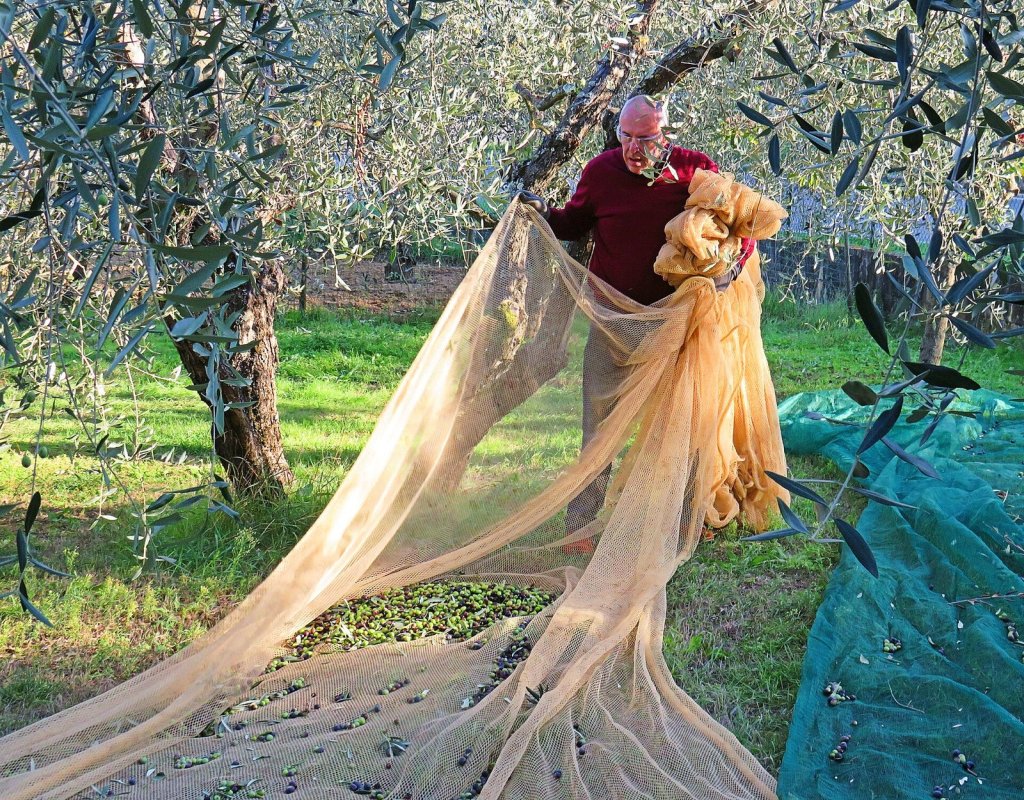
- Nets are spread on the ground under each tree.
- Rakes (small hand rakes, or long ones) comb the olives off the branches. Many people now use electric rakes with vibrating fingers on a pole.
- The olives drop on the nets, the nets are gathered up, the leaves and twigs are picked out, and the olives go into crates.
The olives need to go to the mill quickly, within a day or two. Leaving them in a sack spoils the oil.
The frantoio
The frantoio is the olive mill. In November they work flat out, often day and night. Small growers book a slot, bring in their crates, and take home their own oil.
What happens inside, in a modern mill:
- The olives are washed and the leaves blown off.
- They’re crushed into a paste, stones and all.
- The paste is gently mixed (this is called malaxing), which helps the oil gather.
- A centrifuge separates the oil from the water and the solids.
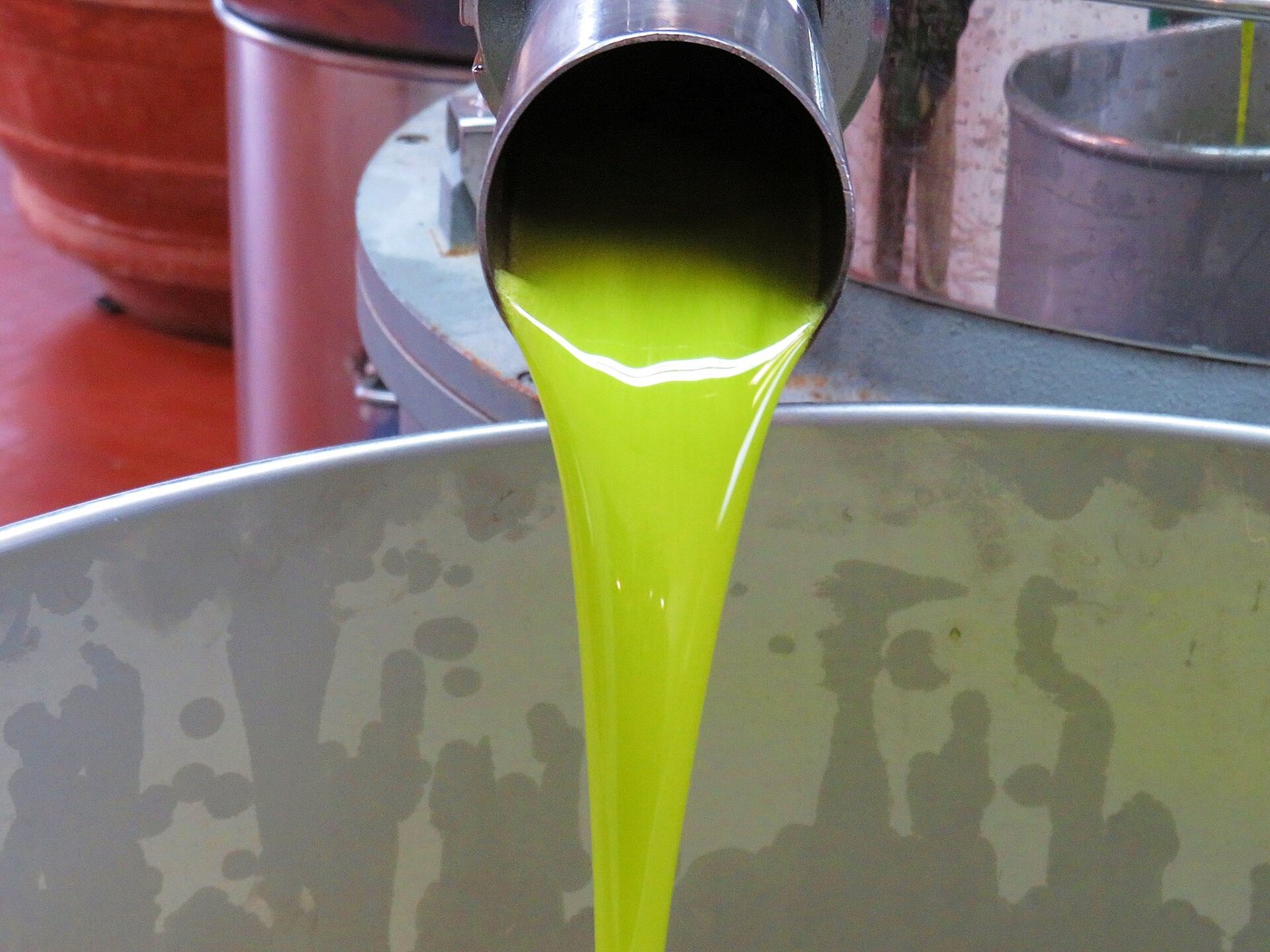
- Out comes the new oil, bright green and cloudy.
Some old-style mills still use stone wheels and mats. Either way, the oil smells of cut grass and artichokes, and the whole place smells wonderful.
If you see “cold extraction” (estratto a freddo) on a label, under EU rules it means the oil was extracted below 27°C.
Olio nuovo
The new oil, straight from the mill. It’s bright green, cloudy and almost spicy: it grabs the back of your throat and makes you cough. That’s the polyphenols, the good stuff. Tuscans say a good oil “pizzica”, it prickles.
The classic way to taste it is fettunta: a thick slice of toasted bread, rubbed with garlic, salted and drowned in new oil. Nothing more. It’s one of the great joys of a Tuscan November.
New oil is also poured over bean soups and zuppa frantoiana, the “olive mill soup”. See what to eat round Lucca.
Lucca DOP and Toscano IGP
Two protected names to look for:
- Olio extravergine di oliva Lucca DOP. From the hills of the province of Lucca. The rules say it’s made mainly from the Frantoio variety (up to 90%) and Leccino (up to 30%), with the olives picked from the tree, the harvest finished by 31 December, and the olives milled within two days.
- Toscano IGP. Extra virgin oil from olives grown and milled anywhere in Tuscany.
Plenty of excellent oil carries neither label, especially from small family groves. Most of it never leaves the village.
Buying good oil
- Buy from the grower or the mill if you can. Ask in the village bar who sells oil. Someone always does.
- Look for a harvest date on the label. Oil is best within a year or so.
- Keep it dark and cool, away from the stove. Light and heat ruin it.
- Taste first if you can. Good Tuscan oil should be fruity, bitter and peppery. Greasy and flat means old.
- Carrying it home? Check your airline’s rules, wrap it well, or buy cans rather than glass.
Seeing the harvest
Some agriturismi and farms invite guests to join the harvest, or to visit the mill. Ask when you book. In November, look out for small festas celebrating the new oil, often with fettunta and bean soup. My sagre month by month has the autumn festas.
And if you walk the hill paths in November, say buongiorno to the people up the ladders. They’ll be glad of the break.
You might also enjoy:
Susan
Photo credits: Gathering olives from the nets, Tuscany (photo: PROPOLI87, CC BY-SA 4.0, via Wikimedia Commons); New oil pouring out at the frantoio (photo: PROPOLI87, CC BY-SA 4.0, via Wikimedia Commons).